

Silicosis is a serious lung disease caused by breathing in respirable crystalline silica over time.
When you have repeated silica exposure, especially through occupational exposure, tiny particles can lodge deep in the lungs and trigger inflammation and permanent scarring.
Many people who developed silicosis were exposed during cutting, grinding, drilling, or polishing stone, concrete, or engineered stone products.
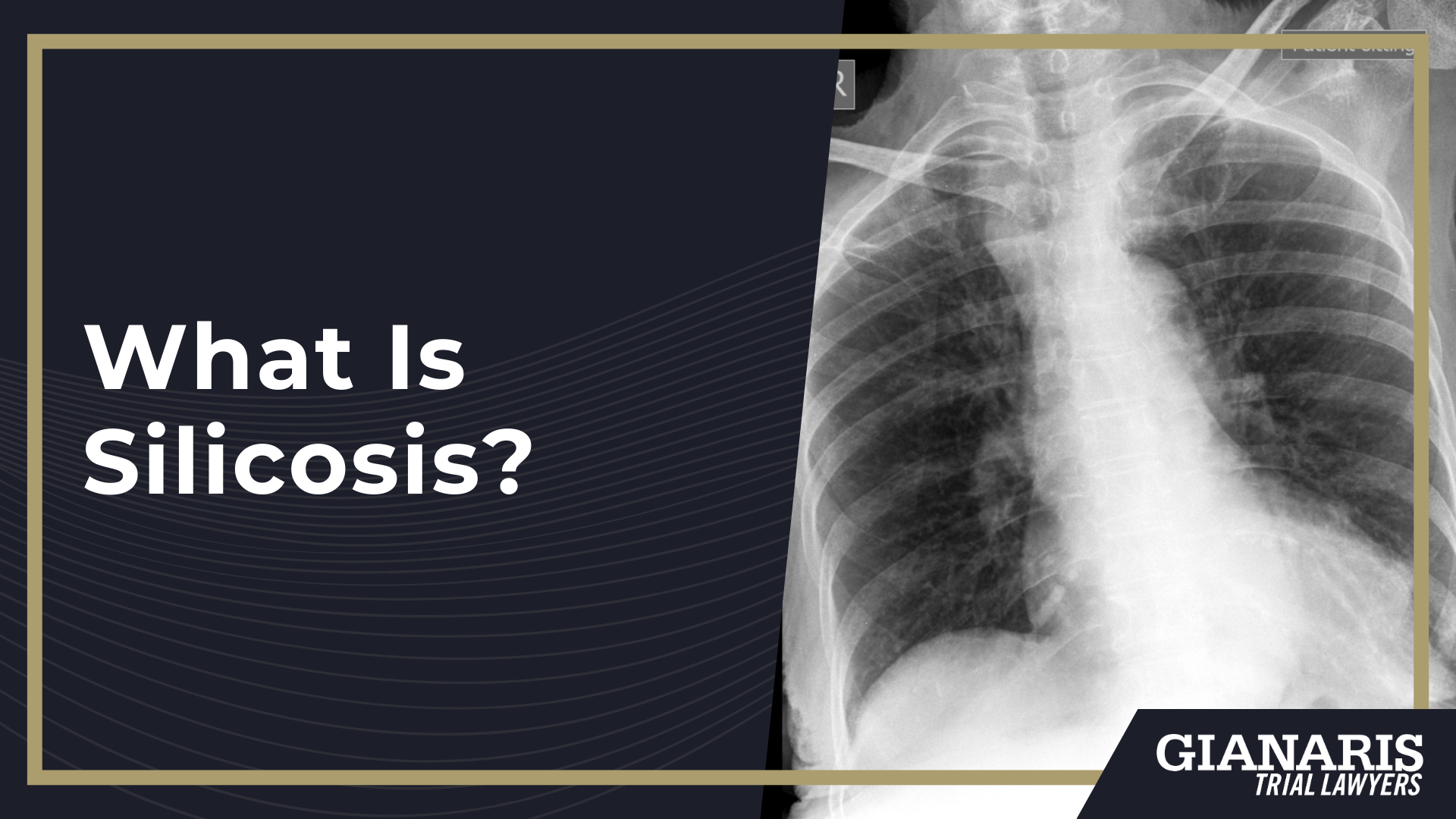
Silicosis is often progressive, meaning symptoms and lung damage can worsen even after exposure ends.
Depending on the timing and intensity of exposure, the condition may present as chronic silicosis, accelerated silicosis, or acute silicosis.
If your diagnosis is tied to work conditions that should have been controlled, a silicosis lawyer can help evaluate whether a silicosis lawsuit is appropriate.
How Crystalline Silica Dust Causes Lung Damage
When materials containing crystalline silica are disturbed, they release airborne silica dust particles small enough to reach the deepest areas of the lungs.
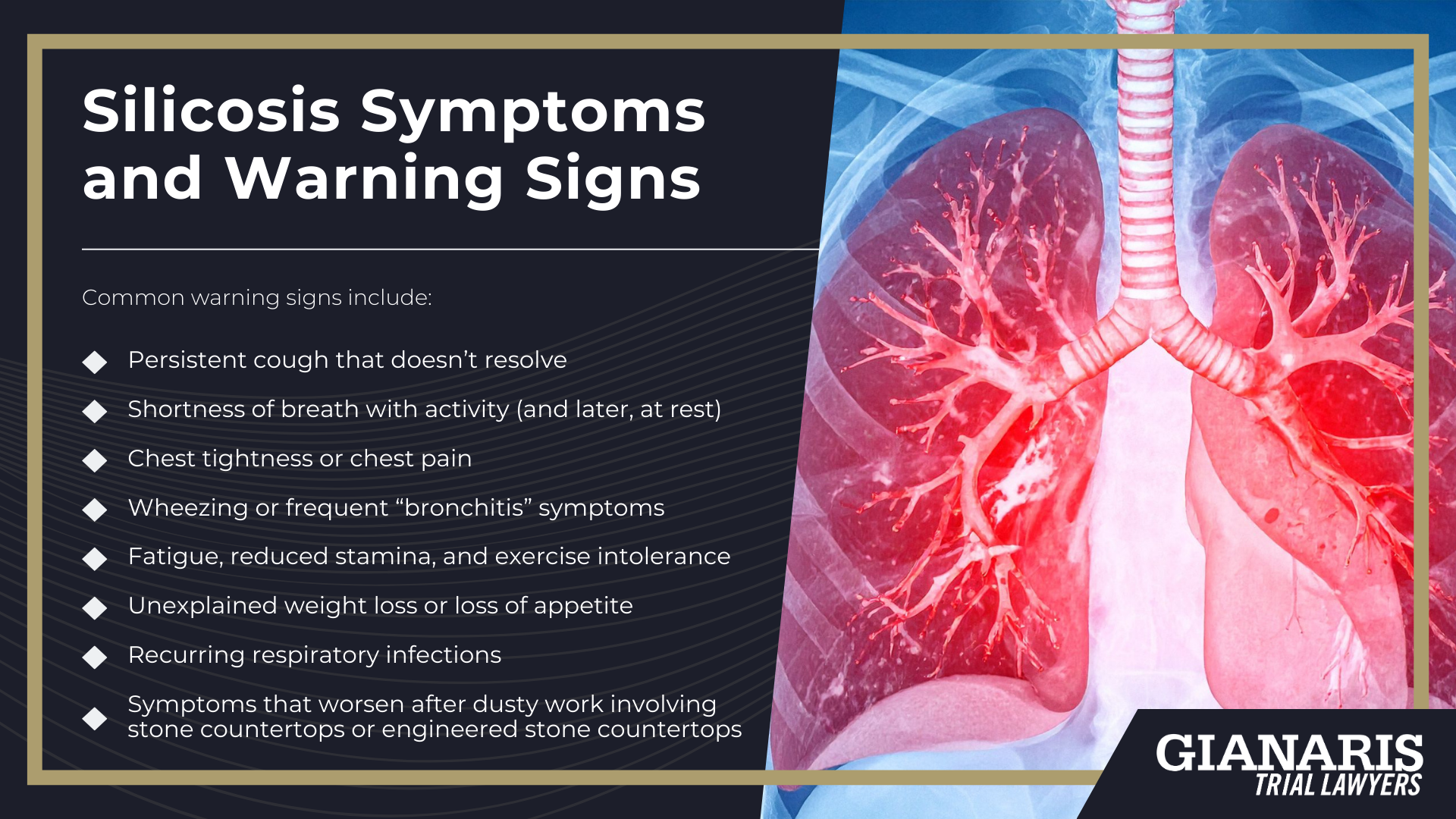
This silica dust triggers an inflammatory response, and with repeated silica dust exposure, the body forms scar tissue that reduces lung elasticity and oxygen exchange.
As scarring builds, breathing becomes harder and daily activity can be limited by fatigue and shortness of breath.
In addition to silicosis itself, heavy exposure has been associated with increased risk of serious conditions such as lung cancer and chronic obstructive pulmonary disease.
The highest-risk scenarios often involve dry cutting or grinding without effective dust control, ventilation, or respiratory protection.
These medical realities are central in a silicosis lawsuit because the case must connect the work exposure to the resulting disease.
What to Do If You’ve Been Diagnosed With Silicosis
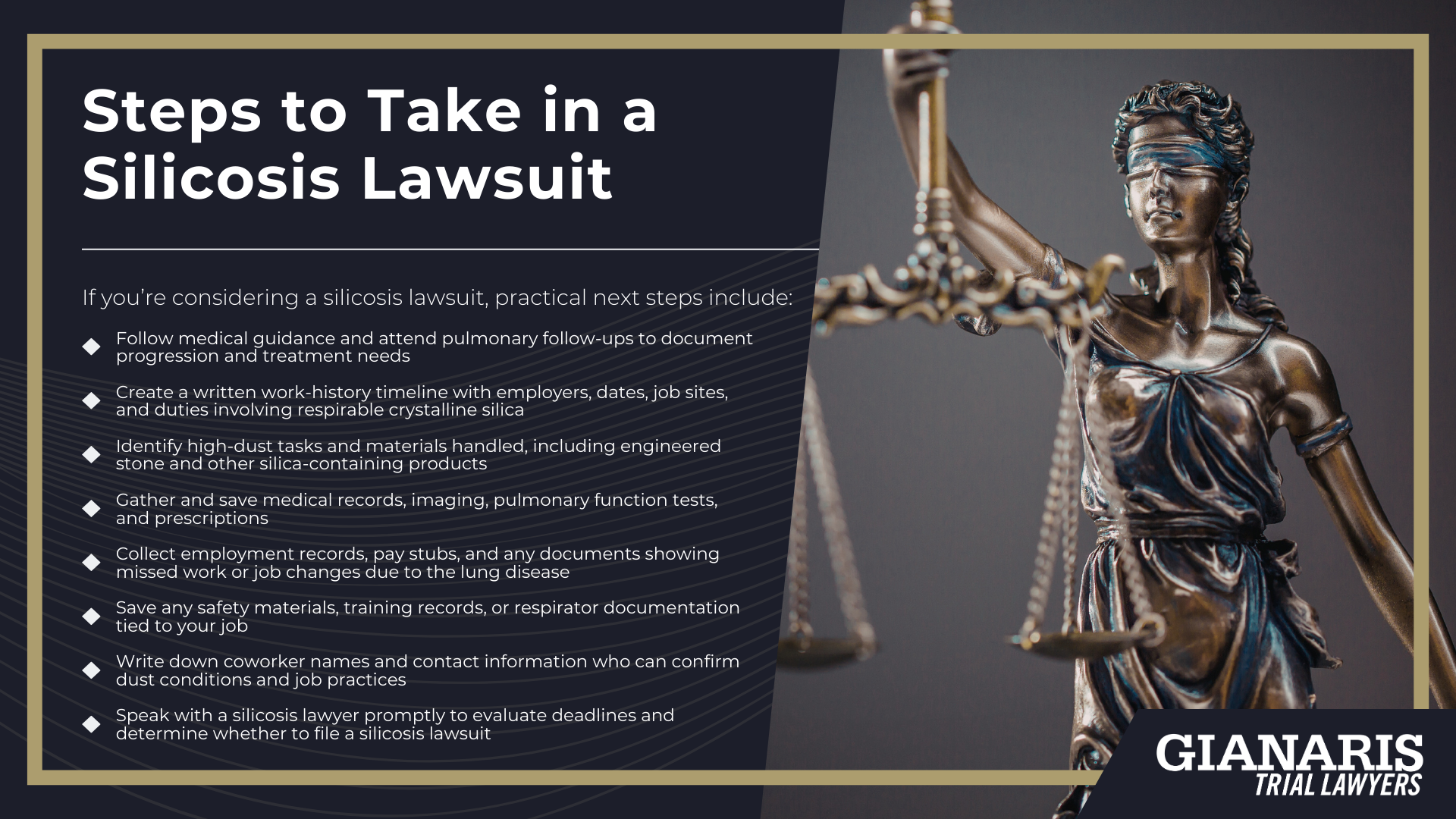
If you’ve been diagnosed, your first priority is medical care and protecting lung function, including follow-up with a pulmonary specialist.
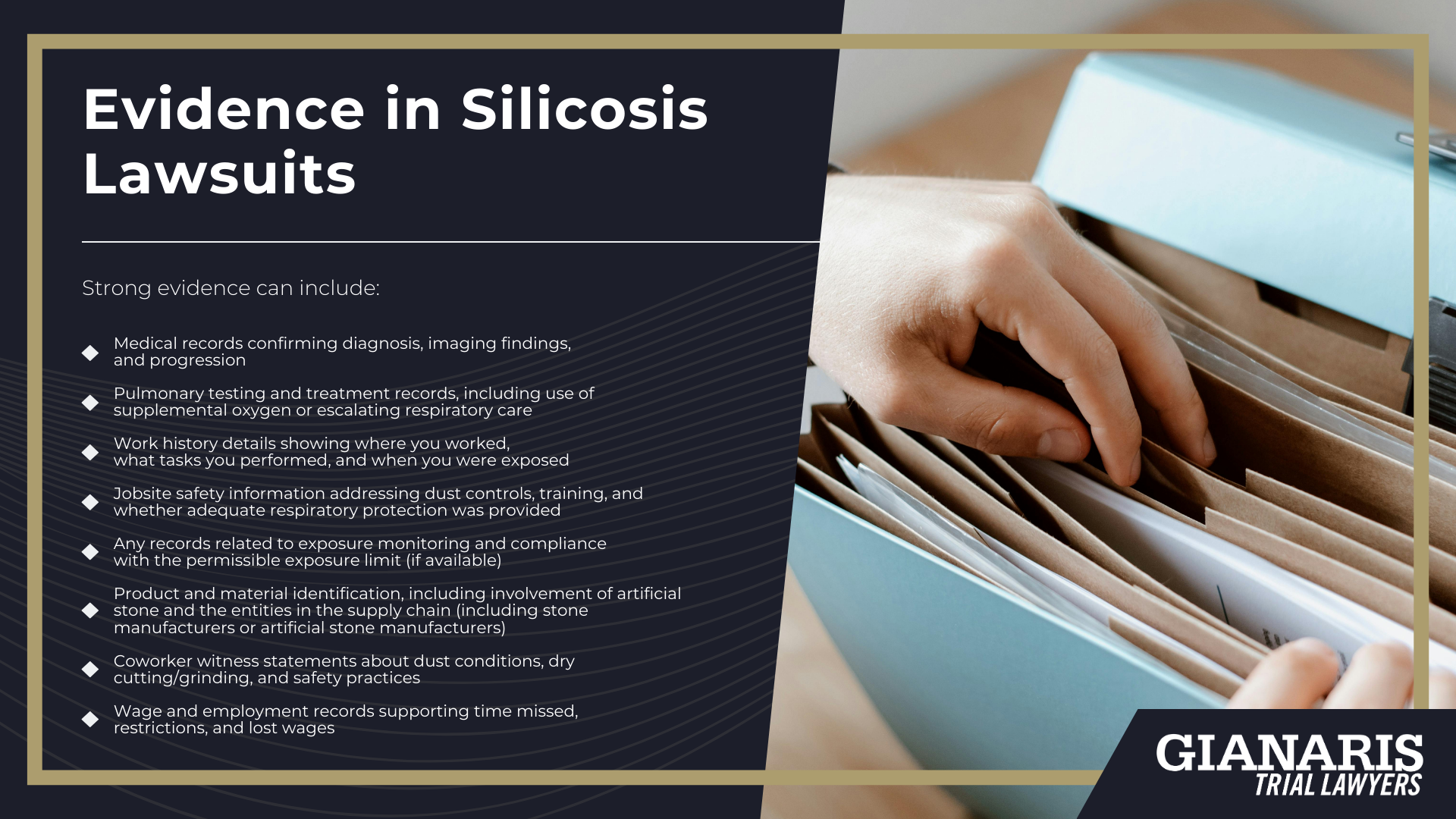
At the same time, preserve your exposure history: write down job sites, employers, job duties, and the materials you worked with—especially tasks that created heavy dust.
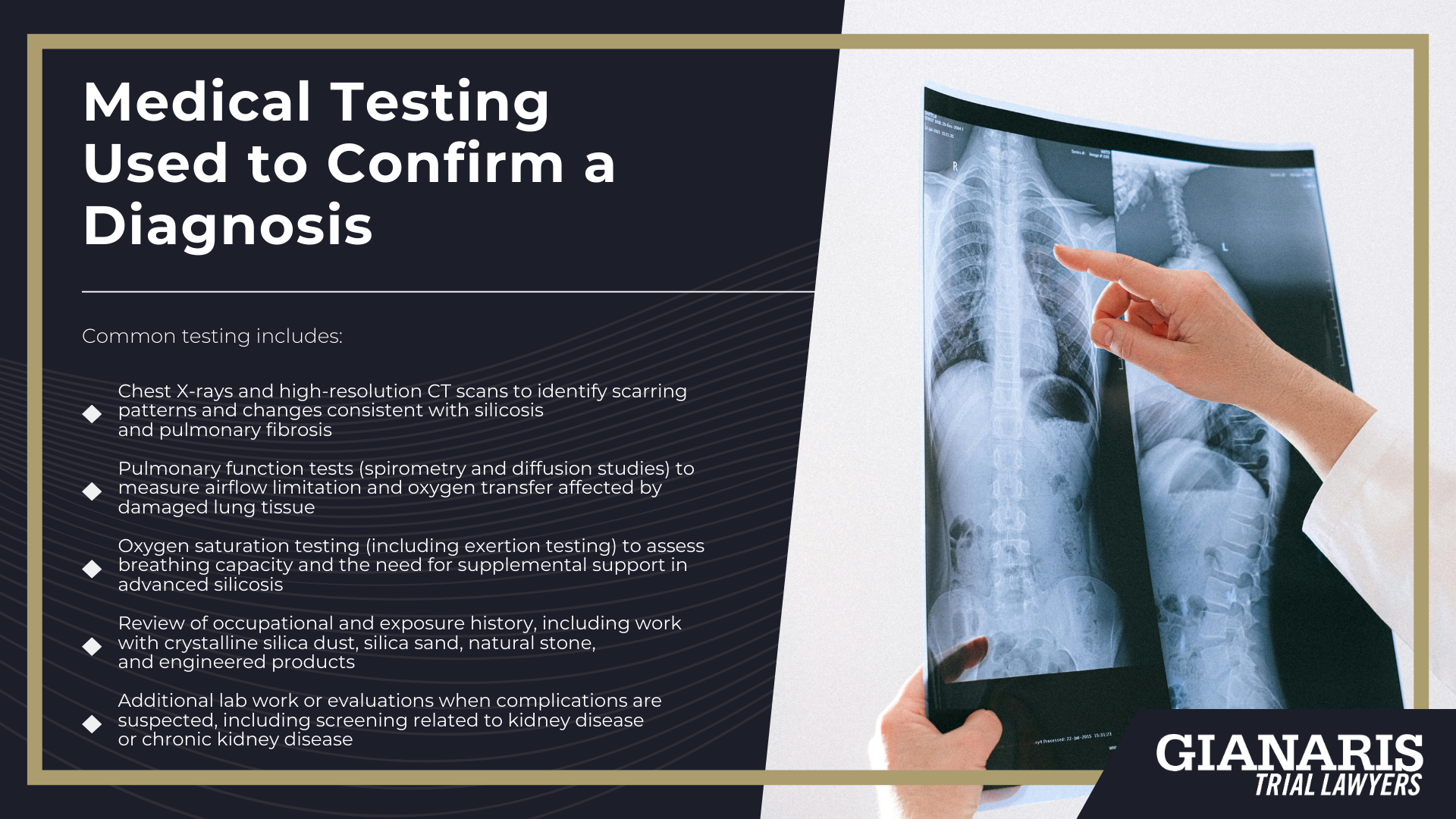
Keep copies of imaging, pulmonary function tests, diagnosis notes, and treatment records, because they help document how the disease developed and progressed.
Avoid giving detailed statements to employers, insurers, or product representatives before you understand your rights and what evidence matters.
A silicosis lawyer can help you understand whether you can file a silicosis lawsuit, what deadlines may apply, and what documentation should be gathered right away.
Early legal guidance can also help position the case for a fair silicosis lawsuit settlement by building the record before evidence disappears.
Who Is Most at Risk for Silicosis?
Silicosis risk is highest in jobs where workers repeatedly inhale dust from materials that contain crystalline silica, particularly when controls are missing or inconsistent.
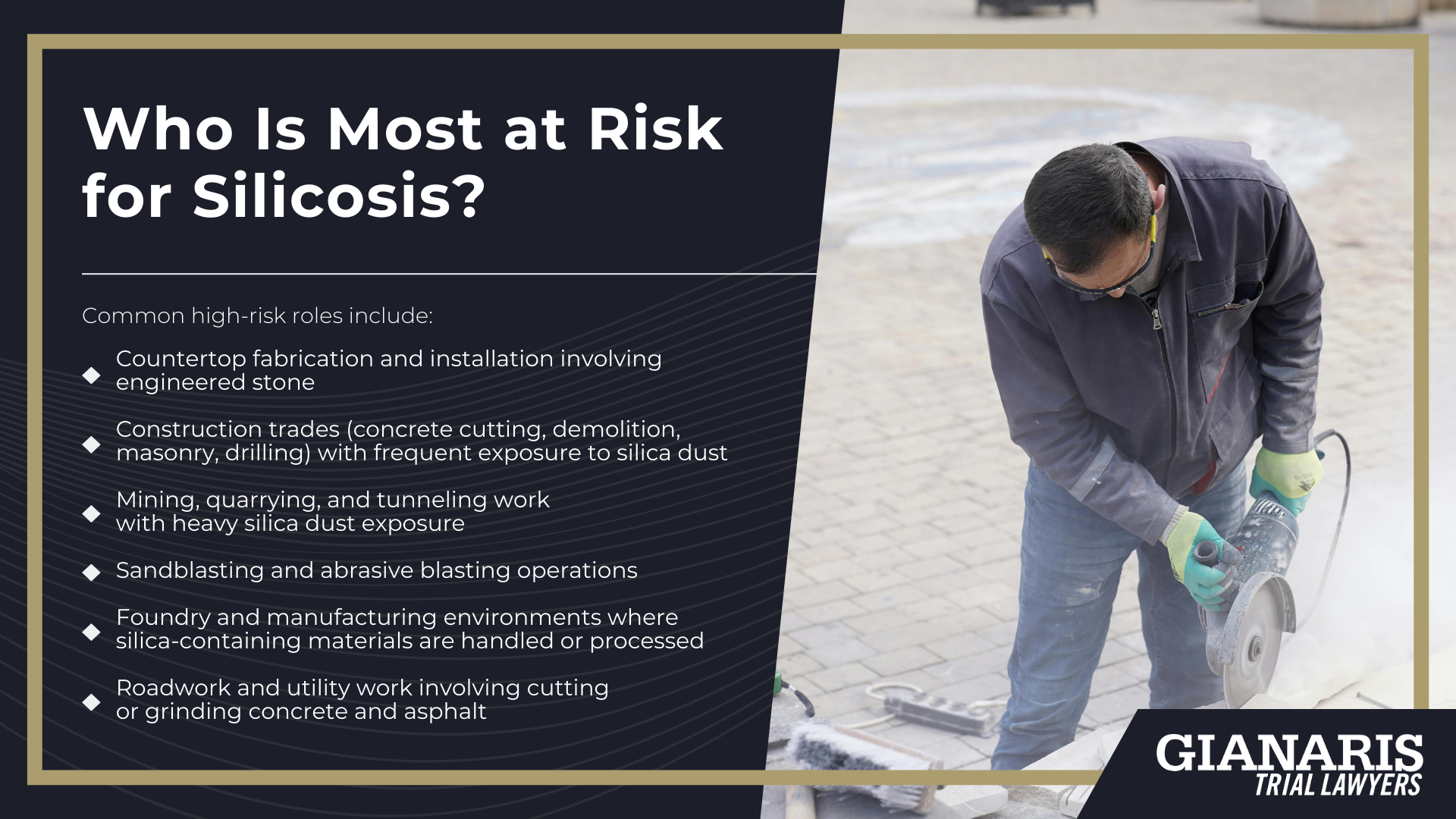
Common high-risk roles include:
- Countertop fabrication and installation involving engineered stone
- Construction trades (concrete cutting, demolition, masonry, drilling) with frequent exposure to silica dust
- Mining, quarrying, and tunneling work with heavy silica dust exposure
- Sandblasting and abrasive blasting operations
- Foundry and manufacturing environments where silica-containing materials are handled or processed
- Roadwork and utility work involving cutting or grinding concrete and asphalt