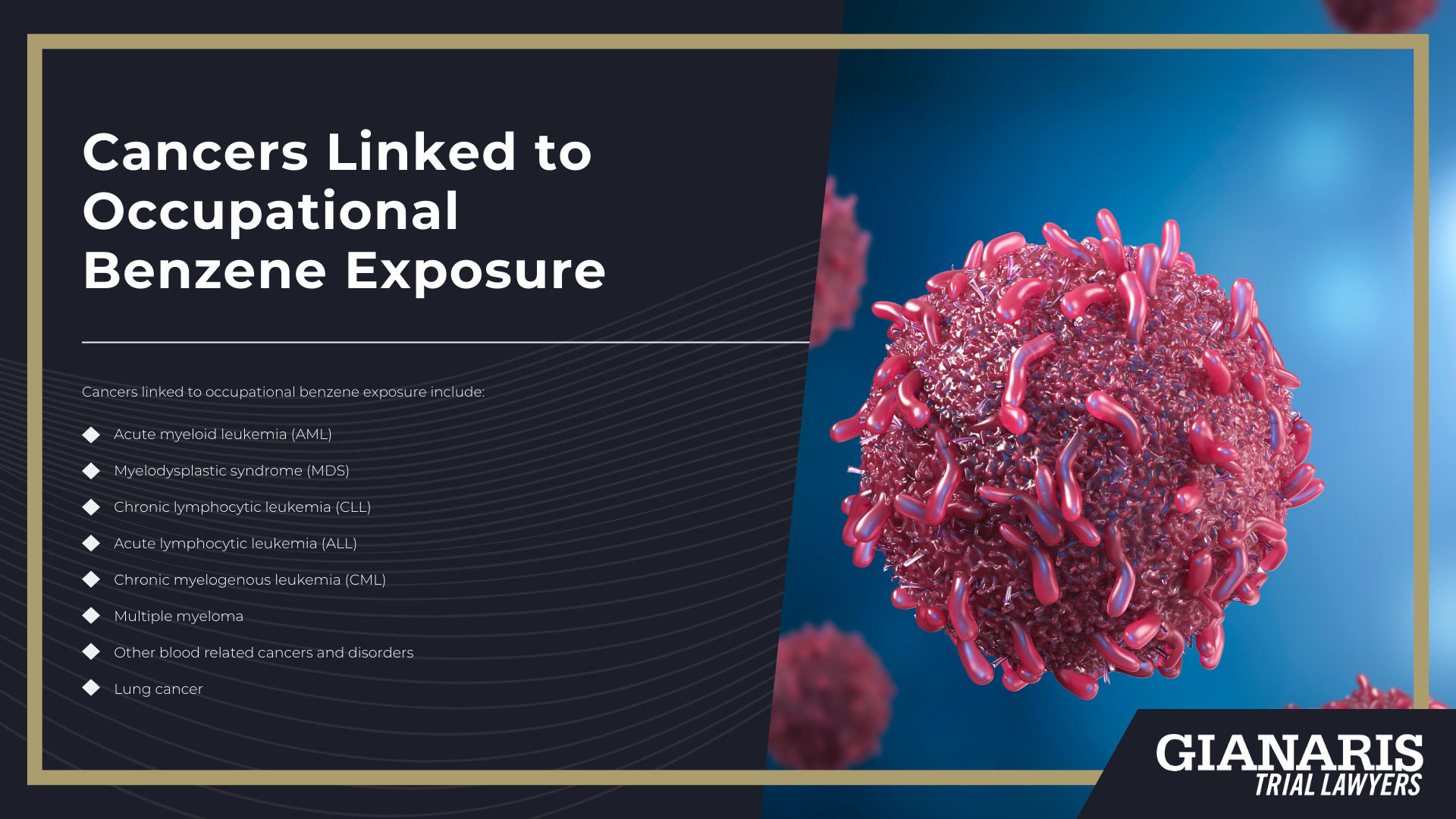
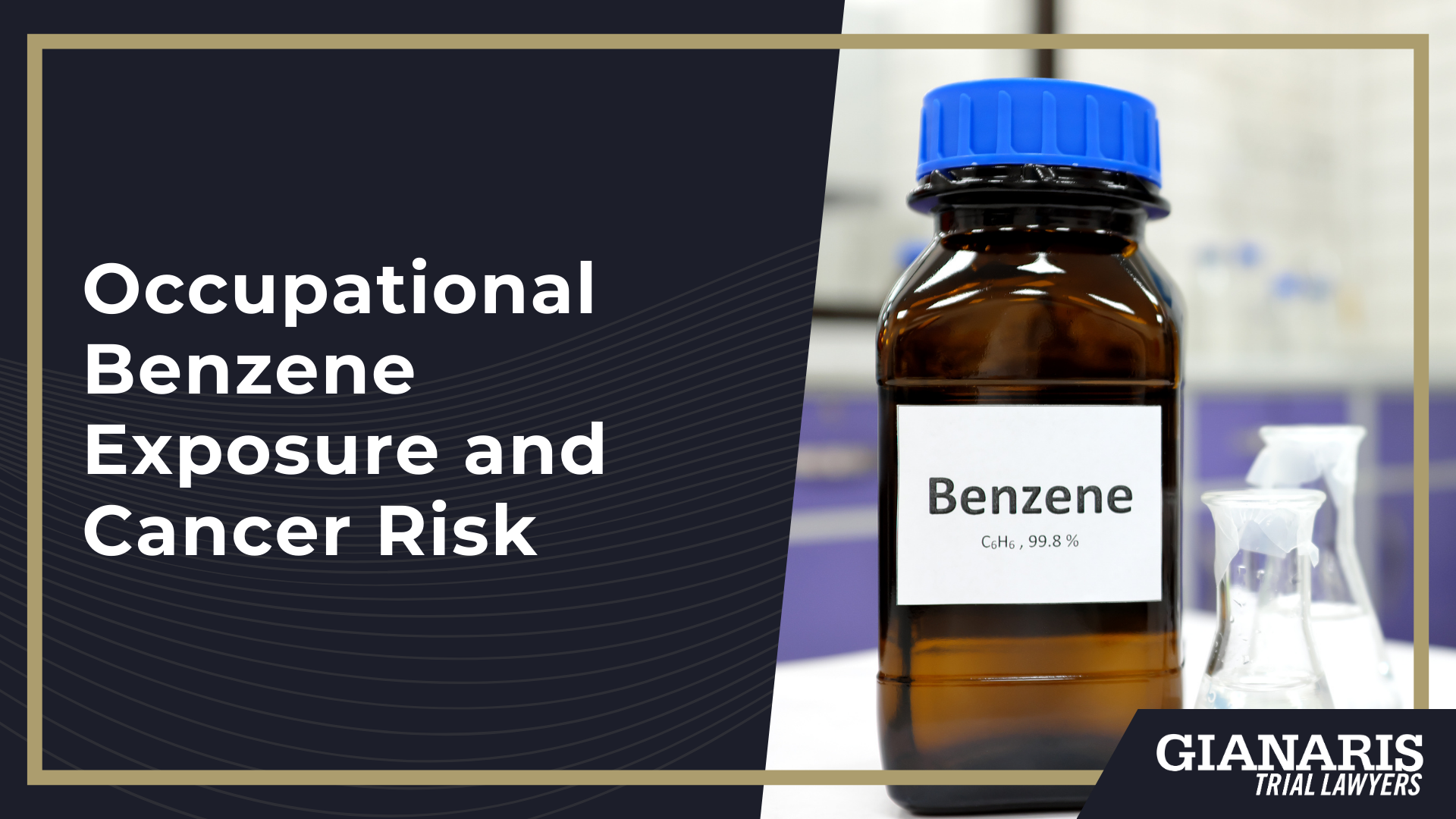
The Environmental Protection Agency recognizes benzene as a known human carcinogen and notes increased leukemia rates in people with occupational exposure.
The International Agency for Research on Cancer, part of the World Health Organization, classifies benzene as carcinogenic to humans based on human epidemiology, animal evidence, and mechanistic data.
The National Toxicology Program also lists benzene as a known human carcinogen, reinforcing that the cancer risk is established across major health authorities.
Research has consistently tied occupational or environmental exposure to elevated risks of leukemia, with classic cohort work in benzene-exposed manufacturing populations, including the Pliofilm worker studies, reporting increased myeloid leukemia risk patterns.
Large-scale research on benzene-exposed workers in China conducted through the National Cancer Institute has similarly documented links between benzene exposure, acute myeloid leukemia, and related bone marrow diseases.
Systematic reviews pooling multiple studies also find a stronger association between workplace benzene exposure and leukemia, particularly acute myeloid leukemia, than would be expected by chance.
The Centers for Disease Control and allied public health resources also recognize that benzene exposure can occur across settings, with cigarette smoke remaining a major non-occupational source in the general population, which often becomes a factor in causation disputes.
Despite federal and state regulations that set limits and require controls in many workplaces, long-term exposure still occurs in some jobs where benzene-containing materials are handled and engineering controls or protective practices fall short.
Industries and Jobs with High Benzene Exposure Risk
Industries with the highest benzene exposure risk tend to be those that produce, transport, or routinely use fuels, solvents, and other toxic chemicals.
Many exposures occur during everyday tasks such as degreasing parts, cleaning equipment, sampling products, loading and unloading materials, or working around leaking lines and storage tanks.
Risk increases in enclosed or poorly ventilated areas where vapors accumulate and where protective equipment use is inconsistent.
Job-related exposure can be compounded by non-occupational sources, including secondhand smoke, which may become relevant when evaluating overall benzene contact over time.
Identifying the industry and the specific work tasks is often the first step in understanding how exposure likely occurred.
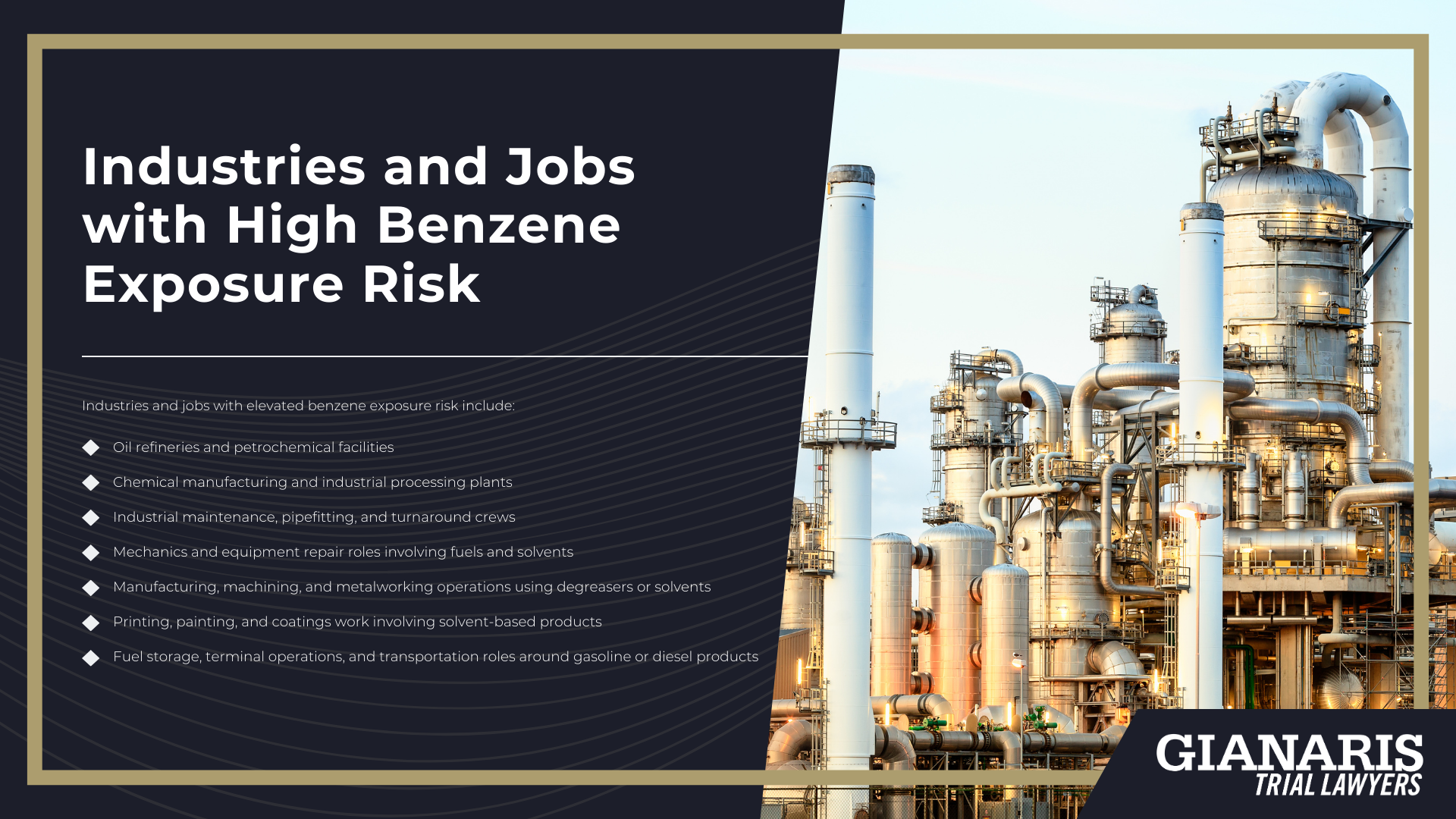
Industries and jobs with elevated benzene exposure risk include:
- Oil refineries and petrochemical facilities
- Chemical manufacturing and industrial processing plants
- Industrial maintenance, pipefitting, and turnaround crews
- Mechanics and equipment repair roles involving fuels and solvents
- Manufacturing, machining, and metalworking operations using degreasers or solvents
- Printing, painting, and coatings work involving solvent-based products
- Fuel storage, terminal operations, and transportation roles around gasoline or diesel products
How Workers are Exposed to Benzene On the Job
Workers are most often exposed to benzene through inhalation exposure when vapors are released into contaminated air during routine industrial tasks.
Prolonged exposure to benzene can occur in settings where dangerous chemicals are handled daily, especially when ventilation is limited or protective measures are inconsistent.
Skin contact is another common route, particularly when workers handle fuels, solvents, or materials such as benzene containing rubber solvent without adequate protective equipment.
Environmental contamination can also contribute to workplace exposure when benzene migrates from storage tanks, pipelines, or waste areas into surrounding air or soil.
Jobs involving fuel handling at refineries, terminals, or gas stations may present repeated exposure opportunities over time.
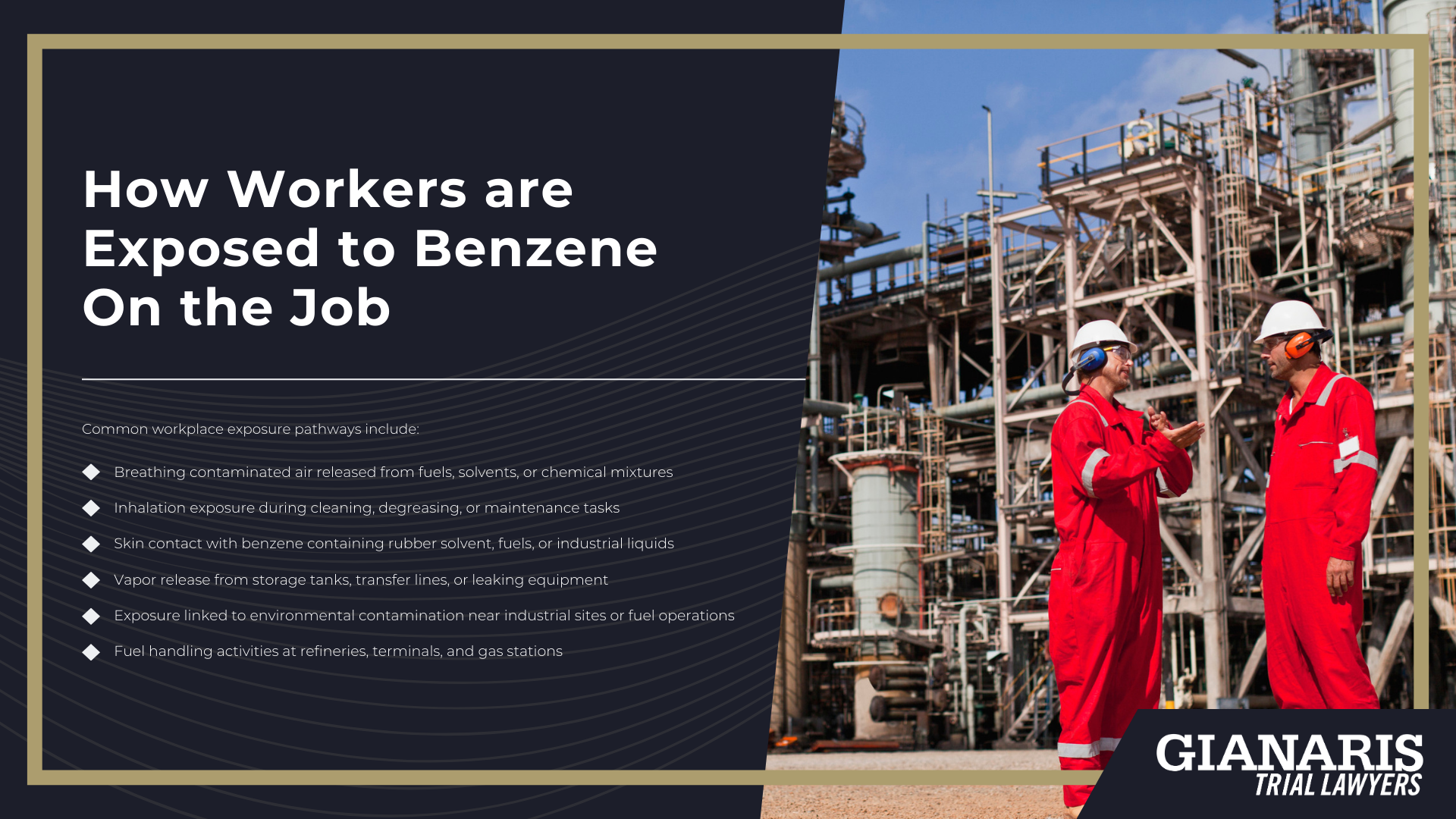
Common workplace exposure pathways include:
- Breathing contaminated air released from fuels, solvents, or chemical mixtures
- Inhalation exposure during cleaning, degreasing, or maintenance tasks
- Skin contact with benzene containing rubber solvent, fuels, or industrial liquids
- Vapor release from storage tanks, transfer lines, or leaking equipment
- Exposure linked to environmental contamination near industrial sites or fuel operations
- Fuel handling activities at refineries, terminals, and gas stations
Workplace Benzene Regulations
In the United States, benzene is treated as a known human carcinogen, and workplace rules are designed to reduce the risk benzene exposure poses to workers who handle fuels, solvents, and other benzene-containing materials.
Under the Occupational Safety and Health Administration benzene standard (29 CFR 1910.1028), the permissible exposure limit is 1 ppm as an 8-hour time-weighted average, with a 5 ppm short-term exposure limit averaged over 15 minutes.
OSHA also requires employers to establish regulated areas when exposures exceed or can reasonably be expected to exceed these limits, and to restrict access to authorized workers.
The standard includes requirements for exposure monitoring and related protections, which become central when assessing whether a job site used adequate safety measures to control benzene vapors.
Public health guidance from CDC/NIOSH reinforces that benzene is a carcinogen and highlights more protective respiratory practices at lower concentrations under its carcinogen policy, which can be relevant when comparing workplace controls to best practices.
In addition to federal rules, some states maintain their own benzene standards and enforcement frameworks, which can affect what safety requirements applied at a specific workplace.
U.S. workplace benzene regulation components include:
- PEL and STEL limits: 1 ppm (8-hour TWA) and 5 ppm (15-minute STEL)
- Regulated areas: required where exposures exceed or may exceed OSHA limits
- Exposure monitoring: air sampling obligations tied to demonstrating compliance
- Medical surveillance guidelines: OSHA provides medical surveillance guidance for benzene-exposed workers
- Respiratory protection expectations: CDC/NIOSH identifies more protective respirator approaches under its carcinogen policy
- State-level rules: some states, such as California, maintain their own benzene standards alongside federal requirements