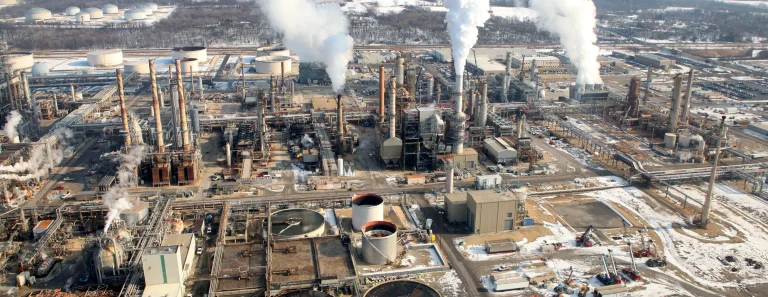
A claim may be appropriate if you were diagnosed with a qualifying condition after substantial exposure associated with the Lemont Refinery — as an injured worker at the facility or as a resident of a nearby community. Potential claimants may include:
- Current and former employees of the Lemont Refinery
- Contractors and construction workers who performed work at the facility
- Residents of Romeoville and surrounding communities diagnosed with cancers or blood disorders associated with benzene exposure
- Parents of children diagnosed with leukemia or other rare blood illnesses
- Surviving family members of individuals who died from such conditions
To recover, the injured party must prove that another party was at fault or legally responsible for the injury. In Illinois, the principle of comparative negligence can also apply: a plaintiff’s damages award may be reduced by their own percentage of fault in the incident that caused the harm, where applicable. Our firm evaluates each potential matter on its individual facts to determine whether a viable claim exists.
Gathering Evidence for a Toxic Exposure Claim
Toxic-exposure claims generally require evidence connecting the diagnosis to documented exposure. Our firm assists clients in gathering and organizing materials that may support a claim:
- Medical records establishing the diagnosis and treatment period
- Employment records from the Lemont Refinery or related contractors and employers
- Residential history confirming location near the refinery
- Environmental data, including publicly available EPA fenceline monitoring records
- Illinois Department of Public Health cancer-incidence data
- Expert medical opinion linking exposure to diagnosis
- EPA enforcement records and consent decrees relating to the facility
- Witness statements from coworkers, neighbors, or medical providers
- Technical documentation regarding engineering controls, safety procedures, and training at the facility
- Property records, historical maps, and construction records confirming proximity
Potential Damages in a Lemont Refinery Claim
In a lawsuit like this, “damages” refers to the compensation a court or settlement may award to a plaintiff for harm suffered. Damages in a toxic-exposure case generally fall into three categories.
Economic damages represent the actual, out-of-pocket expenses incurred by the injured party. These can include past and future medical bills, costs of ongoing treatment and medication, lost wages, and the replacement of reduced earning capacity. Economic damages are typically supported by documentary evidence such as medical billing records, employment records, and expert calculations of future losses.
Noneconomic damages compensate for nonmonetary losses that do not appear on a receipt or pay stub but are nonetheless real. These can include pain and suffering, emotional distress, mental anguish, and loss of enjoyment of life. In wrongful-death cases, surviving family members may also recover for loss of companionship and support.
Punitive damages are different in form and purpose. They are not intended to compensate the victim but rather to punish a defendant for particularly egregious behavior and to deter similar conduct in the future. Punitive damages are not awarded in every case; their availability is limited by Illinois law and the specific facts of the claim.
Other recoverable costs in appropriate cases can include funeral and burial expenses, property damage and diminished property value associated with contamination, and pre-judgment interest.
Workers’ Compensation Benefits vs. a Third-Party Lawsuit
When a worker is injured on the job, Illinois workers’ compensation law generally provides benefits regardless of fault — including medical costs and a portion of lost wages. However, those benefits are limited, and they typically prevent the employee from suing their own employer directly.
A separate third-party lawsuit may still be available against parties other than the employer — for example, chemical suppliers, equipment manufacturers, contractors, or property owners. These third-party claims can sometimes provide additional support for medical costs, lost income, and pain and suffering beyond what workers’ compensation benefits alone allow.
Our firm can help you determine which path — or which combination of paths — applies to your situation.
Gianaris Trial Lawyers: Reviewing Potential Lemont Refinery Claims
Gianaris Trial Lawyers is currently reviewing potential claims related to the Lemont Refinery. Our team works with medical experts, engineering consultants, and environmental scientists to evaluate whether a diagnosis may be associated with documented exposure.
If you believe your illness — or a loved one’s — may be connected to the Lemont Refinery, contact our office for a free and confidential consultation to learn whether you may be eligible for a legal claim.