
No fees unless we win.
Get a free consultation
128 Reviews
5.0
★★★★★

Railroad COPD Lawyer

How is Chronic Obstructive Pulmonary Disease (COPD) Linked to the Railroad Industry?

A Railroad COPD Lawyer from Gianaris Trial Lawyers investigates cases in which railroad workers were diagnosed with COPD after long term exposure to toxic chemicals during railroad work.

Chronic obstructive pulmonary disease (COPD) is a progressive lung condition that restricts airflow and damages the airways, leading to persistent shortness of breath, chronic cough, reduced oxygen exchange, and a gradual loss of physical stamina that can interfere with both work and everyday activities.

Gianaris Trial Lawyers is reviewing claims from individuals who believe their illness was caused by exposure to toxic chemicals and chemical fumes while working in the railroad industry.

Railroad COPD Lawyer

Our Lawyers Investigate Cases Involving Severe COPD and Work on the Railroad

COPD is a progressive lung disease that can limit airflow and make ordinary activity feel exhausting, especially as breathing problems worsen over time.

It often includes both emphysema and chronic bronchitis, conditions that inflame the airways and reduce the lungs’ ability to move oxygen efficiently.

While cigarette smoking is a major cause, COPD can also develop from occupational exposure to lung irritants (including diesel exhaust, dust, and chemical fumes) encountered during years of railroad work.

Many railroad jobs involve repeated contact with engine emissions and industrial particulates that resemble concentrated air pollution, particularly in yards, cabs, shops, and other enclosed areas.

Additional risk factors can include prolonged exposure to dust, poor ventilation, and secondhand smoke in shared work environments. For some workers, the medical record shows significant lung damage even without smoking history, raising serious questions about the role of workplace exposure.

The result is often persistent cough, wheezing, shortness of breath, and reduced stamina that interferes with work and daily life.

This page explains how COPD can be linked to railroad work, what evidence supports that link, and how a FELA claim may apply when preventable exposures played a role.

If you or a loved one were exposed to toxic substances and chemical fumes while working on the railroad, you may be eligible to file a claim and seek compensation.

Reach out to the railroad chemical exposure lawyers at Gianaris Trial Lawyers today for a free consultation.

You can also use the chat feature on this page to get in touch with our legal team.

What is Chronic Obstructive Pulmonary Disease (COPD)?

Chronic obstructive pulmonary disease (COPD) is a broad term for lung and airway diseases that limit airflow because of damage in the airways and/or the lung’s air sacs (alveoli).

Cleveland Clinic describes COPD as involving airway inflammation and scarring, damage to the air sacs, or both, most often in the forms of chronic bronchitis and emphysema.

The Centers for Disease Control and Prevention (a U.S. Department of Health and Human Services agency) reports that COPD remains common in the United States; in 2023, the age-adjusted prevalence of diagnosed COPD in adults was 3.8% (NHIS data).

COPD is strongly associated with long-term inhalation of lung irritants, and the National Heart, Lung, and Blood Institute (NIH) lists chronic exposure to air pollution, chemical fumes, and dust from the environment or workplace among factors that can raise the likelihood of developing COPD.

COPD also places people at higher risk for complications from respiratory infection, which is why preventive care is routinely part of COPD management.
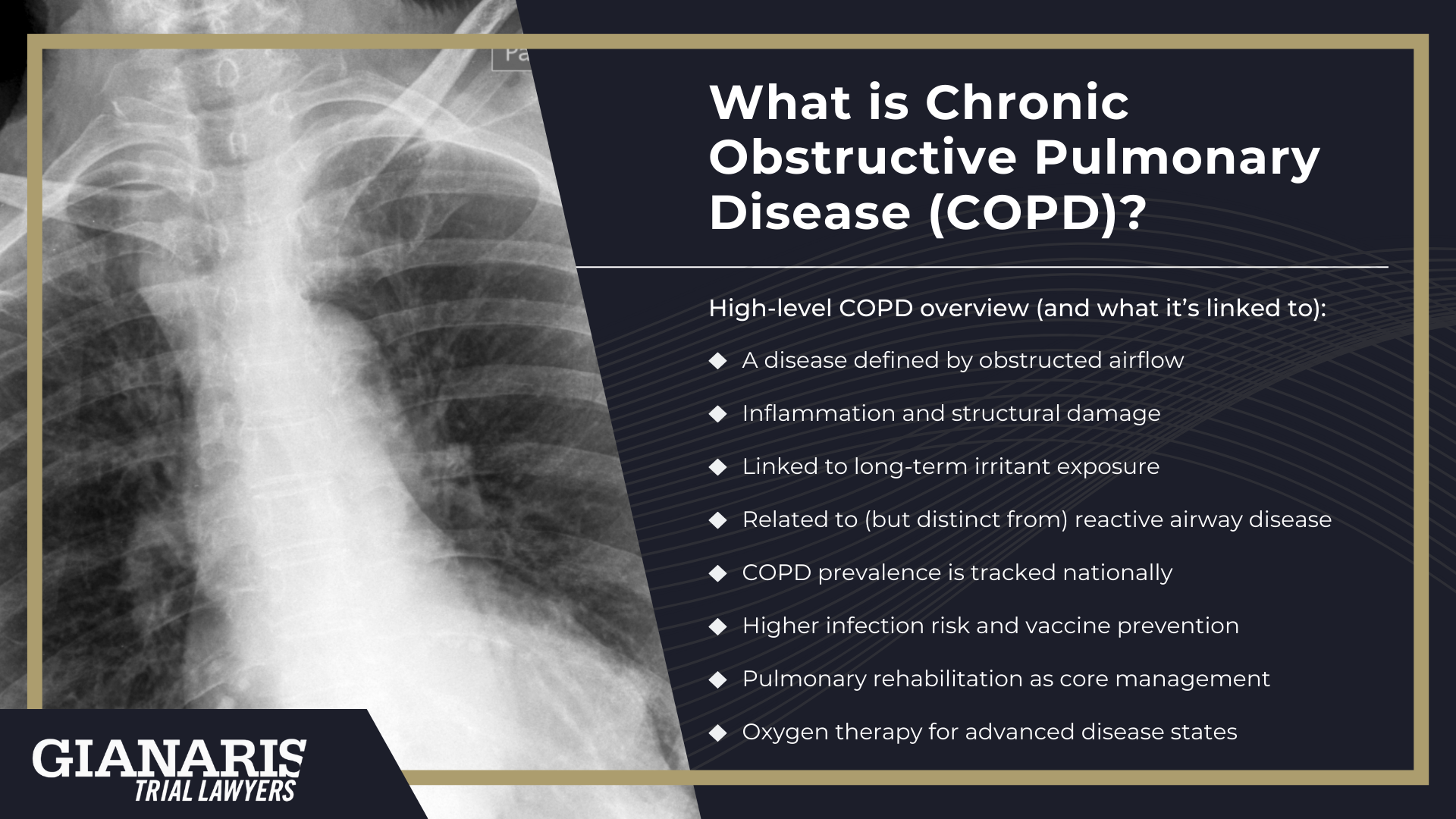
High-level COPD overview (and what it’s linked to):

  • A disease defined by obstructed airflow: COPD is characterized by persistent airflow limitation driven by airway and/or alveolar abnormalities.
  • Inflammation and structural damage: COPD is tied to chronic airway inflammation and scarring and/or destruction of the air sacs (alveoli).
  • Linked to long-term irritant exposure: Beyond smoking, NHLBI identifies long-term exposure to air pollution, workplace chemical fumes, and dust as key non-smoking risk contributors for developing COPD.
  • Related to (but distinct from) reactive airway disease: COPD is a chronic obstructive condition; reactive airway disease is sometimes used as a non-specific label for asthma-like airway reactivity, and the clinical workup focuses on separating asthma/reactive patterns from fixed obstruction seen in COPD.
  • COPD prevalence is tracked nationally: CDC surveillance commonly measures COPD based on whether adults have been told they have COPD, emphysema, or chronic bronchitis, reflecting how the condition is diagnosed and reported.
  • Higher infection risk and vaccine prevention: MedlinePlus notes that people with COPD are at higher risk for serious problems from infections like influenza and pneumococcal pneumonia, and vaccination is a standard preventive recommendation in COPD care.
  • Pulmonary rehabilitation as core management: Pulmonary rehabilitation is a medically supervised program used for chronic lung diseases like COPD, focused on improving function and teaching disease-management strategies.
  • Oxygen therapy for advanced disease states: Oxygen therapy may be prescribed when COPD leads to low blood oxygen levels, as part of supportive treatment planning.

COPD Symptoms and Daily Impact

COPD affects how air moves in and out of the lungs, leading to poor airflow and reduced lung function as the disease takes hold.

The condition damages the tiny air sacs responsible for oxygen exchange and narrows inflamed airways, which explains why difficulty breathing becomes a defining feature over time.

For many people, symptoms begin gradually and may be mistaken for aging or reduced fitness, especially when early changes feel manageable.

As airflow limitation worsens, daily activities require more effort and recovery time, even without exertion.

In advanced cases, long-term strain on the heart and lungs can contribute to complications such as pulmonary hypertension, significantly affecting overall health.
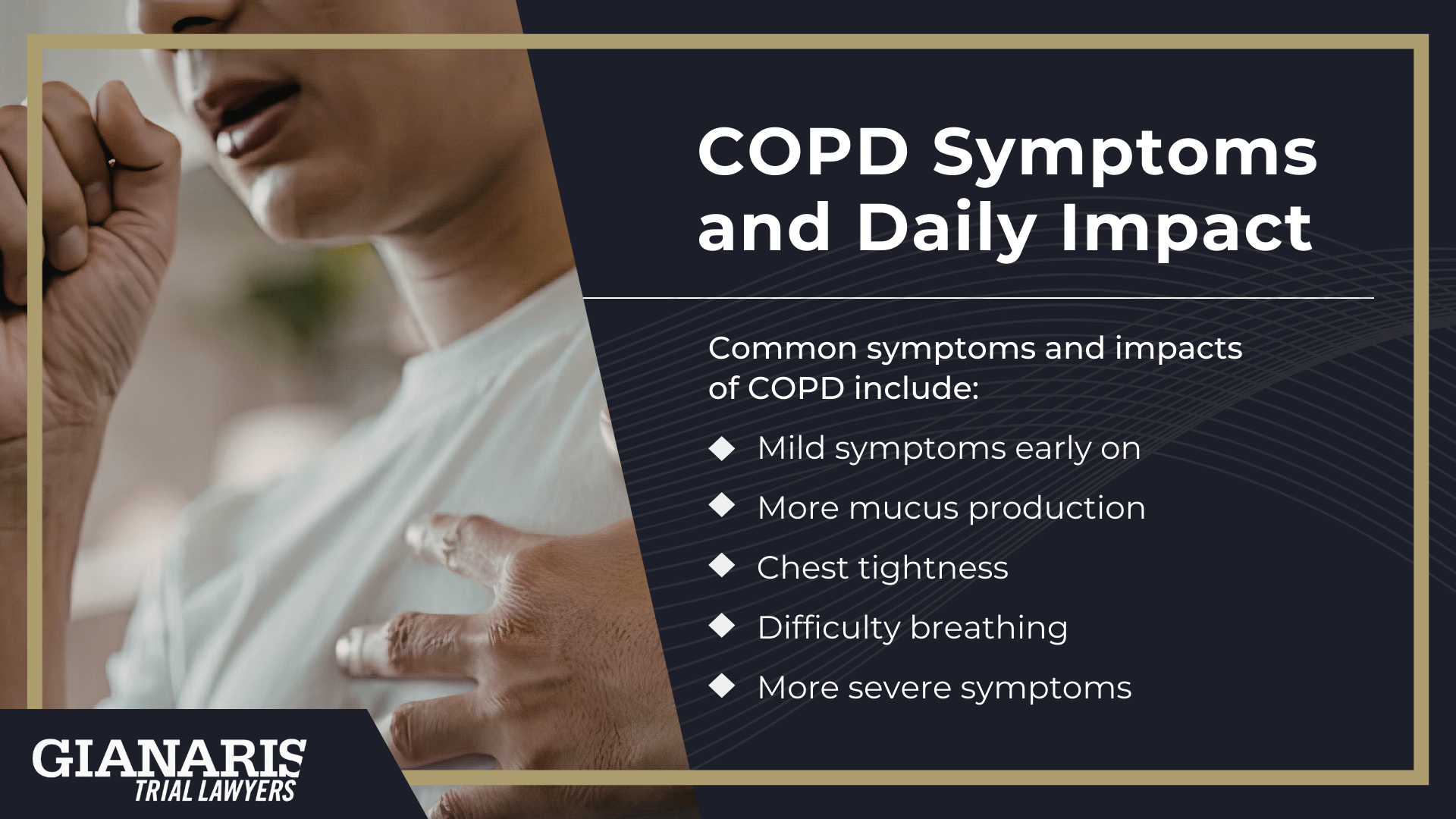
Common symptoms and impacts of COPD include:

  • Mild symptoms early on, such as shortness of breath with exertion or fatigue during routine tasks
  • More mucus production that contributes to chronic cough and airway blockage
  • Chest tightness caused by airway narrowing and persistent inflammation
  • Difficulty breathing during activity or at rest as airflow becomes increasingly restricted
  • More severe symptoms over time, including reduced stamina, frequent respiratory infections, and limitations on work and daily independence

How COPD Progresses Over Time

COPD is a chronic condition that typically becomes progressively worse as lung damage accumulates and airflow limitation increases.

In the early stages, symptoms may be mild, which can delay diagnosis and allow inflammation and structural changes in the lungs to continue unchecked.

Over time, narrowing airways and damaged air sacs make it harder to move oxygen into the bloodstream, placing added strain on the heart and increasing the risk of complications such as heart disease.

As oxygen levels fall, some people eventually require supplemental oxygen to maintain basic organ function and tolerate daily activity.

Although smoking is often cited as the biggest risk factor, ongoing occupational exposures and environmental irritants can continue to drive disease progression even after smoking stops or in individuals who never smoked.

Early treatment can slow decline by improving airflow, helping reduce inflammation, and limiting the frequency of flare-ups that accelerate lung damage.

Without effective management, repeated exacerbations may lead to rapid loss of lung function and increased hospitalizations.

Understanding how COPD progresses underscores why early diagnosis and exposure control matter for long-term health and quality of life.

How Railroad Work Can Contribute to COPD

COPD is often described as a smoking-related disease, but railroad work can create a second pathway to chronic airway injury through long-term exposure to combustion byproducts, dust, and industrial fumes.

Diesel-powered operations generate concentrated air pollutants in the same spaces where crews spend entire shifts, including locomotive cabs, yards, and repair shops.

Diesel exhaust exposure has been repeatedly associated with chronic respiratory illnesses in railroad workers, including COPD and chronic bronchitis, not just lung cancer.

Track and maintenance operations add another major inhalation hazard: silica-containing dust generated during ballast handling and cutting work, which has been linked to chronic lung disease and COPD in railroad settings.

Railroad exposures also overlap in a way that accelerates respiratory decline—diesel exhaust during operations, welding and cutting fumes in shops, and chemical solvents and degreasers used for cleaning parts and equipment.

Over years, these conditions can drive persistent airway inflammation, repeated exacerbations, and a measurable loss of lung function.

The connection is rarely one “big exposure event.” It is usually a long pattern of inhalation hazards embedded in routine railroad work.

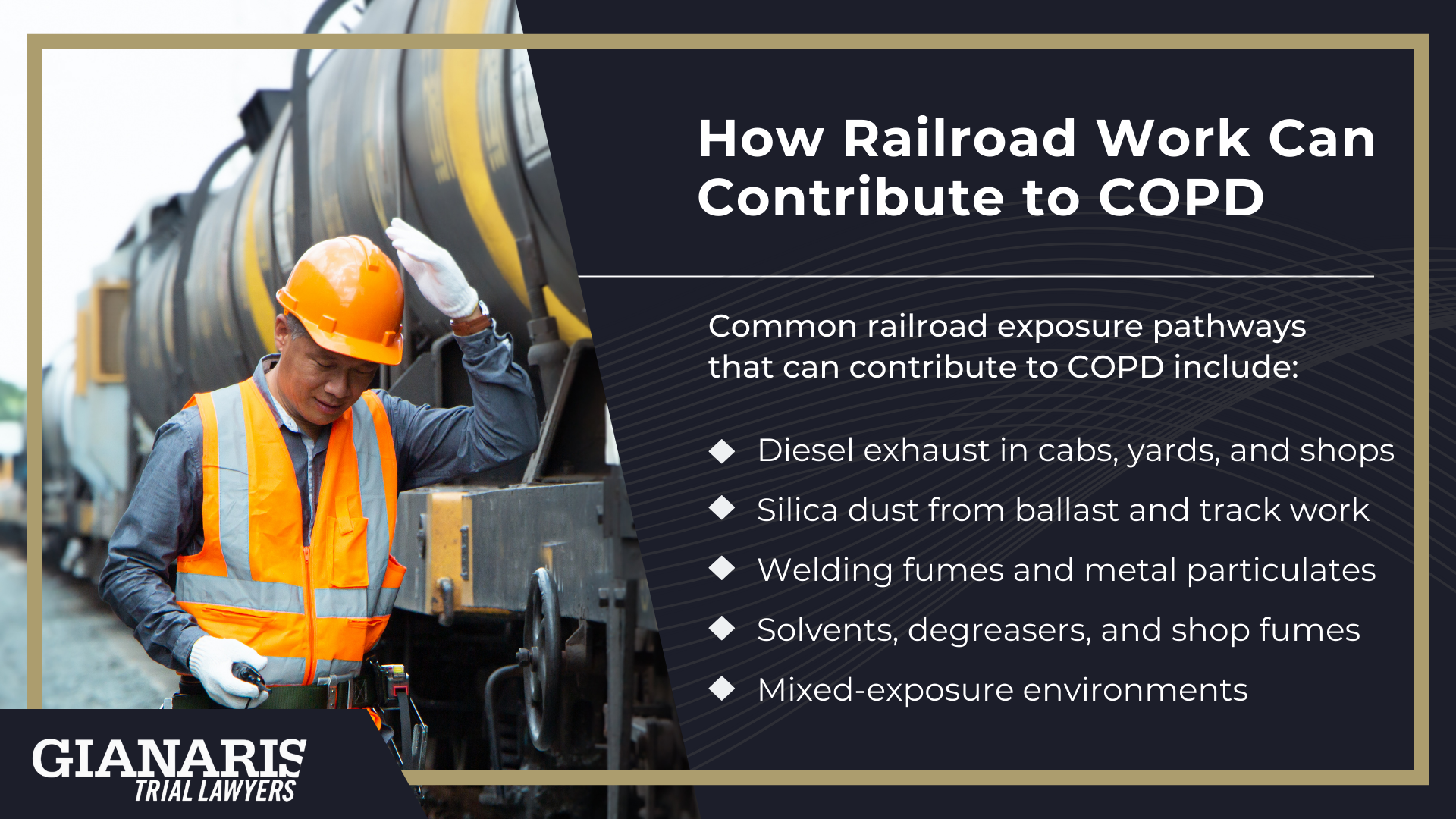
Common railroad exposure pathways that can contribute to COPD include:

  • Diesel exhaust in cabs, yards, and shops — long hours around running or idling locomotives can create repeated inhalation of diesel particulate and gases linked to COPD and chronic bronchitis.
  • Silica dust from ballast and track work — ballast handling and track maintenance can generate respirable dust linked to silicosis and chronic obstructive lung disease, including COPD.
  • Welding fumes and metal particulates — repair work can generate airborne particulates that irritate the lungs and contribute to long-term respiratory damage in heavily exposed workers.
  • Solvents, degreasers, and shop fumes — chemical vapors in enclosed maintenance environments can function as ongoing respiratory irritants that compound diesel and dust exposures.
  • Mixed-exposure environments — many railroad roles involve multiple overlapping inhalation hazards in a single shift, which matters when evaluating occupational contribution and cumulative lung injury.

In COPD cases tied to railroad work, the most important evidence is often the exposure pattern over time: job role, work locations, ventilation conditions, and how often diesel equipment was operating nearby.

Silica and dust histories can be just as important for maintenance-of-way workers as diesel histories are for engineers and conductors.

The goal is not to claim that railroad work is the only cause of COPD in every case, but to evaluate whether occupational exposure materially contributed to the disease and its severity.

Many workers also experienced secondhand smoke and other non-occupational irritants, yet the railroad exposure record can still be central where daily work placed them in high-particulate environments for years.

When COPD appears after a career spent around diesel exhaust, ballast dust, and shop fumes, the work history often supplies the missing context that standard medical charts leave out.

Diesel Exhaust Exposure and COPD in Railroad Jobs

Diesel exhaust is a central inhalation hazard in many railroad jobs because locomotive engines and yard equipment release emissions directly into the work environment, often for hours at a time.

Railroad-specific epidemiology supports the COPD link: a retrospective cohort study of U.S. railroad workers found that COPD mortality increased with years worked in diesel-exposed jobs, using methods designed to account for smoking history and the “healthy worker” effect.

A separate railroad worker case–control study likewise reported higher COPD mortality associated with diesel-exposed work and observed stronger associations with increasing years in exposed jobs, again controlling for smoking.

These findings fit what clinicians recognize about diesel exhaust as a respiratory hazard: chronic inhalation of diesel exhaust and other workplace fumes can contribute to COPD or worsen existing COPD, including in non-smokers.

Mechanistically, diesel particulate matter is small enough to reach deep into the lungs, where it can drive persistent airway irritation and inflammation over time.

That matters in railroad settings because exposure is often repetitive and cumulative: cab air during long runs, idling in yards, shop work near running engines, and work in enclosed spaces where exhaust can concentrate.

The result is not usually a single dramatic exposure but a long pattern of breathing diesel exhaust that may accelerate loss of lung function and raise the likelihood of chronic obstructive disease.

Taken together, the railroad cohort data and broader occupational lung disease guidance support diesel exhaust as a plausible and documented contributor to COPD in railroad workers with substantial diesel-era work histories.

Can You File a FELA Claim for Railroad COPD?

Railroad workers can file a FELA claim for COPD when the disease is connected, at least in part, to workplace exposure and preventable hazards.

FELA covers occupational diseases, not only sudden injuries, which is important because COPD often develops after years of inhaling diesel exhaust, dust, and shop fumes.

A successful claim generally requires showing that the railroad’s negligence contributed to the exposure, such as inadequate ventilation, lack of respiratory protection, poor hazard training, or work practices that allowed engines to idle near crews.

COPD cases often involve multiple contributing factors, including smoking history, so the legal question is whether railroad exposure played a meaningful role in causing or worsening the disease.

Time limits matter because occupational disease claims typically follow a “discovery rule,” meaning the clock often starts when a worker knew or reasonably should have known that COPD was related to railroad work.

Evidence usually includes pulmonary testing, treating physician records, and a detailed occupational history that documents where and how exposure occurred.

Coworker statements, job descriptions, and information about shop or yard conditions can also help establish the exposure environment and the railroad’s safety practices.

A strong FELA COPD case ties the medical diagnosis to a clear exposure timeline and explains how reasonable safety measures could have reduced the risk.

Gathering Evidence for a Railroad COPD Claim

A railroad COPD claim depends on showing a clear connection between the medical diagnosis and the worker’s exposure history on the railroad.

The most persuasive evidence usually combines objective medical testing with detailed documentation of where the worker spent time and what they were breathing during those years.

Because COPD can have multiple contributing factors, evidence should also address alternative explanations (especially smoking history) while documenting why occupational exposure materially contributed to the disease.

The goal is to build a timeline that links job duties, exposure conditions, and safety practices to the development or worsening of COPD.

Evidence may include:

  • Pulmonary function tests (spirometry) and related respiratory testing showing obstructive impairment and baseline severity
  • Imaging and diagnostic records (chest X-rays, CT scans, radiology reports) documenting structural lung changes
  • Treating physician notes and specialist evaluations linking COPD to occupational exposure where medically supported
  • Work history records (job titles, craft, seniority rosters, assignments, route histories, shop/yard locations)
  • Exposure narrative and timeline describing diesel exhaust, dust, welding fumes, solvent exposure, and ventilation conditions over the career
  • Records of safety practices (PPE policies, respiratory protection programs, air monitoring, ventilation maintenance, training materials)
  • Coworker statements and supervisor testimony confirming routine exposure conditions, idling practices, enclosed spaces, and visible fume/dust levels
  • Incident reports or industrial hygiene documents involving fumes, dust events, poor ventilation, or equipment issues
  • Employment and wage documentation supporting lost earnings, work restrictions, early retirement, or reduced capacity
  • Smoking and medical history documentation to accurately address confounding factors and clarify occupational contribution

Damages in FELA COPD Cases

Damages” are the categories of harm a railroad worker can seek compensation for in a FELA case, including both financial losses and the human impact of living with a chronic lung disease.

In COPD cases, lawyers assess damages by documenting the full medical course of the illness, the cost of care over time, and how the diagnosis changes the worker’s ability to earn a living and function day to day.

This evaluation often relies on medical records, pulmonary testing, medication needs, projected treatment plans, and testimony from treating physicians or specialists.

Economic losses are typically supported with wage records, employment history, and analysis of how work restrictions or disability affect future earnings.

Non-economic damages are assessed through the severity and duration of symptoms, limitations on daily activity, and the overall disruption COPD causes in a worker’s life.

Common damages in FELA COPD cases include:

  • Medical expenses (doctor visits, hospital care, medications, inhalers, pulmonary rehab, oxygen equipment, and ongoing treatment)
  • Future medical costs for long-term care, monitoring, and progression-related needs
  • Lost wages from missed work during treatment, flare-ups, or reduced hours
  • Loss of earning capacity when COPD limits the ability to return to the same job or continue working
  • Pain and suffering tied to chronic shortness of breath, fatigue, and physical limitation
  • Loss of quality of life when COPD restricts mobility, independence, and normal activities
  • Out-of-pocket costs related to travel for care, home modifications, and supportive equipment
  • Disability-related losses if the condition leads to permanent impairment or forced early retirement

Gianaris Trial Lawyers: Investigating COPD Diagnoses Linked to Railroad Work

A COPD diagnosis can change a worker’s life in ways that are immediate and permanent, especially when shortness of breath, fatigue, and repeated flare-ups start dictating what daily activity is possible.

In railroad cases, the key question often becomes whether years spent around diesel exhaust, ballast dust, shop fumes, and other airborne hazards materially contributed to the lung damage that now limits breathing and stamina.

Answering that question requires more than a diagnosis: it requires a detailed exposure history, a careful review of safety practices, and medical evidence that explains how occupational conditions contributed to chronic obstructive disease.

Gianaris Trial Lawyers investigates COPD cases tied to railroad work by developing a clear exposure timeline and examining whether reasonable measures could have reduced harmful exposures.

That includes evaluating work locations, job duties, ventilation conditions, and the real-world availability and enforcement of respiratory protection.

If you or a family member has been diagnosed with COPD after a railroad career, an early review can help preserve records, document exposure conditions, and determine whether a FELA claim is possible.

Contact Gianaris Trial Lawyers to discuss your COPD diagnosis and learn whether railroad exposure may support a FELA claim.

Frequently Asked Questions

  • What chemical exposures on the railroad may be linked to COPD?

    Several chemical and particulate exposures common in railroad work have been associated with chronic airway irritation and long-term obstructive lung disease.

    These exposures typically occur through inhalation over many years rather than a single incident, which is why COPD often develops long after the exposure period ends.

    Railroad jobs frequently involve overlapping inhalation hazards, making cumulative exposure especially important when evaluating occupational contribution.

    The substances below are commonly discussed in connection with COPD risk in railroad work:

    • Diesel exhaust from locomotives, yard engines, and idling equipment
    • Silica dust generated during ballast handling and track maintenance
    • Welding fumes and metal particulates from cutting, grinding, and fabrication work
    • Solvents and degreasers used in shops and maintenance facilities
    • Dust and airborne particulates from rail yards, repair shops, and enclosed workspaces
  • How do medical professionals diagnose COPD?

    Medical professionals diagnose COPD by combining a patient’s symptoms, medical history, and objective testing that measures how well the lungs move air.

    The cornerstone of diagnosis is a breathing test called spirometry, which evaluates airflow limitation.

    During this test, a patient exhales forcefully into a device that measures forced expiratory volume, showing how much air can be pushed out of the lungs in one second and how restricted the airways are. COPD is diagnosed when airflow obstruction persists even after the use of bronchodilator medication.

    Imaging studies may also be used to show structural changes in the lungs, including damage where the air sacs deflate or lose elasticity.

    A healthcare provider will often review occupational history, smoking exposure, and environmental factors to help determine possible causes.

    Together, these steps allow clinicians to confirm COPD and assess its severity and likely contributors.

  • Can you get COPD even if you never smoke cigarettes?

    Yes.

    With COPD, smoke exposure from cigarettes is a major risk factor, but people can develop COPD even if they never smoke.

    Long-term occupational exposure to diesel exhaust, dust, and chemical fumes can damage the airways and lungs in ways that lead to COPD without any personal smoking history.

    Medical research also shows that environmental air pollution and secondhand smoke can contribute to chronic airway injury over time.

    For people who do smoke, smoking cessation remains critical because continuing to smoke can accelerate lung damage, while those who quit smoking or stop smoking may slow disease progression, but stopping does not eliminate COPD that has already developed from prior exposures.

  • How is COPD treated?

    COPD treatment focuses on improving breathing, limiting flare-ups, and managing chronic respiratory symptoms, rather than curing the disease.

    Treatment plans are tailored to disease severity and may involve medications, therapy, and lifestyle changes aimed at stabilizing lung function.

    Many therapies work by opening the airways, reducing inflammation, or helping patients clear mucus more effectively.

    While treatment cannot prevent COPD once lung damage has occurred, it can slow progression and help treat complications that worsen quality of life. Early and consistent treatment often reduces hospitalizations and improves day-to-day function.

    Long-term care typically involves coordination between primary care providers, pulmonologists, and respiratory therapists.

    Common COPD treatments include:

    • Long acting bronchodilators to relax airway muscles and improve airflow
    • Inhaled corticosteroids or inhaled steroids to reduce airway inflammation and flare-ups
    • Pulmonary rehabilitation programs to improve endurance and breathing efficiency
    • Supplemental oxygen therapy for patients with low blood oxygen levels
    • Vaccinations and preventive care to reduce respiratory infections
    • Management of co-existing conditions and strategies to treat complications such as frequent exacerbations
  • Is COPD a deadly disease?

    COPD can be a serious and potentially life-threatening disease, particularly when it is advanced or poorly controlled.

    It is a progressive condition, meaning lung damage accumulates over time and can eventually interfere with basic bodily functions.

    While COPD does not always lead directly to death, it significantly increases the risk of fatal complications such as respiratory failure, severe infections, and heart disease.

    According to public health data, COPD deaths remain a major cause of mortality in the developing world and even in the United States.

    The risk of death generally rises as the disease becomes more severe and as exacerbations become more frequent.

    Outcomes can also vary depending on when the disease is diagnosed, how well it is managed, and whether harmful exposures continue.

    Many people live for years with COPD, especially when treatment begins early and contributing risk factors are addressed.

    However, when COPD develops at a younger age occur or is driven by long-term occupational exposure, the long-term health impact can be substantial.

Published by:
Share
Picture of Ted Gianaris
Ted Gianaris

With nearly 30 years of legal experience, Attorney Ted Gianaris has secured over $350 million in compensation for Illinois injury victims, car accident victims, and surviving family members of wrongful death victims.

This article has been written and reviewed for legal accuracy and clarity by the team of writers and attorneys at Gianaris Trial Lawyers and is as accurate as possible. This content should not be taken as legal advice from an attorney. If you would like to learn more about our owner and experienced Illinois injury lawyer, Ted Gianaris, you can do so here.

Gianaris Trial Lawyers does everything possible to make sure the information in this article is up to date and accurate. If you need specific legal advice about your case, contact us. This article should not be taken as advice from an attorney.

Additional Occupational Diseases Linked to the Railroad Industry resources on our website:
All
FAQs
Injuries & Conditions
Legal Help
Occupations
Settlements & Compensation
You can learn more about Occupational Diseases Linked to the Railroad Industry below:
Occupational Diseases Linked to the Railroad Industry
Railroad Black Lung Lawsuit
Railroad Myelodysplastic Syndrome Lawsuit
Railroad Parkinson's Disease Lawsuit
Railroad Pulmonary Fibrosis Lawyer
Railroad Scleroderma Lawyer
Railroad Toxic Encephalopathy Lawsuit

Other Occupational Diseases Linked to the Railroad Industry Resources

All
FAQs
Injuries & Conditions
Legal Help
Occupations
Settlements & Compensation