No fees unless we win.
Get a free consultation
128 Reviews
5.0
★★★★★

FELA Claims for Railroad Slip-and-Fall Accidents

Overview for FELA Claims for Railroad Slip-and-Fall Accidents

The Federal Employers’ Liability Act (FELA) is a critical protection for employees injured in railroad slip-and-fall accidents on the job.

FELA allows workers to pursue compensation when a railroad’s negligence contributes to a fall, such as unsafe walking surfaces, poor lighting, debris, weather-related hazards, inadequate maintenance, or missing warnings.

FELA requires carriers to provide a reasonably safe workplace, proper training, tools, and supervision.

Gianaris Trial Lawyers represents injured railroad workers and their families in FELA claims, building trial-ready cases to hold railroads accountable and pursue full, fair recovery.

FELA Claims for Railroad Slip-and-Fall Accidents

FELA Lawyers for Railroad Slip-and-Fall Accidents

Railroad slip and fall injuries are often dismissed as “routine,” but the reality is that a single fall on ballast, steel steps, or a slick platform can cause serious, lasting harm.

Slip and fall accidents on railroad property frequently happen during everyday tasks: climbing in and out of locomotives, walking yard tracks, stepping onto uneven surfaces, or carrying equipment in low light.

Railroad slip and fall accidents are especially dangerous because workers are surrounded by moving equipment, hard surfaces, and cramped areas that leave little room to recover once footing is lost.

Under FELA, injured railroad employees can pursue a fela claim when negligence by the railroad played any part in causing the slip and fall.

That’s where an experienced lawyer can make a real difference: by identifying the safety failures, preserving evidence, and building a trial-ready case from the start.

Our attorneys investigate the conditions that led to the fall, including maintenance records, inspection logs, weather and cleanup policies, and witness statements from coworkers who saw the hazard.

We also work to document the full impact of your injuries, because slip and fall cases often involve back injuries, shoulder damage, fractures, and head trauma that can change your ability to work and live normally.

If you were hurt in a railroad slip and fall, contact Gianaris Trial Lawyers today to speak with a Railroad slip-and-fall accident lawyer and learn what it takes to pursue fair compensation.

You can also use the chatbot on this page to see if you qualify immediately.

The History And Purpose Of The Federal Employers Liability Act (FELA)

The Federal Employers Liability Act was passed to protect railroad workers in a dangerous and fast-moving railroad industry where serious injuries were common and safety standards were often inconsistent.

Unlike workers’ compensation systems, the law was designed to let injured railroad workers seek damages when a railroad’s negligence contributed to a railroad injury.

In practice, FELA is both a safety law and a compensation law.

It pushes railroad employers to maintain safer work conditions and gives injured railroad employees a path to pursue fair compensation when those duties are ignored.

FELA remains the core legal framework for many railroad injury cases, including a railroad slip and fall tied to unsafe footing, poor maintenance, or missing warnings.

You may also see the statute referred to as the employers liability act FELA, particularly in older documents and summaries.

Who is Covered Under FELA?

FELA generally covers railroad employees who work for railroads engaged in interstate commerce, which includes many major carriers and rail operations.

Coverage is tied to employment status and job duties, not the specific job title: train crews, yard workers, maintenance personnel, and other roles may qualify.

If you are an employee of a railroad and were hurt on the job, you may be considered one of the injured railroad workers eligible to bring a claim.

Independent contractors are not automatically covered, but some situations are complex and turn on control, supervision, and who truly directed the work.

Because a railroad slip and fall can happen in yards, terminals, locomotives, or along track areas, coverage questions often come up quickly after an incident.

Legal Requirements Under FELA

FELA requires railroad employers to provide a reasonably safe workplace, which includes safe walking surfaces, adequate lighting, appropriate tools, proper supervision, and realistic work practices.

The railroad must take reasonable steps to identify hazards and address them, especially hazards that predictably lead to a railroad slip and fall, such as debris, oil or grease, ice buildup, defective steps, or uneven surfaces.

FELA also intersects with safety statutes and regulations that may apply to rail operations.

In some cases, laws like the Locomotive Inspection Act can matter when a fall involves locomotive steps, handholds, ladders, or other locomotive-related conditions.

When these duties are violated, a railroad’s failures can become the foundation of a FELA claim.

Proving Negligence and Establishing Liability

To recover under the federal employers liability act, an injured worker must show the railroad’s negligence played a role in causing the injury.

That negligence may involve poor maintenance, inadequate inspections, missing warnings, unsafe policies, or failing to correct known hazards.

In railroad injury cases, evidence often includes incident reports, photographs, inspection and maintenance records, training materials, safety rules, and witness statements.

For slip-and-fall claims, the focus is usually on what made the surface unsafe, how long the hazard was present, and whether the railroad had notice or should have discovered it through routine inspections.

An experienced FELA lawyer or railroad injury lawyer builds the case by tying those facts to the fall and documenting the resulting harm in a way that holds up under cross-examination.

This is where an experienced railroad injury lawyer can add value: preserving evidence early and pushing back when the railroad tries to shift blame onto the worker.

Damages and Recoverable Damages Under FELA

FELA allows injured workers to pursue a broad range of damages.
Damages may include:

  • Medical expenses,
  • Lost wages,
  • Future loss of earning capacity
  • Compensation for pain, suffering, and disability

The goal is not a quick payout.

It is fair compensation that reflects what the injury has actually taken from the person’s health, work life, and future.

In severe cases, damages may also address long-term treatment needs, limitations at work, and reduced quality of life.

If a railroad fatality occurs, families may be able to pursue damages through a wrongful death claim under FELA.

While people sometimes talk about “maximum compensation,” the real measure is what the evidence supports.

Your recovery depends on the facts, the medical proof, and the strength of the liability case.

FELA Statute of Limitations

Most FELA claims must be filed within three years of the date of injury.

For some occupational illnesses, the deadline may be tied to when the worker knew (or reasonably should have known) the condition was work-related, but the rules are fact-specific and deadlines can be contested.

If your case involves a railroad slip and fall, the timeline usually starts on the date of the accident, which makes early action important.

Waiting can also weaken the case because hazards get repaired, records get overwritten, and witnesses become harder to locate.

A railroad injury lawyer can help you identify the right deadline and preserve the evidence needed to support your claim.
Common Injuries In Railroad Slip-and-Fall Cases

A railroad slip-and-fall can cause far more than a short-term sprain, especially in railroad work where surfaces are uneven and workers are often carrying tools or climbing equipment.

Many injured employees suffer back injuries, shoulder tears, broken bones, or head trauma when a fall happens on ballast, steps, platforms, or slick walkways.

These injuries can quickly drive up medical costs, require ongoing medical treatment, and lead to time off work that affects income and job stability.

For an injured railroader, the financial impact often includes both immediate medical expenses and long-term losses, including future lost wages if the injury limits the ability to return to the same duties.

Because unlike workers compensation, FELA allows a broader range of damages, FELA claims often focus on documenting the full consequences of the injury, not just the first ER visit.

A FELA attorney can help preserve early evidence, coordinate medical documentation, and build the case around how the railroad’s negligence played a role in creating the unsafe condition.

Depending on the facts, FELA lawsuits may be filed in state or federal court, and the right strategy is usually determined early.

If the injury is fatal, a family member may have rights under FELA, and experienced legal counsel can explain what steps to take next.

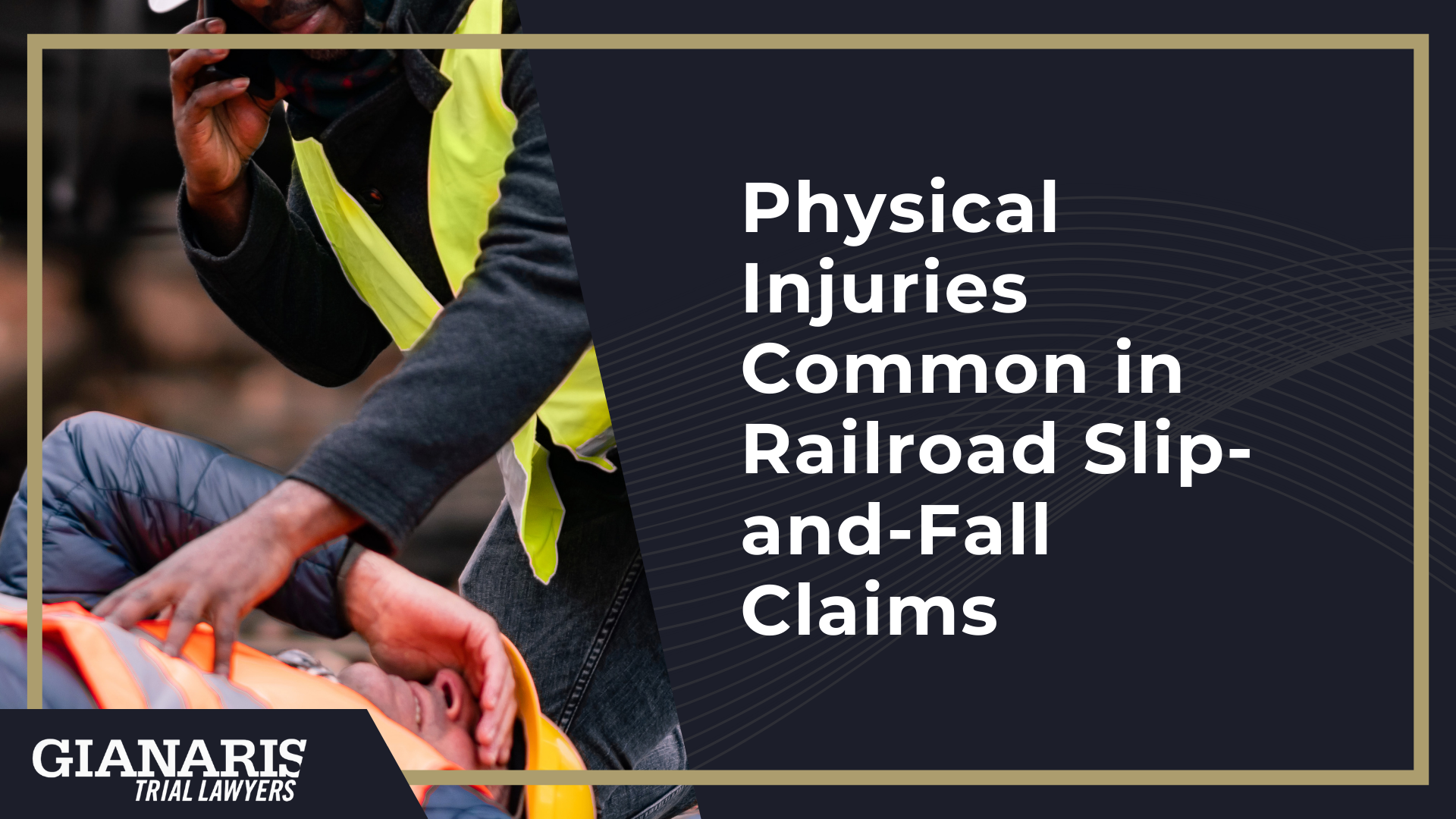
Physical Injuries Common in Railroad Slip-and-Fall Claims

Physical injuries in railroad slip-and-fall claims often involve the spine, joints, and head because workers fall onto hard surfaces, steel edges, or uneven ground.

Back injuries can include herniated discs, lumbar strains, or nerve-related pain that makes lifting, bending, and climbing unsafe.

Shoulder injuries are also common, especially rotator cuff tears from trying to catch oneself during a fall or from landing awkwardly while stepping down from equipment.

Knee and ankle injuries, like meniscus tears, ligament damage, or fractures, can be especially disruptive for workers who spend long hours walking uneven terrain.

Head injuries may include concussions or more serious traumatic brain injuries, sometimes paired with neck injuries that require specialized medical treatment.

These injuries frequently require imaging, physical therapy, surgery, or long-term pain management, which increases medical expenses and can create a long recovery timeline.

A railroad accident report may describe the incident as “minor,” but the medical reality often proves otherwise, especially when swelling and nerve symptoms develop days later.

Working with a FELA attorney and the right legal counsel helps ensure the injury is documented thoroughly so the claim reflects the true cost of care and the impact on earning capacity.

Causes of Railroad Slip-and-Fall Accidents

Railroad slip-and-fall accidents often happen because a railroad company allows predictable hazards to remain in high-traffic areas.

Common causes include oil, grease, water, ice, or fuel on walkways; loose ballast or debris; poorly maintained steps and ladders; missing handholds; inadequate lighting; and uneven surfaces near tracks, platforms, and yard areas.

In many cases, negligent railroads also contribute to falls by rushing work, understaffing cleanup and maintenance, or failing to enforce basic safety procedures.

When the railroad’s negligence played any part in causing the fall, such as ignoring a known hazard or failing to inspect and repair equipment, FELA may allow the worker to pursue compensation beyond what workers comp or workers compensation typically provides.

That difference matters, because unlike workers compensation, FELA can allow recovery for full damages tied to pain, suffering, and long-term impairment, not just limited wage benefits.

Many workers also have questions about benefits and reporting, including issues involving the Railroad Retirement Board, but those benefits are not the same as proving liability for a FELA case.

A FELA attorney can help determine whether the facts support FELA claims, identify the responsible safety failures, and decide whether the case belongs in state or federal court.

If you or a loved one is an injured railroader after an on the job injury, speaking with designated legal counsel early helps protect evidence and reduces the risk of the railroad shaping the narrative before you have support.

Do You Qualify For a Railroad Slip-and-Fall Accident Lawsuit?

You may qualify if you’re a railroad employee covered by federal law and railroad’s negligence contributed to your fall.

Common issues in railroad yards include poor lighting, slick or uneven surfaces, debris, and faulty equipment in a hazardous work environment, all signs of employer negligence.

Under FELA litigation, you can still pursue compensation even if comparative negligence is alleged, as long as the railroad’s negligence played a role.

Get immediate medical attention, and keep medical records, because a serious injury or catastrophic injury often depends on strong documentation.

A FELA lawyer can explain the legal process, evaluate the circumstances surrounding the incident, and help you seek to recover compensation.

Gianaris Trial Lawyers: Assisting Injured Railroad Workers From Slip-and-Fall Accidents

Gianaris Trial Lawyers is a law firm that represents injured railroad workers in slip-and-fall cases across the nation’s railroads.

Our injury lawyers investigate the hazard, the safety failures, and whether safety regulations were ignored.

We use incident evidence and medical records to pursue damages that support your recovery and long-term financial security, including lost income and future losses.

We handle FELA litigation in federal court when appropriate, and we take cases on a contingency fee basis, meaning no upfront legal fees.

Contact our legal team for a free consultation to discuss your options.

You can also use the chatbot on this page to see if you qualify immediately.

Frequently Asked Questions

  • Does FELA Cover Railroad Slip-and-Fall Accidents?

    Yes, FELA can cover railroad slip-and-fall accidents if you are a railroad employee and the railroad’s negligence contributed to the fall in any way.

    That negligence may involve unsafe walking surfaces, poor lighting, debris, weather-related hazards, inadequate maintenance, or missing warnings.

    A FELA lawyer can review the facts and determine whether you have a viable FELA claim.

  • What Should I Do After a Railroad Slip and Fall at work?

    Get medical care immediately and make sure the provider documents your symptoms and the mechanism of injury.

    Report the incident to your supervisor and request that an accident report is completed, then write down what you remember while it’s still fresh.

    If possible, take photos of the hazard and your surroundings and speak with FELA attorneys before giving detailed statements to railroad representatives.

  • What Injuries Are Common in FELA Slip-and-Fall Claims?

    Railroad slip-and-fall injuries often involve the back, shoulders, knees, ankles, and head because workers fall onto hard or uneven surfaces.

    Many people suffer herniated discs, fractures, rotator cuff tears, concussions, or other injuries that can limit their ability to return to full duty.

    Because these injuries can worsen over time, it’s important to document treatment early and track how the injury affects work and daily life.

  • How Do You Prove Negligence in a FELA Slip-and-Fall Case?

    To prove negligence, you typically show that the railroad knew or should have known about the hazard and failed to fix it or warn workers about it.

    Evidence may include maintenance and inspection records, cleanup policies, training materials, photos, witness statements, and prior complaints about the same condition.

    FELA lawyers use that evidence to connect the unsafe condition to the fall and the resulting injuries in a trial-ready way.

  • How Long Do I Have to File a FELA Claim for a Slip-and-Fall Accident?

    In most cases, you have three years from the date of the accident to file a FELA claim.

    Waiting can hurt your case because hazards may be repaired, footage may be overwritten, and witnesses may be harder to locate.

    A FELA attorney can confirm the deadline that applies to your situation and help preserve the evidence needed to pursue fair compensation.

Published by:
Share
Picture of Ted Gianaris
Ted Gianaris

With nearly 30 years of legal experience, Attorney Ted Gianaris has secured over $350 million in compensation for Illinois injury victims, car accident victims, and surviving family members of wrongful death victims.

This article has been written and reviewed for legal accuracy and clarity by the team of writers and attorneys at Gianaris Trial Lawyers and is as accurate as possible. This content should not be taken as legal advice from an attorney. If you would like to learn more about our owner and experienced Illinois injury lawyer, Ted Gianaris, you can do so here.

Gianaris Trial Lawyers does everything possible to make sure the information in this article is up to date and accurate. If you need specific legal advice about your case, contact us. This article should not be taken as advice from an attorney.

Other FELA Lawsuits Resources
All
FAQs
Injuries & Conditions
Legal Help
Occupations
Settlements & Compensation
You can learn more about FELA Lawsuits below:
A Complete Guide to FELA Lawsuits for Injured Railroad Workers
Average FELA Settlement Amounts
Common Railroad Worker Injuries
FELA Case Compensation
FELA Claims for Railroad Crush Injuries
FELA Claims for Railroad Derailments and Associated Injuries
FELA Injury Types
FELA Statute of Limitations
FELA vs Workers Compensation: What is the Difference?
FELA Wrongful Death Lawsuits
How is FELA Compensation Determined?
Important Evidence in FELA Claims
The Legal Process for FELA Railroad Cases Explained
Who Qualifies for a FELA Railroad Claim?

Other FELA Lawsuits Resources

All
FAQs
Injuries & Conditions
Legal Help
Occupations
Settlements & Compensation