
No fees unless we win.
Get a free consultation
128 Reviews
5.0
★★★★★

FELA Claims for Railroad Derailments and Associated Injuries

Overview for FELA Claims for Railroad Derailments and Associated Injuries

The Federal Employers’ Liability Act (FELA) is a critical protection for railroad employees injured in derailments and other serious incidents that often follow.

FELA allows workers to pursue compensation when a railroad’s negligence contributes to a derailment, such as track defects, poor inspections, unsafe operating practices, faulty equipment, inadequate training, or failures in maintenance and supervision, and it requires carriers to provide a reasonably safe workplace.

Gianaris Trial Lawyers represents injured railroad workers and their families in FELA derailment claims, building trial-ready cases to hold railroads accountable and pursue full, fair recovery.

FELA Claims for Railroad Derailments and Associated Injuries

FELA Lawyers for Railroad Derailments and Associated Injuries

Railroad derailments are among the most dangerous events in the rail industry because they can unfold in seconds and leave workers with devastating injuries.

A single railroad derailment can throw crew members, crush compartments, trigger fires, or cause secondary impacts from shifting cargo and equipment.

Train derailment scenes are also chaotic and hazardous, which means workers may suffer injuries during the initial event and while trying to respond, evacuate, or secure the area.

Railroad derailment injuries often include head trauma, spine and back injuries, fractures, crush injuries, burns, and exposure-related complications when hazardous materials are involved.

In the most tragic cases, derailments lead to railway deaths, leaving families with overwhelming loss and unanswered questions.

When you’ve been injured in a railroad derailment, the railroad may move quickly to shape the narrative and limit liability, even before the full extent of your injuries is known.

That’s where an experienced railroad accident lawyer can make a difference by preserving evidence, identifying safety failures, and building a case that is ready for trial.

Gianaris Trial Lawyers investigates the causes behind railroad derailments, including track conditions, inspection and maintenance records, operating practices, equipment issues, and the decisions that put workers in harm’s way.

We also document the full scope of railroad accident injuries, including the medical impact, time off work, and long-term limitations that can affect your livelihood.

Our team builds FELA claims designed to hold railroads accountable for preventable railroad injuries and to pursue full, fair compensation.

If you or a loved one was injured in a railroad derailment, contact Gianaris Trial Lawyers today to speak with a railroad lawyer and learn what your legal options may be.

You can also use the chatbot on this page to see if you qualify immediately.

The History And Purpose Of The Federal Employers Liability Act (FELA)

The Federal Employers’ Liability Act (FELA) was created to protect railroad workers in a dangerous rail environment where serious injuries were common and safety rules were not consistently enforced.

Unlike no-fault systems, FELA allows injured railroad employees to recover damages when employer negligence contributes to harm.

That matters in catastrophic events like railroad derailments, where a train derailment can expose crews to violent forces, hazardous conditions, and long-term health risks.

As the modern rail system expanded, especially with freight railroads moving heavy loads across long distances, FELA remained a core tool for holding carriers accountable when preventable safety failures injure workers.

It works alongside safety oversight by agencies such as the Federal Railroad Administration (FRA) (also referred to as the Federal Railroad Administration FRA), but FELA is the pathway workers use to seek compensation when negligence causes injury.

Who is Covered Under FELA?

FELA generally covers railroad employees who work for rail carriers engaged in interstate commerce, including many large freight railroads.

Coverage depends on employment status and job duties, not the specific title, so workers in yards, terminals, maintenance departments, and train crews may qualify.

That includes roles like conductors and, in some cases, a conductor trainee performing duties under supervision.

If you are hurt while performing rail work for a covered railroad, FELA may apply even if the railroad disputes fault.

Independent contractor situations can be more complicated and often depend on who controlled the work and the safety conditions at the time of the accident.

Legal Requirements Under FELA

Under FELA, a railroad must provide a reasonably safe workplace, which includes safe methods of work, adequate training, appropriate tools, and proper supervision.

In derailment-related cases, safety duties often center on the condition of the track, inspection practices, equipment maintenance, speed and operating rules, and communication protocols.

A derailment may involve one rail car or multiple train cars, and the railroad’s obligations extend to preventing hazards that can turn an operational issue into a major incident.
When derailments involve cargo that can affect the surrounding environment (such as toxic chemicals, harmful chemicals, or materials like vinyl chloride) the employer’s planning, training, and emergency-response procedures can become critical issues in the case.

Even when outside agencies investigate, FELA focuses on whether the railroad’s conduct and decisions created an unsafe workplace for the employee.

Proving Negligence and Establishing Liability

To succeed under FELA, an injured worker must show the railroad’s negligence played a role in causing the injury.

In derailment cases, that may involve failures tied to track inspection and maintenance, ignored warnings, unsafe operating practices, poor training, defective equipment, or unsafe work directives.

Evidence often includes maintenance and inspection records, event data, operating rules, radio logs, photographs, witness statements, and documents describing what occurred before and after the derailment.

In high-impact scenarios, such as when a train collides with another train or obstruction, or when a train derails at high speed, the investigation often focuses on what should have been prevented and what safety systems failed.

Sometimes there is a public investigation and a published final report; those records can help frame what happened, but your FELA case still depends on building proof that the railroad’s choices created unreasonable risk to workers.

Damages and Recoverable Damages Under FELA

FELA allows injured workers to seek compensation for the full scope of harm caused by a derailment-related injury.

That can include medical bills, lost wages, future loss of earning capacity, and damages for pain, suffering, and disability.

Derailments may also involve secondary harms, like exposure-related symptoms or injuries sustained during evacuation or emergency response at the derailment site, and those impacts should be documented carefully.

In some cases, derailments result in property damage in the surrounding area, but a worker’s FELA claim focuses on the employee’s injuries and losses.

When a derailment involves chemical release concerns, such as air monitoring or air quality issues, or emergency actions like a controlled burn, it becomes even more important to document symptoms, medical evaluations, and work assignments tied to exposure risk.

FELA Statute of Limitations

Most FELA claims must be filed within three years of the date of injury.

For certain occupational illness claims, the deadline can depend on when the worker knew or reasonably should have known the condition was work-related, but that analysis is fact-specific.

In derailment cases, waiting can make it harder to prove what happened because equipment gets repaired, sites change, and records can be lost or overwritten.

If you were hurt in a derailment connected to a widely reported incident (a location like East Palestine), deadlines still apply the same way, and early action helps preserve critical evidence.

A lawyer can confirm your filing window and take steps to secure the records needed to support your case.
Common Injuries In Railroad Derailments Cases

Railroad derailment incidents can cause severe injuries because the forces involved are sudden, violent, and unpredictable.

When a locomotive or multiple railcars are derailed, crew members may be thrown inside the cab, pinned by shifting equipment, or struck by flying debris, leading to traumatic injuries in seconds.

These cases often involve head trauma, back and neck injuries, fractures, and crush injuries, along with burns or exposure-related symptoms when freight releases hazardous materials.

A derailment can also trigger secondary collisions, such as railcars colliding with each other, equipment, or nearby structures, which increases the risk of multi-system trauma.

In the most serious transportation incidents, workers or members of the public may be killed, and families are left dealing with devastating loss.

Even when a derailment looks “contained,” injuries can still be life-altering due to long recoveries, persistent pain, and limitations that affect work and daily function.

Because the event is typically fast-moving, early documentation of the location, the equipment involved, and the medical timeline can be critical to proving what happened and why.

Physical Injuries Common in Railroad Derailments Claims

Physical injuries in derailment claims often involve the spine, joints, and head because workers are jolted, thrown, or trapped when equipment leaves the track.

A worker may suffer concussions, traumatic brain injuries, or facial trauma from impact inside the locomotive cab, especially when the train derails at speed.

Back injuries can include herniated discs and nerve compression, while shoulder and knee injuries are common from bracing during the impact or being tossed against hard surfaces.

Crush injuries and fractures may occur if a railcar shifts, collapses, or pins a worker during the derailment sequence.

Some derailments also involve fires or chemical exposure, which can add burns and respiratory injury to the list of harms.

These injuries can require months of medical treatment and rehabilitation, and they often raise long-term risk for chronic pain and loss of function.

The severity can vary by location and conditions, such as whether the derailment occurred in a yard, on open track, or near a crossing where other vehicles or cars may be involved.

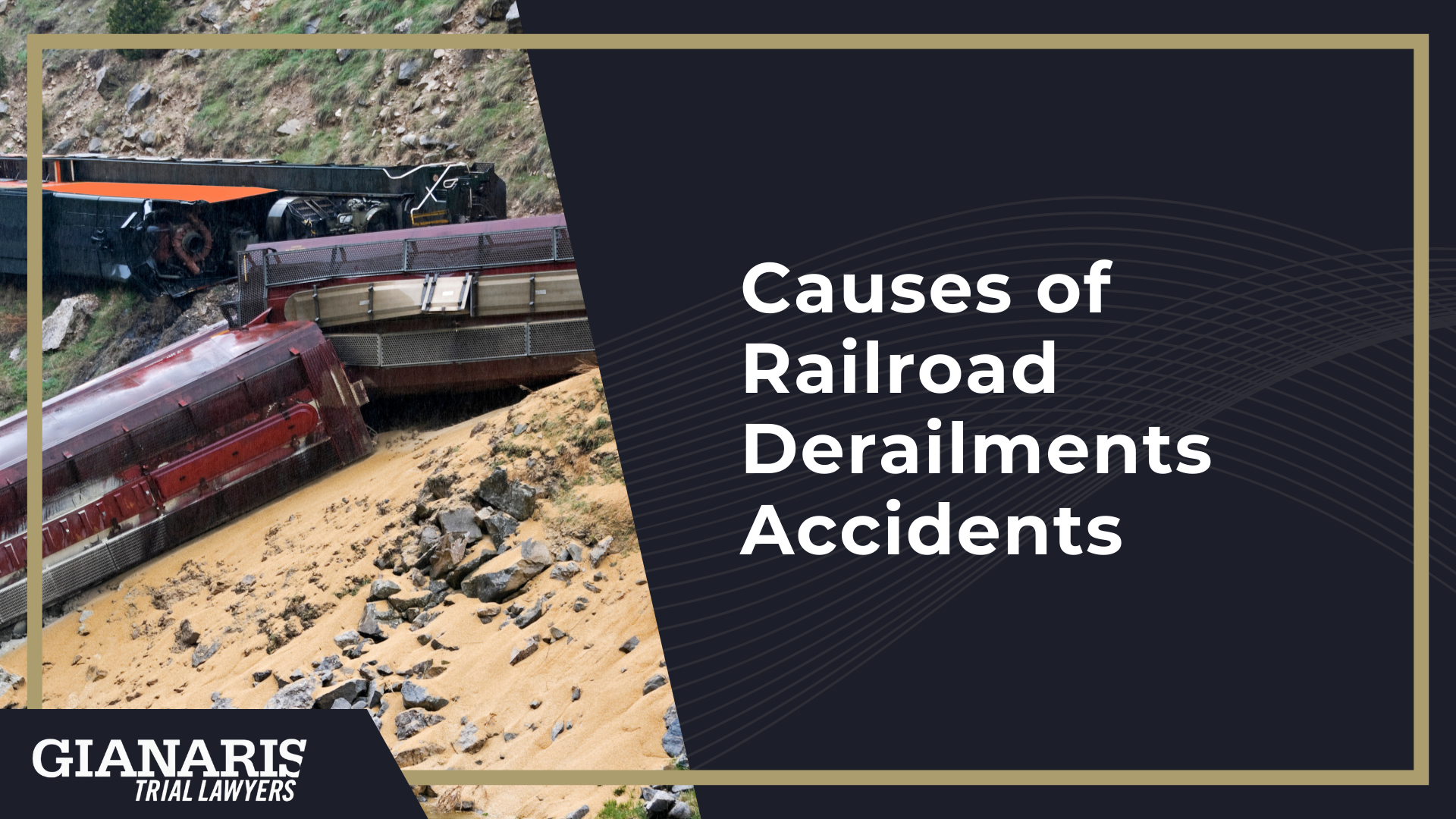
Causes of Railroad Derailments Accidents

Railroad derailments can happen for many reasons, but most stem from preventable risks tied to infrastructure, equipment, and operations.

Track and infrastructure problems (worn components, inadequate inspection, poor maintenance, or failure to implement safety improvements) can cause railcars to leave the rails, especially under heavy freight loads.

Equipment failures also play a major role, including wheel defects, bearing failures, braking issues, or mechanical problems that destabilize the train.

Derailments may also result from collisions, such as a train striking a vehicle at a crossing, colliding with equipment on the track, or being impacted by another rail movement in certain settings.

Operational factors matter too, including speed, communication breakdowns, and decisions made within a tight hour or shift window that prioritize movement over safety.

Investigations often examine the department responsible for maintenance and inspection, the condition of railcars and the locomotive, and what warnings existed before the incident.

Derailments can occur anywhere, whether in rural corridors or dense communities, but the core question is usually the same: what risk was present, who knew, and what should have been done to prevent the train from being derailed.

Do You Qualify For a Railroad Derailment Lawsuit?

You may qualify if you are a railroad employee who was injured in a derailment and the company failed in its duty to provide a reasonably safe workplace.

Many derailment cases turn on what happened before the event (track conditions, inspection gaps, unsafe operations, overloaded or shifting load, or poor communication during train movement) and whether the railroad’s safety systems failed.

If you were part of the crew involved, your firsthand account matters, and an early report and medical documentation can help preserve the timeline.

Evidence from the site may include photos, maintenance records, witness accounts, and environmental details such as disturbed soil, debris patterns, or damage to nearby land.

In some incidents, derailments affect surrounding areas, impacting streams, drainage, or even contributing to flooding, and those conditions can become important to understanding the scope of the hazard and the response.

If the derailment led to a serious injury or death, the legal options may expand for the worker or surviving family, depending on the circumstances.

A lawyer can walk you through the process, confirm coverage, and help protect the evidence while the railroad and investigators are still documenting the event.

Gianaris Trial Lawyers: Assisting Injured Railroad Workers From Derailment Accidents

Gianaris Trial Lawyers represents employees hurt in derailment events and builds trial-ready cases designed to hold railroads accountable when safety duties are ignored.

Our office takes a hands-on approach from day one, securing records, identifying decision points that were leading to the derailment, and preserving evidence before conditions change.

We investigate what the company knew, what it did or didn’t do, and how the derailment happened, including operational choices, equipment issues, and track maintenance failures that put the crew at risk.

When the derailment has broader impacts, such as debris spread across land, contamination concerns in soil, or damage near streams, we document those facts as part of the full picture of the incident and response.

We also coordinate medical documentation and wage-loss proof so the claim reflects the real consequences of the injury, not just the initial report.

Whether the event happened in Texas, or elsewhere across the rail system, our service is the same: careful investigation, strong evidence, and a team committed to preparing each case for the best result possible.

If you were injured in a derailment, contact Gianaris Trial Lawyers to discuss what happened and learn what next steps may be available.

You can also use the chatbot on this page to see if you qualify immediately.

Frequently Asked Questions

  • Does FELA cover railroad derailments and derailment-related injuries?

    Yes, FELA can cover injuries caused by railroad derailments when you are a railroad employee and the railroad’s negligence played any part in what happened.

    Negligence may include track defects, poor inspections, unsafe operating practices, faulty equipment, or failures in training, maintenance, and supervision.

    Because derailments often create secondary dangers (fires, shifting cargo, impacts during evacuation) FELA claims can also include injuries that occur during the response, not just at the moment the train derails.

  • What should I do right after being injured in a railroad derailment?

    Get medical attention immediately, even if you think the injury is minor, because derailment injuries can worsen once shock and adrenaline wear off.

    Report the incident to your supervisor and make sure an accident report is created, then write down what you remember about the conditions, speed, equipment issues, and the moments leading up to the derailment.

    If possible, document the scene with photos, identify witnesses, and speak with a railroad accident lawyer before giving detailed recorded statements to the railroad.

  • What injuries are common in FELA derailment claims?

    Railroad derailment injuries often include head trauma, concussions, spine and back injuries, fractures, crush injuries, burns, and serious soft-tissue damage.

    Workers can also be hurt during secondary impacts when railcars collide, cargo shifts, or equipment collapses, which can turn a derailment into a multi-injury event.

    If hazardous materials are involved, some workers experience exposure-related complications that require evaluation and follow-up care, and those symptoms should be documented early.

  • How do you prove negligence in a derailment-related FELA case?

    Proving negligence usually involves showing that the railroad failed to provide a reasonably safe workplace and that the failure contributed to the derailment or the injuries that followed.

    Key evidence often includes:

    • Maintenance and inspection records
    • Operating rules
    • Event data
    • Radio logs
    • Training materials
    • Photos or video
    • Witness statements from crew members who observed unsafe conditions

    Even if an outside investigation produces a public report, your case still depends on building clear proof of what the railroad knew, what it did or didn’t do, and how those choices created unreasonable risk.

  • How long do I have to file a FELA claim after a railroad derailment?

    In most cases, you have three years from the date of the injury to file a FELA claim.

    Waiting can hurt your case because the derailment site changes quickly, equipment may be repaired, data can be overwritten, and witnesses can be harder to locate.

    A lawyer can confirm the deadline for your situation and take early steps to preserve the evidence needed to pursue full, fair compensation.

Published by:
Share
Picture of Ted Gianaris
Ted Gianaris

With nearly 30 years of legal experience, Attorney Ted Gianaris has secured over $350 million in compensation for Illinois injury victims, car accident victims, and surviving family members of wrongful death victims.

This article has been written and reviewed for legal accuracy and clarity by the team of writers and attorneys at Gianaris Trial Lawyers and is as accurate as possible. This content should not be taken as legal advice from an attorney. If you would like to learn more about our owner and experienced Illinois injury lawyer, Ted Gianaris, you can do so here.

Gianaris Trial Lawyers does everything possible to make sure the information in this article is up to date and accurate. If you need specific legal advice about your case, contact us. This article should not be taken as advice from an attorney.

Other FELA Lawsuits Resources
All
FAQs
Injuries & Conditions
Legal Help
Occupations
Settlements & Compensation
You can learn more about FELA Lawsuits below:
A Complete Guide to FELA Lawsuits for Injured Railroad Workers
Average FELA Settlement Amounts
Common Railroad Worker Injuries
FELA Case Compensation
FELA Claims for Railroad Crush Injuries
FELA Claims for Railroad Slip-and-Fall Accidents
FELA Injury Types
FELA Statute of Limitations
FELA vs Workers Compensation: What is the Difference?
FELA Wrongful Death Lawsuits
How is FELA Compensation Determined?
Important Evidence in FELA Claims
The Legal Process for FELA Railroad Cases Explained
Who Qualifies for a FELA Railroad Claim?

Other FELA Lawsuits Resources

All
FAQs
Injuries & Conditions
Legal Help
Occupations
Settlements & Compensation