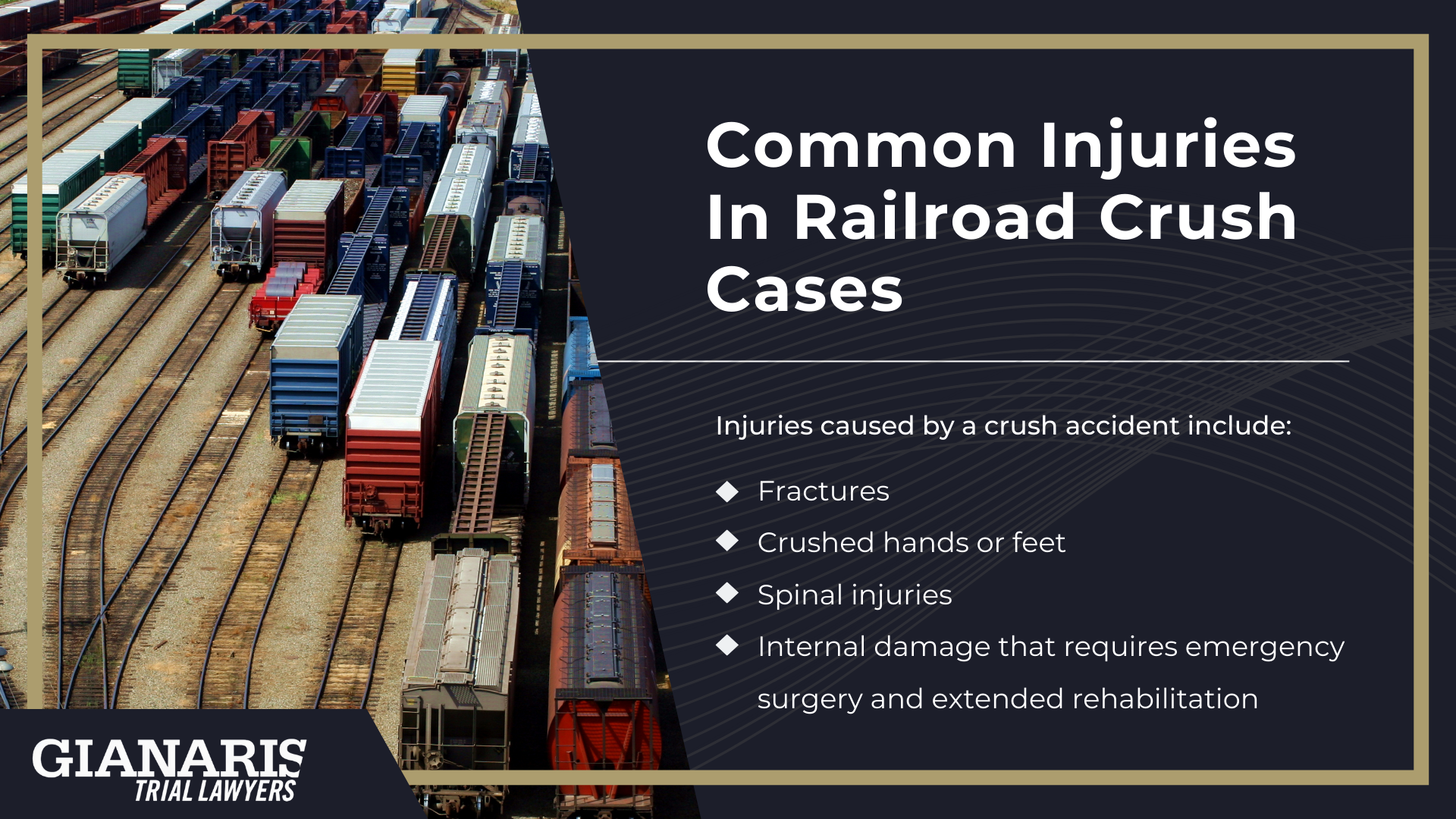

The Federal Employers Liability Act was enacted to protect railroad workers in a demanding railroad industry where serious railroad accidents and preventable hazards were common.
Instead of limiting recovery to fixed benefits like workers compensation or workers comp, the law gives injured railroad workers the right to pursue damages when a railroad’s negligence contributes to an on the job injury.
In practice, FELA is both a compensation system and a safety pressure valve.
It makes railroad employers accountable for unsafe practices that injure railroad employees.

Today, FELA remains the backbone of many railroad injury cases, including devastating railroad crush injuries tied to unsafe switching, defective equipment, or missing safeguards.
You may also see it described as the employers liability act FELA, especially in older materials and summaries.
These are federal laws, and they apply regardless of the state where the injury occurred.
Who is Covered Under FELA?
FELA generally covers railroad employees who work for railroads engaged in interstate commerce, which includes many major carriers.
Coverage is based on employment and job duties, not job title, so train crews, yard workers, mechanical departments, track maintenance, and other roles in railroad work may qualify.
If you are an injured railroader hurt while performing your job, you may be eligible to bring FELA claims even if the railroad disputes fault.

Independent contractors are not automatically covered, and coverage questions can be fact-specific, especially when multiple companies are present at the site.
Benefits through the Railroad Retirement Board may be relevant to a worker’s overall situation, but they are not the same as pursuing a negligence-based FELA case.
Legal Requirements Under FELA
Under FELA, railroad employers must provide a reasonably safe workplace, which includes safe methods of work, adequate staffing and training, proper tools, and realistic operating practices.
The railroad’s duty extends to identifying hazards and addressing them before workers are hurt, especially hazards that create crushing risks during switching, coupling, braking, and movement of equipment.
Additional safety statutes can matter, including the Safety Appliance Act and the Locomotive Inspection Act, which set standards related to equipment conditions and safety features.

When those duties are ignored, the result can be catastrophic, including railroad crush injuries that change a worker’s life in seconds.
Proving that a railroad failed to follow safe procedures or maintain equipment can be a powerful part of a FELA case.
Proving Negligence and Establishing Liability
To win under the federal employers liability act, an injured worker must show that the railroad’s negligence played a role in causing the injury.
Negligence may involve unsafe switching practices, poor communication, lack of lockout procedures, missing safeguards, defective equipment, inadequate training, or a rushed work pace that predictably leads to injury.
Evidence in railroad injury cases often includes incident reports, photographs, inspection and maintenance records, safety rules, training materials, radio logs, video, and coworker statements.

In crush cases, timing and mechanics matter, so the investigation frequently focuses on where the worker was positioned, what moved, who controlled movement, and what the railroad knew about the risk.
An experienced lawyer can preserve evidence early and counter attempts to shift blame to the worker after the fact.
Strong proof is what turns a tragic railroad injury into a claim that forces accountability.
Damages and Recoverable Damages Under FELA
FELA allows injured workers to seek a broad range of damages, including past and future medical costs, lost wages, diminished earning capacity, and compensation for pain, suffering, and disability.
Crush injuries often require surgeries, rehabilitation, assistive devices, and long-term care, so damages must reflect both immediate expenses and future needs.
The goal is fair compensation that matches the real impact of the injury on work, independence, and long-term health.
While people sometimes talk about maximum compensation, there is no preset cap in the way many benefit systems operate.

Recovery depends on the strength of the evidence and the documented losses.
This is a key difference from workers compensation systems, which typically limit benefits and do not pay for the full range of human losses.
An experienced lawyer will also evaluate how benefits and reporting issues intersect with the worker’s broader financial picture, including what may be handled through the Railroad Retirement Board versus what must be proved in court.
FELA Statute of Limitations
Most FELA claims must be filed within three years of the date of the injury.
In crush injury cases, that clock usually starts on the day the accident occurred, which makes early action important.
Waiting can weaken the case because equipment gets repaired, conditions change, video gets overwritten, and witnesses become harder to track down.

If you believe you have a claim, speaking with a law firm that handles FELA lawsuits can help you confirm the deadline and preserve the evidence needed to move forward.
The sooner an investigation begins, the easier it is to protect the facts that prove what happened.