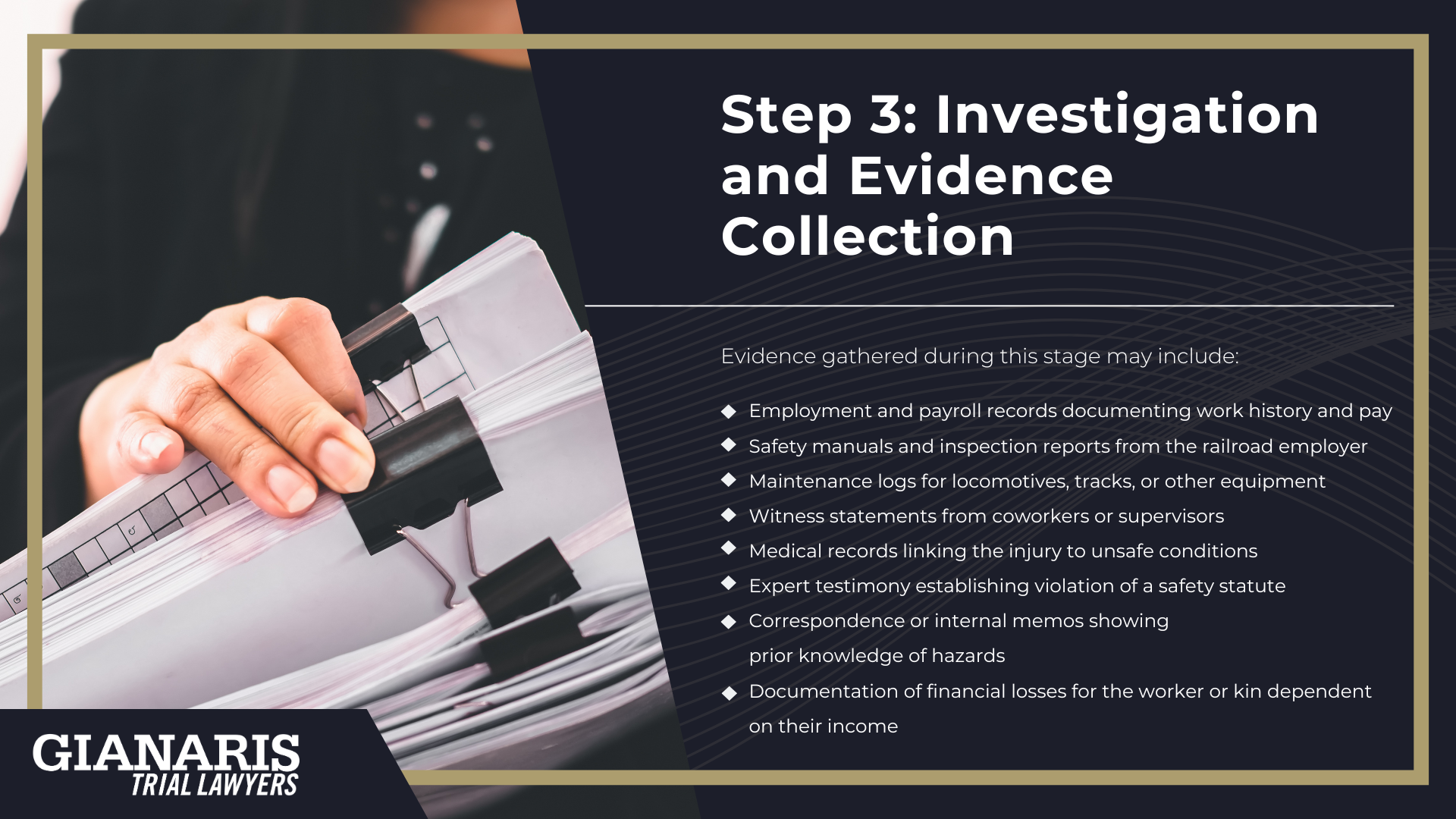

When a railroad worker is injured on the job, the first priority is always medical care.
The inherent dangers of railroad work (heavy machinery, exposure to toxins, and unpredictable job environments) make prompt evaluation and documentation critical.
Injured workers should report the incident immediately to a supervisor and contact their union representative for guidance before giving detailed statements to the company.
Because railroads are common carriers engaged in interstate commerce, they are subject to federal safety standards, and employers can be held liable when those standards are violated.
Proper documentation of the injury, treatment, and cause of the incident is essential to securing fair compensation later.
Medical records not only establish the connection between the injury and the workplace but also help determine whether the employee qualifies for higher compensation due to permanent impairment or physical disability.
Even injuries caused by defective machinery, unsafe conditions, or other equipment used in such commerce may support a valid FELA claim.
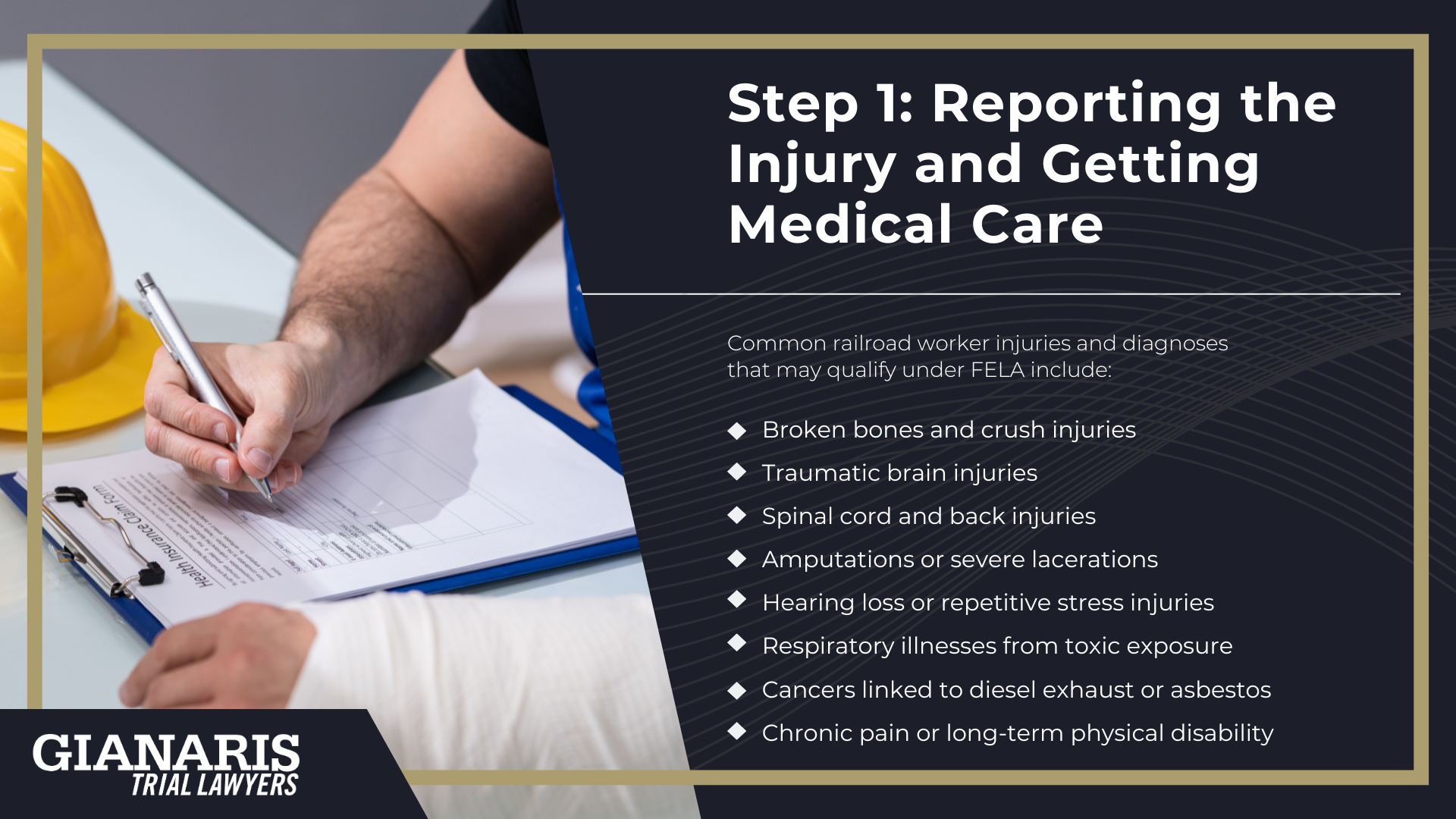
Common railroad worker injuries and diagnoses that may qualify under FELA include:
- Broken bones and crush injuries
- Traumatic brain injuries
- Spinal cord and back injuries
- Amputations or severe lacerations
- Hearing loss or repetitive stress injuries
- Respiratory illnesses from toxic exposure
- Cancers linked to diesel exhaust or asbestos
- Chronic pain or long-term physical disability
Timely reporting and immediate treatment protect both health and legal rights, laying the foundation for a strong FELA case.