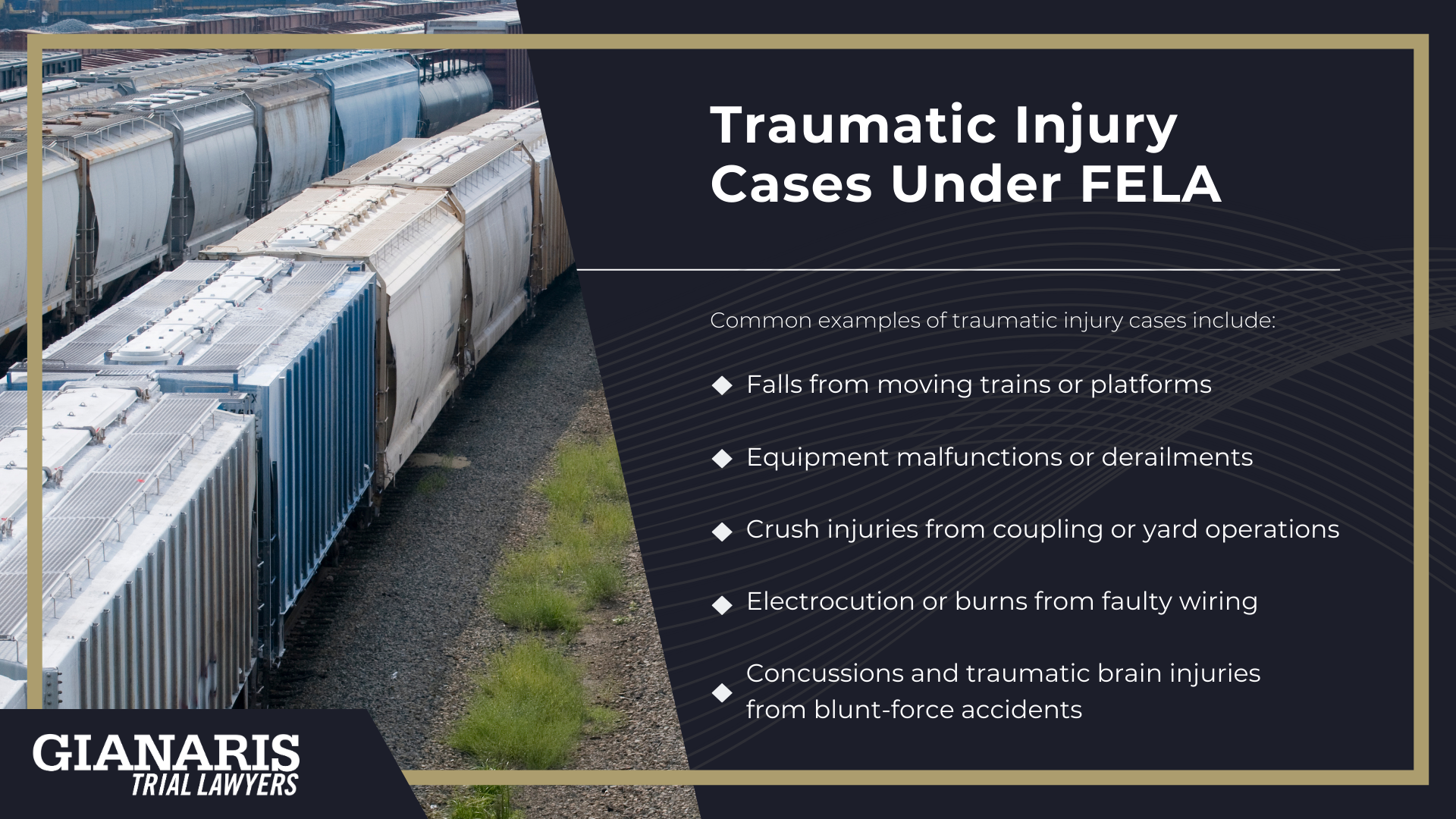

The Federal Employers Liability Act (FELA) was enacted to provide railroad workers with a means to recover full and fair damages when injured on the job.
Unlike workers compensation, which offers limited and no-fault benefits, FELA litigation allows injured workers to hold negligent railroads accountable under federal law.
This system recognizes that railroad work presents unique dangers, from physical accidents to long-term toxic exposure.
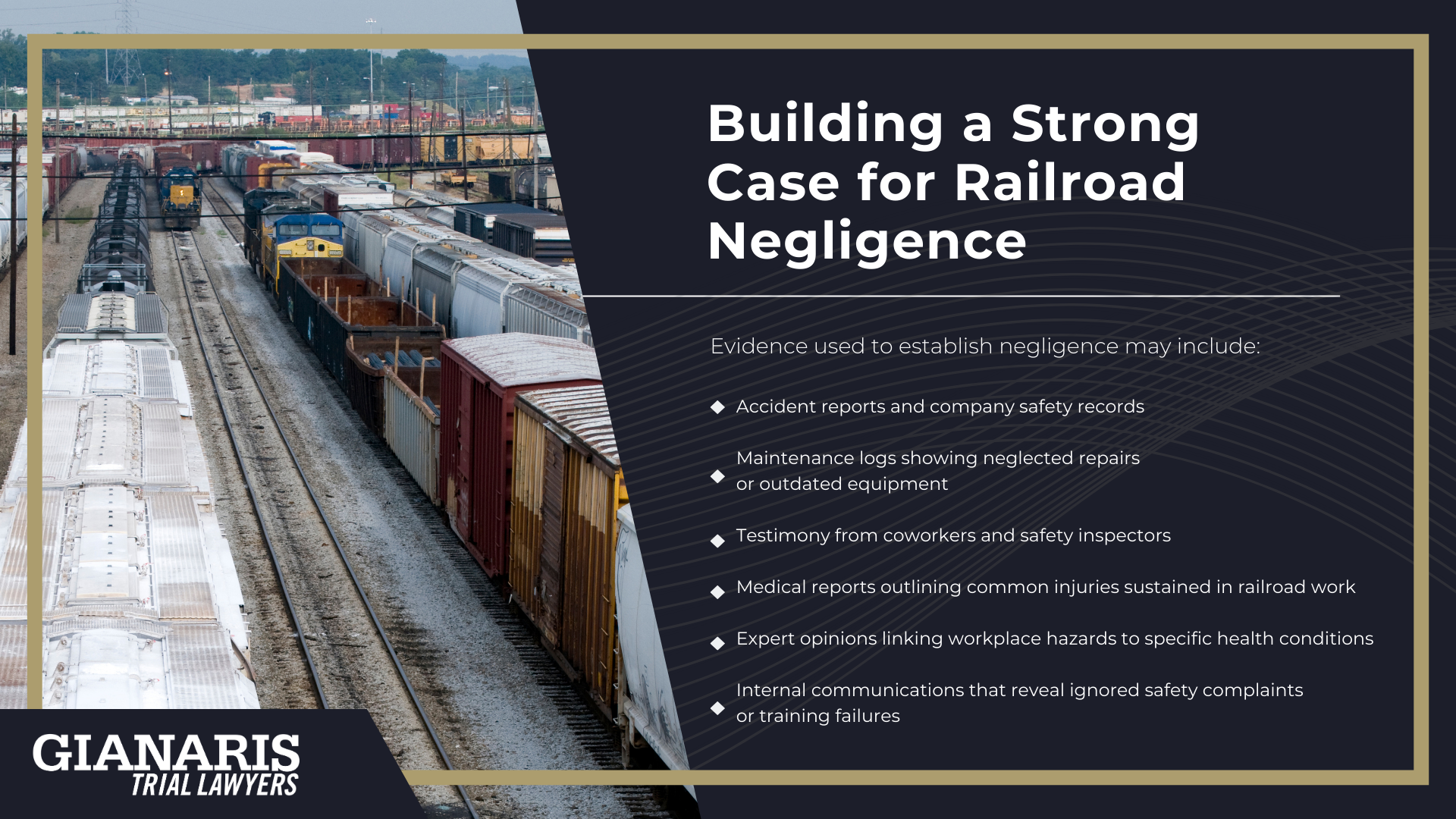
To recover maximum compensation, an injured employee must prove that the railroad’s negligence (no matter how slight) contributed to their injury or illness.
This requirement forms the foundation of every FELA lawsuit and drives how damages are calculated.
Because compensation is not based on fixed schedules, each claim reflects the real financial and personal impact of the injury.
Establishing liability, causation, and damages through evidence and expert testimony is central to the legal process.
In this way, FELA provides an avenue for justice and recovery that more accurately reflects the hardships faced by railroad employees.

Common categories of recoverable compensation under FELA include:
- Past and future medical expenses
- Lost wages and diminished earning capacity
- Pain, suffering, and emotional distress
- Permanent disability or disfigurement
- Loss of enjoyment of life and household services
Through this structure, the FELA act aims to restore an injured worker’s financial stability and quality of life as fully as possible.
Because railroad companies often deny or minimize liability, having an attorney who understands the intricacies of FELA litigation is essential.
The process requires extensive documentation, from safety violations to medical evaluations and economic loss projections.
An experienced railroad injury lawyer can use this evidence to prove negligence and push for maximum compensation.
For injured workers, this legal protection serves as both accountability for negligent railroads and a path toward long-term recovery.
Factors Influencing FELA Compensation
The value of a FELA claim depends on a range of factors that demonstrate how the injury has affected the worker’s life and earning capacity.
Central to any case is evidence of employer negligence, which must show that unsafe working conditions or a failure to follow safety regulations contributed to the worker’s injury.
When negligence is proven, injured employees can pursue compensation that reflects both their financial losses and personal suffering.
The severity of the injury, duration of recovery, and long-term medical needs all play major roles in calculating damages.
Medical costs, such as hospitalization, rehabilitation, and ongoing treatment for chronic conditions or exposure-related diseases, are a significant part of this evaluation.
Lost wages and reduced earning capacity are also measured to determine how the injury has affected financial stability and future income.
Courts and juries consider the worker’s age, occupation, and potential career trajectory in the railroad industry when calculating compensation.
The stronger the documentation and expert testimony supporting these losses, the greater the likelihood of a substantial award.
Factors influencing compensation in FELA cases include:
- The extent of employer negligence and violation of safety standards
- The severity and permanence of the worker’s injury
- Evidence of unsafe working conditions or hazardous exposure
- Total medical costs and anticipated future treatment
- Lost wages, reduced earning capacity, and overall financial security
Because each FELA lawsuit is based on individual facts, damages vary widely from case to case.
Having skilled legal counsel is essential for accurately presenting evidence and quantifying every aspect of loss.
Experienced attorneys use expert witnesses, economists, and medical professionals to project the full value of a claim.
This approach helps railroad workers pursue compensation that truly accounts for their physical, emotional, and financial hardship.
In many cases, it is the difference between a limited recovery and the maximum compensation the law allows.