
No fees unless we win.
Get a free consultation
128 Reviews
5.0
★★★★★

Who Qualifies for a Benzene Exposure Lawsuit?

Exposed to Benzene and Diagnosed with Cancer or Other Serious Illnesses? Contact Gianaris Trial Lawyers

Benzene exposure lawsuit claims are typically filed by workers and individuals who can document repeated contact with benzene through industrial work, fuel-related job duties, or long-term environmental contamination.

Repeated exposure has been linked to serious health effects that often involve the bone marrow and blood-forming system, including leukemia and other life-altering disorders.

Gianaris Trial Lawyers is reviewing claims from individuals who were exposed to benzene and later diagnosed with serious health problems such as acute myeloid leukemia (AML).

Who Qualifies for a Benzene Exposure Lawsuit; Understanding Eligibility in Benzene Exposure Claims; Why Benzene Lawsuits Focus on Exposure History and Medical Diagnosis; Documented Benzene Exposure_ The First Qualification Requirement; Occupational Benzene Exposure_ High-Risk Industries and Job Roles; Environmental and Community Exposure to Benzene; Medical Conditions Commonly Associated With Benzene Exposure; Other Blood and Bone Marrow Disorders Linked to Benzene Exposure; Acute Myeloid Leukemia (AML) and Related Leukemias; Diagnosis Can Often Come Years After Initial Exposure to Benzene; Do You Qualify for a Benzene Exposure Lawsuit; Common Evidence Used in a Benzene Exposure Lawsuit; Potential Compensation in a Benzene Exposure Claim; Who Typically Does NOT Qualify for a Benzene Exposure Lawsuit; Gianaris Trial Lawyers_ Investigating Benzene Lawsuits

Benzene Lawsuits Filed by Victims of Prolonged Exposure: Overview

Benzene is classified as a known human carcinogen, and multiple federal agencies have linked repeated exposure to a higher risk of serious blood and bone marrow diseases.

The Department of Health and Human Services has long recognized benzene as a cancer-causing agent, particularly in connection with leukemia and other blood related cancers.

The Environmental Protection Agency (EPA) also regulates benzene as a hazardous air and water contaminant, reflecting how often it appears in fuel systems, industrial processes, and contaminated sites involving toxic substances.

In many Benzene cases, the exposure history involves long-term work around gasoline vapors, solvents, or industrial chemicals, with the highest risk often tied to occupational exposure.

This can include refinery and manufacturing environments, but it also includes jobs around gas stations, fuel transport, and other settings where benzene-containing products are handled or stored.

Benzene exposure may also occur outside the workplace, including in communities near chemical plants, where emissions and releases can contribute to ambient exposure.

The chemical is also present in cigarette smoke, which is one reason benzene is treated as a widespread public health hazard rather than a niche workplace chemical.

Depending on the facts of the case, the medical diagnoses may include leukemia such as chronic lymphocytic leukemia (CLL), cancers like multiple myeloma, and other forms of chemical exposure-related disease that may support personal injury or wrongful death claims.

Gianaris Trial Lawyers is a nationally recognized law firm specializing in chemical exposure cases, specifically Benzene contamination and exposure.

If you or a loved one were exposed to Benzene and subsequently developed acute myeloid leukemia (AML), other blood cancers, or other serious illnesses, you may be eligible to file a Benzene exposure lawsuit and seek compensation.

Contact Gianaris Trial Lawyers today for a free consultation.

You can also use the chat feature on this page to find out if you qualify for a Benzene exposure claim.

Understanding Eligibility in Benzene Exposure Claims

Understanding Eligibility in Benzene Exposure Claims

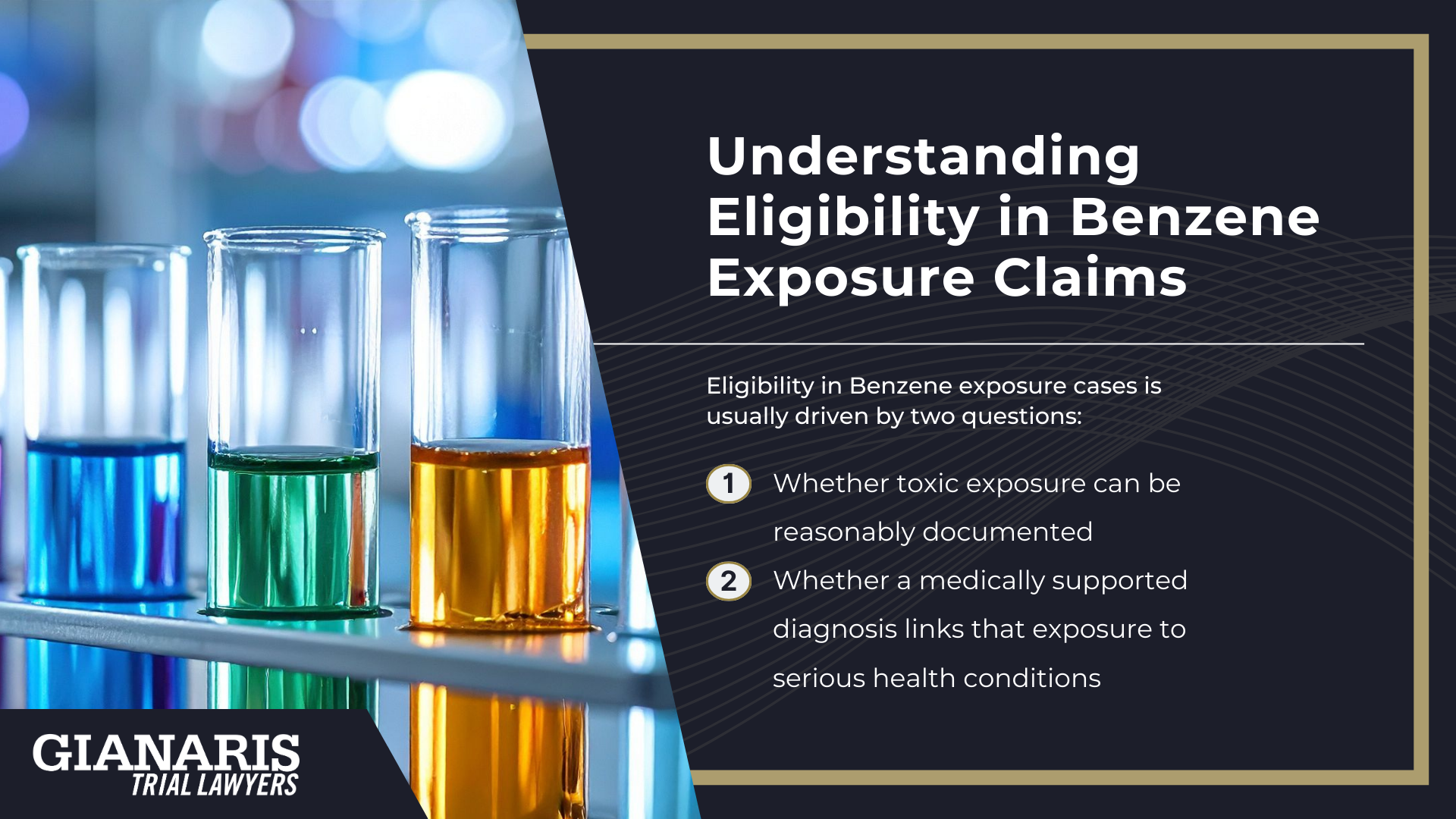
Eligibility in Benzene exposure cases is usually driven by two questions:

  1. Whether toxic exposure can be reasonably documented,
  2. Whether a medically supported diagnosis links that exposure to serious health conditions.

Benzene is widely treated as a high-priority hazard because it is a proven blood and bone-marrow toxicant, and federal public health authorities recognize that long-term exposure can damage the body’s ability to produce healthy blood cells and can impair the immune system.

The Centers for Disease Control and Prevention (CDC) explains that long-term benzene exposure can decrease blood cell counts, contributing to anemia and increasing infection risk: findings that align with the way benzene is evaluated in occupational and environmental health investigations.

In most Benzene litigation, the dispute is not whether benzene is dangerous, but whether the exposure occurred at levels and durations that plausibly elevated a person’s cancer risk, and whether the medical record supports the claimed connection.

Regulators treat benzene as a cancer-causing air pollutant and a drinking-water contaminant because it appears frequently in industrial environments and contaminated sites.

For example, ATSDR notes that benzene has been detected at hundreds of EPA National Priorities List (Superfund) sites, which supports how often benzene appears in investigations involving toxic chemicals and environmental releases.

Eligibility also turns on how exposure is shown.

Many claimants were not handling benzene in laboratory-grade form; they were working around fuel vapors and industrial emissions where high Benzene levels can develop in enclosed or poorly ventilated areas.

Others were exposed through repeated skin contact with fuels or solvents, where liquid benzene or benzene-containing mixtures touched the skin as part of routine job duties.

The EPA’s own benzene health summary explains that benzene can affect bone marrow, cause excessive bleeding, and damage immune function through changes in blood cells and antibodies: biologic effects that often appear in the same cases where blood-related cancers are diagnosed.

In practical terms, the core eligibility factors usually include:

  • A clear exposure pathway showing how toxic exposure occurred (inhalation, skin contact, or contaminated water), including whether the person worked around fuels, solvents, or other toxic substances.
  • Evidence of elevated exposure conditions, such as repeated work in areas where vapors accumulated, direct handling of benzene-containing products, or environmental releases tied to industrial operations.
  • A diagnosis consistent with benzene-associated disease, most commonly leukemia and other blood-related cancers supported by medical records and pathology findings.
  • Timing and latency consistency, meaning the medical diagnosis occurs within a timeframe that fits known patterns of benzene-related blood toxicity and leukemia development after sustained exposure.
  • Documentation to support causation arguments, including employment records, exposure history, industrial monitoring data, or environmental testing where available.

This framework explains why some claims qualify and others do not.

A person can have real exposure without meeting the legal and medical thresholds required to move forward, particularly when exposure was brief or cannot be documented.

At the same time, repeated exposure in work environments tied to fuels and industrial emissions can create the type of record that supports a claim, especially when serious blood or marrow disease appears afterward.

Federal regulators treat benzene as a high-concern pollutant in part because it is emitted by refineries and industrial facilities at scale, and the EPA has required controls and monitoring programs directed at benzene due to its role as a hazardous air toxic with carcinogenic properties.

Why Benzene Lawsuits Focus on Exposure History and Medical Diagnosis

Benzene lawsuits focus on exposure history and medical diagnosis because Benzene poisoning is primarily a blood and bone marrow injury, and the strongest scientific evidence connects benzene to disrupted blood cell production and leukemia.

OSHA’s benzene medical surveillance guidelines describe benzene as a hematopoietic toxin linked to pancytopenia, aplastic anemia, and leukemia, and they recognize both inhalation and skin absorption as important exposure routes, including contact with liquid benzene.

The National Toxicology Program, part of the Department of Health and Human Services, lists benzene as a human carcinogen and notes strong evidence tying it to myeloid leukemia, including acute myelogenous leukemia.

The World Health Organization (WHO), through IARC evaluations, has also concluded that occupational benzene exposure shows an increased risk of leukemia in exposed workers, which is why case screening often centers on blood cancers with documented latency.

Because benzene is present in petroleum products derived from crude oil, exposure scenarios often involve fuels, solvents, and industrial mixtures that also contain other chemicals, making a detailed work history important for isolating benzene as a meaningful contributor to the illness.

Understanding Eligibility in Benzene Exposure Claims; Why Benzene Lawsuits Focus on Exposure History and Medical Diagnosis

Exposure history also matters in environmental exposure cases tied to hazardous waste sites, where benzene contamination can persist in groundwater or air over long periods and may involve overlapping contaminant profiles.

The medical diagnosis is equally central because benzene-related diseases tend to follow recognizable clinical patterns, often beginning with blood abnormalities before progressing to leukemia, and public health agencies have also documented other systemic effects from sustained high exposure, including reproductive harm such as irregular menstrual periods in women exposed to high levels for extended periods.

Finally, because benzene is a component of tobacco smoke, defendants often argue alternative exposures, which is one reason case evaluation usually requires a clear timeline of when and how the exposure occurred and whether the diagnosis fits known benzene carcinogenic risks.


Documented Benzene Exposure: The First Qualification Requirement

Documented benzene exposure is often the first gatekeeping issue in these cases because liability analysis begins with whether the exposure can be shown with enough specificity to be credible in litigation.

In most claims, the dispute is not whether benzene is hazardous, but whether the claimant can identify where the exposure happened, how it happened, and how often it happened over time.

The strongest cases include a work or residential history tied to known benzene sources: fuel handling, industrial solvents, refinery operations, or long-term proximity to industrial emissions.

Exposure documentation can come from employment records, job descriptions, safety data sheets, witness statements, air monitoring data, and environmental testing results when available.

Understanding Eligibility in Benzene Exposure Claims; Why Benzene Lawsuits Focus on Exposure History and Medical Diagnosis; Documented Benzene Exposure_ The First Qualification Requirement

This evidence matters because benzene-related diseases often have latency periods, and the timeline between exposure and diagnosis becomes central to causation arguments.

It also helps address a common defense strategy: arguing that other risk factors, such as smoking or unrelated chemical exposures, explain the diagnosis.

Without this documentation, it becomes difficult to argue that proving benzene exposure caused the illness is medically and legally supportable, even when the diagnosis is severe.

Occupational Benzene Exposure: High-Risk Industries and Job Roles

Occupational exposure remains a central focus in many benzene exposure claims because the workplace is where sustained, repeated exposure is most likely to occur, often across years rather than isolated incidents.

The Occupational Safety and Health Administration (OSHA) identifies several industries where workers may be exposed to the highest levels of benzene, including petrochemical production and petroleum refining, coke and coal chemical manufacturing, rubber tire manufacturing, and the storage or transport of benzene and petroleum products containing benzene.

OSHA’s benzene standard also reflects how exposure can occur across routine operations involving benzene or liquid mixtures containing benzene, particularly during loading and unloading, distribution, storage, and other tasks where vapors can escape or liquid contact can occur.

From a medical standpoint, benzene is treated as a serious occupational hazard because it can be absorbed through inhalation and skin contact, and OSHA’s medical surveillance guidelines describe its ability to depress the blood-forming system and contribute to disorders such as aplastic anemia and leukemia.

Even where employers are subject to federal and state regulations intended to reduce exposure, real-world conditions (maintenance work, confined spaces, equipment failures, inadequate ventilation, and inconsistent protective practices) can still create repeated exposure opportunities.

OSHA’s exposure evaluation guidance also notes that exposure can occur in additional trades beyond primary benzene manufacturing, including steel work, printing, shoe manufacturing, laboratory work, firefighting, and gas station employment.

In many cases, benzene exposure is not isolated to a single product or container; it may occur through benzene-containing solvents, degreasers, fuel blends, or chemical mixtures used as part of daily work.

This is one reason eligibility screening often begins with a job history review tied to industries and roles where benzene is a recognized occupational contaminant and where exposure pathways are plausible based on the work performed.

Understanding Eligibility in Benzene Exposure Claims; Why Benzene Lawsuits Focus on Exposure History and Medical Diagnosis; Documented Benzene Exposure_ The First Qualification Requirement; Occupational Benzene Exposure_ High-Risk Industries and Job Roles

High-risk industries and job roles commonly associated with occupational benzene exposure include:

  • Oil and gas / petroleum refining
    • refinery operators, unit operators, blending operators, tank farm workers, pipeline workers, turnaround crews
  • Chemical manufacturing and processing plants
    • chemical plant operators, process technicians, batch mixers, chemical handlers, quality control technicians
  • Rubber manufacturing and industrial solvent use
    • rubber plant workers, compound mixers, maintenance workers, adhesive application, and degreasing
  • Fuel distribution and storage
    • fuel terminal workers, tanker truck drivers, loading rack operators, bulk fuel storage personnel
  • Gas stations and fueling operations
    • gas station attendants, service technicians, fuel delivery staff, underground storage tank maintenance workers
  • Railroad and industrial transportation work involving fuels and solvents
    • locomotive mechanics, rail yard workers, fuel system maintenance crews, equipment cleaners and degreasers
  • Industrial maintenance and mechanical repair
    • mechanics, millwrights, machinists, HVAC and industrial repair workers exposed to degreasers, solvents, and petroleum-based cleaners
  • Steel mills, foundries, and heavy manufacturing
    • production workers, furnace operators, maintenance crews, industrial cleaners working around chemical byproducts and solvent use
  • Firefighting and hazardous materials response (incident-specific exposure)
    • industrial firefighters, hazmat responders, emergency cleanup crews exposed during chemical releases or fuel fires

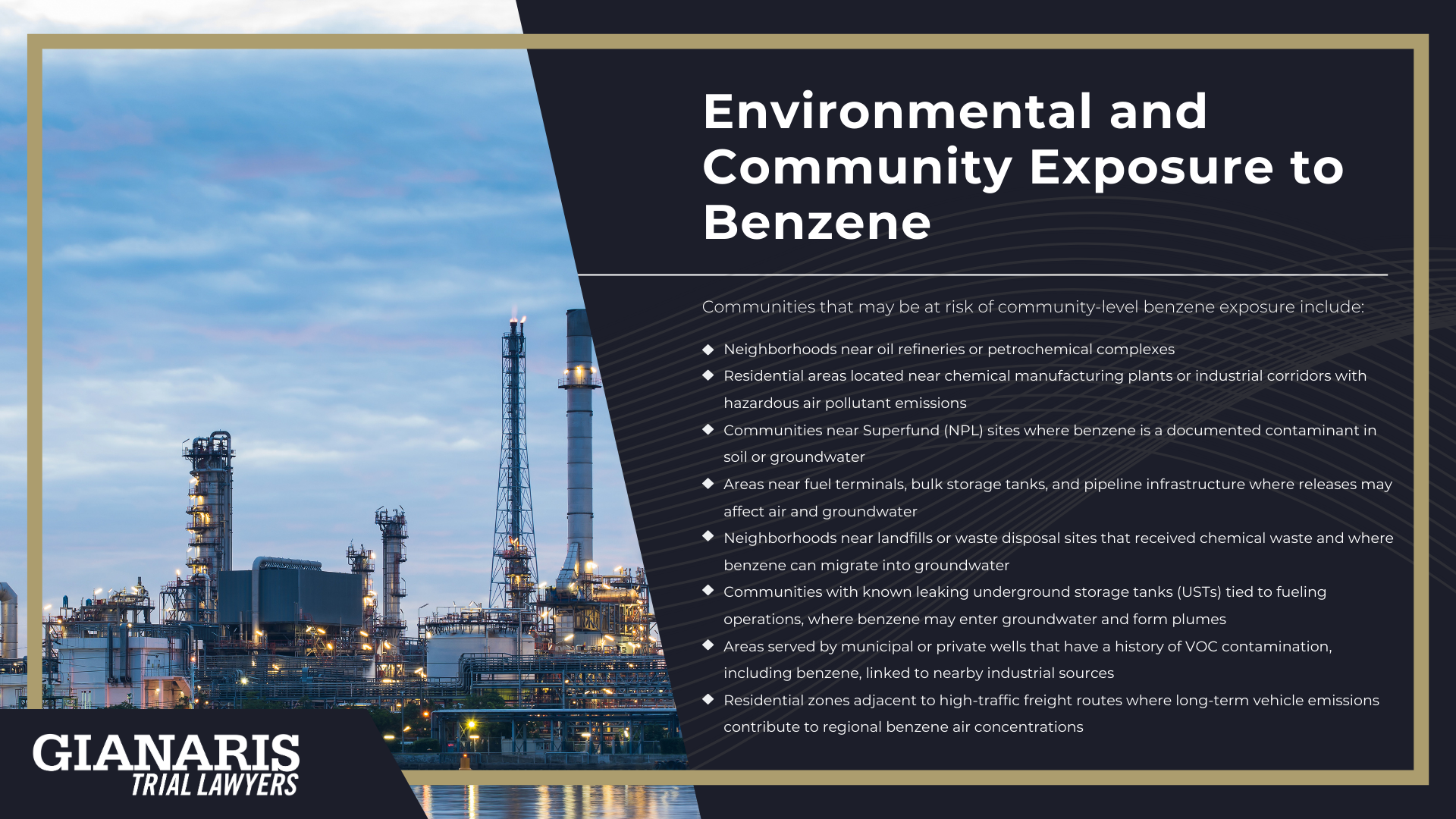
Environmental and Community Exposure to Benzene

Community exposure to benzene is often evaluated differently than workplace exposure because the sources are diffuse and the exposure pathways can involve both air and water over long periods.

The Environmental Protection Agency (EPA) recognizes benzene as a widespread contaminant at hazardous waste sites and reports that it has been found at a significant share of Superfund National Priorities List locations, which reflects how frequently it appears in environmental investigations.

One common mechanism is an underground plume, where benzene moves through soil and groundwater after a leak, spill, or buried waste release and can migrate toward drinking water wells or seep into basements through vapor intrusion.

Another pathway is air pollution, because benzene evaporates quickly and can accumulate downwind of industrial sources or fuel-related operations, creating long-term ambient exposure concerns for nearby residents.

EPA materials also note that most benzene intake for the general public typically occurs through breathing contaminated air, which is why ambient air impacts remain central when evaluating the risk benzene exposure poses to communities near emission sources.

As a concrete indicator of prevalence, EPA’s own Superfund benzene fact sheet reports that benzene has been found at at least 29% of hazardous waste sites on the National Priorities List, reinforcing why community exposure screening often begins with proximity to known contamination zones and industrial release histories.

Understanding Eligibility in Benzene Exposure Claims; Why Benzene Lawsuits Focus on Exposure History and Medical Diagnosis; Documented Benzene Exposure_ The First Qualification Requirement; Occupational Benzene Exposure_ High-Risk Industries and Job Roles; Environmental and Community Exposure to Benzene

Communities that may be at risk of community-level benzene exposure include:

  • Neighborhoods near oil refineries or petrochemical complexes
  • Residential areas located near chemical manufacturing plants or industrial corridors with hazardous air pollutant emissions
  • Communities near Superfund (NPL) sites where benzene is a documented contaminant in soil or groundwater
  • Areas near fuel terminals, bulk storage tanks, and pipeline infrastructure where releases may affect air and groundwater
  • Neighborhoods near landfills or waste disposal sites that received chemical waste and where benzene can migrate into groundwater
  • Communities with known leaking underground storage tanks (USTs) tied to fueling operations, where benzene may enter groundwater and form plumes
  • Areas served by municipal or private wells that have a history of VOC contamination, including benzene, linked to nearby industrial sources
  • Residential zones adjacent to high-traffic freight routes where long-term vehicle emissions contribute to regional benzene air concentrations

Medical Conditions Commonly Associated With Benzene Exposure

Benzene is dangerous because it is a bone-marrow toxicant that can interfere with the body’s ability to produce healthy blood cells, which is why the most consistent long-term harms involve the blood-forming system.

The Centers for Disease Control and Prevention (CDC) explains that long-term benzene exposure can reduce red blood cells, leading to anemia, and can also cause excessive bleeding and immune effects that raise infection risk.

In medical terms, the bone marrow is where white blood cells and red blood cells are produced, and benzene can suppress or alter that production, contributing to blood abnormalities that sometimes precede leukemia.

Understanding Eligibility in Benzene Exposure Claims; Why Benzene Lawsuits Focus on Exposure History and Medical Diagnosis; Documented Benzene Exposure_ The First Qualification Requirement; Occupational Benzene Exposure_ High-Risk Industries and Job Roles; Environmental and Community Exposure to Benzene; Medical Conditions Commonly Associated With Benzene Exposure

Benzene enters the body primarily through inhalation of contaminated air, but it can also be absorbed through the skin and ingested through contaminated water, and ATSDR notes that it can circulate in the bloodstream and be stored temporarily in bone marrow and fat.

Once metabolized, benzene forms reactive compounds that can damage marrow cells and contribute to genetic and chromosomal changes, which is one reason it is treated as a potent leukemogenic chemical in toxicology.

This risk profile is reflected in the work of the International Agency for Research on Cancer (IARC), which concludes that benzene causes acute myeloid leukemia and finds limited evidence for associations with other blood cancers such as chronic lymphocytic leukemia, non-Hodgkin lymphoma, and multiple myeloma.

Because benzene-related blood cancers and marrow disorders often develop after prolonged exposure and may not appear until years later, eligibility screening and medical review typically account for latency, the timing of symptoms, and whether earlier blood abnormalities were documented before diagnosis.

Acute Myeloid Leukemia (AML) and Related Leukemias

Acute myeloid leukemia (AML) is the cancer most consistently and strongly associated with benzene exposure in toxicology and epidemiology, which is why it is often treated as the central diagnosis in benzene exposure claims.

Benzene’s primary target is the bone marrow, where blood cells are produced, and long-term exposure has been linked to marrow suppression, abnormal blood counts, and later development of myeloid malignancies.

The International Agency for Research on Cancer (IARC) concluded there is sufficient evidence in humans that benzene causes AML (also described as acute non-lymphocytic leukemia/ANLL in older classifications), and it found more limited evidence for other hematologic cancers.

In litigation terms, AML and closely related myeloid diseases are treated differently from more speculative benzene associations because the exposure-response evidence is clearer, and multiple large worker cohorts show elevated risk tied to cumulative exposure and intensity.

Some studies also evaluate chronic myelogenous leukemia (CML), which is biologically distinct from AML but still falls within the broader category of myeloid leukemias, and findings are often analyzed separately because the evidence base is smaller.

Understanding Eligibility in Benzene Exposure Claims; Why Benzene Lawsuits Focus on Exposure History and Medical Diagnosis; Documented Benzene Exposure_ The First Qualification Requirement; Occupational Benzene Exposure_ High-Risk Industries and Job Roles; Environmental and Community Exposure to Benzene; Medical Conditions Commonly Associated With Benzene Exposure; Other Blood and Bone Marrow Disorders Linked to Benzene Exposure; Acute Myeloid Leukemia (AML) and Related Leukemias

Studies linking benzene exposure to AML and related leukemias:

  • IARC Monographs (2012 review; Group 1 carcinogen classification): IARC’s evaluation concluded benzene causes AML/ANLL based on “sufficient evidence” in humans, citing multiple occupational cohorts and mechanistic data showing benzene’s bone marrow toxicity and leukemogenic activity.
  • Chinese Worker Cohort (NCI & Chinese CDC collaboration; 110,631 workers; 1972–1999 follow-up): A large multicenter case–cohort analysis nested within this cohort evaluated combined MDS/AML and also evaluated chronic myelogenous leukemia separately. The study used a detailed exposure reconstruction model calibrated with historical routine measurements and suggested increasing risk of MDS/AML with increasing cumulative benzene exposure in defined windows prior to diagnosis, supporting dose-response concerns in occupational settings.
  • Pliofilm Cohort (Goodyear workers; benchmark evidence base for benzene risk assessment): The Pliofilm cohort has long been treated as a cornerstone study group for benzene leukemia risk, including in regulatory assessment contexts. Analyses of this cohort emphasize that leukemia excess was driven largely by AML/ANLL subtypes, and updates to exposure estimates have consistently supported the conclusion that high-concentration occupational exposure had leukemogenic potential, especially for acute myeloid forms.
  • EPA-linked subtype analysis using the Pliofilm cohort (ANLL/AML focus): A later analytic paper evaluating acute non-lymphocytic leukemia and its subtypes using updated Pliofilm exposure estimates noted that the EPA’s benzene carcinogenicity work has historically relied on this cohort. The study examined AML/ANLL mortality associations across exposure categories and lag times, reinforcing why AML is used as a primary endpoint in benzene carcinogenicity evaluation and in causation analysis.

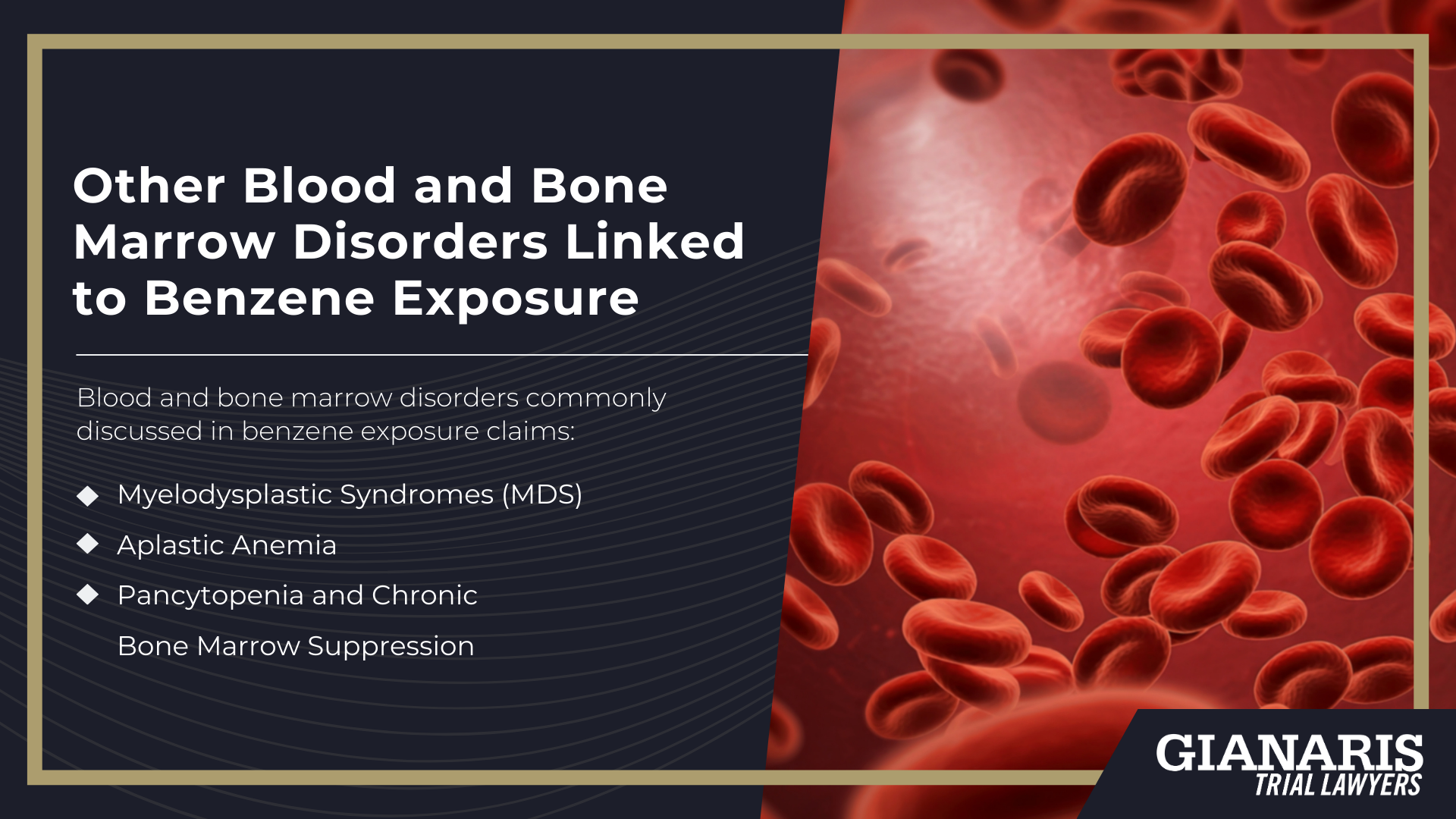
Other Blood and Bone Marrow Disorders Linked to Benzene Exposure

Benzene exposure is not only linked to acute myeloid leukemia (AML); it is also associated with a broader set of blood and bone marrow disorders that reflect the same underlying injury pattern: damage to the marrow’s ability to make healthy blood cells.

OSHA’s medical surveillance guidelines describe benzene as a hematopoietic toxin capable of causing pancytopenia (low counts across multiple blood cell lines), aplastic anemia, and other marrow suppression syndromes—effects that can appear before any cancer diagnosis is made.

This is why many benzene exposure evaluations look closely at “pre-leukemic” or marrow-failure conditions, including myelodysplastic syndromes (MDS), which can present as persistent cytopenias and abnormal marrow function long before the development of AML.

Peer-reviewed clinical literature describing benzene-induced disease notes that MDS is often a transitional stage in benzene-related marrow injury, with some patients later progressing to aplastic anemia or acute leukemia.

At the population level, more recent epidemiologic work has strengthened the case for benzene’s association with MDS, particularly in occupational settings with substantial cumulative exposure.

A large study of Chinese factory workers employed in benzene-exposed workplaces evaluated exposure-response relationships for myeloid neoplasms and found evidence supporting a link between benzene exposure and increased risk of MDS and AML, including analyses by time since exposure and age at exposure.

In practice, these non-AML diagnoses can be legally significant because they show the same core toxic injury mechanism (marrow suppression and abnormal hematopoiesis) and may be diagnosed after years of exposure, even when leukemia has not yet developed.

Understanding Eligibility in Benzene Exposure Claims; Why Benzene Lawsuits Focus on Exposure History and Medical Diagnosis; Documented Benzene Exposure_ The First Qualification Requirement; Occupational Benzene Exposure_ High-Risk Industries and Job Roles; Environmental and Community Exposure to Benzene; Medical Conditions Commonly Associated With Benzene Exposure; Other Blood and Bone Marrow Disorders Linked to Benzene Exposure

Blood and bone marrow disorders commonly discussed in benzene exposure claims:

  • Myelodysplastic Syndromes (MDS): MDS is defined by ineffective blood cell formation and persistent cytopenias, often presenting with fatigue, infections, or bleeding due to low blood counts.
  • Aplastic Anemia: Aplastic anemia involves failure of the bone marrow to produce adequate blood cells and is typically characterized by pancytopenia.
  • Pancytopenia and Chronic Bone Marrow Suppression: Some individuals present first with abnormal blood counts, chronic leukopenia, or repeated infections, which are clinical signals that the marrow has been injured but has not yet progressed to a malignant process.

Diagnosis Can Often Come Years After Initial Exposure to Benzene

Latency is the period between a person’s first meaningful exposure to a toxic chemical and the point when a diagnosable disease appears.

In benzene exposure cases, latency is significant because benzene-related blood cancers and bone marrow disorders often develop gradually, after long-term injury to the marrow rather than immediate clinical collapse.

Public health authorities recognize that chronic benzene exposure can suppress bone marrow function and cause persistent abnormalities in blood counts before leukemia is diagnosed, which means the earliest warning signs may appear years before the disease reaches an advanced stage.

This concept matters because benzene is metabolized into reactive compounds that can damage the cells responsible for producing new blood cells, creating conditions for genetic changes and dysfunctional blood formation over time.

IARC’s evaluation of benzene as a Group 1 carcinogen reflects not only epidemiologic findings linking benzene to leukemia, but also mechanistic evidence showing benzene’s ability to cause long-term marrow toxicity and leukemogenic effects.

Understanding Eligibility in Benzene Exposure Claims; Why Benzene Lawsuits Focus on Exposure History and Medical Diagnosis; Documented Benzene Exposure_ The First Qualification Requirement; Occupational Benzene Exposure_ High-Risk Industries and Job Roles; Environmental and Community Exposure to Benzene; Medical Conditions Commonly Associated With Benzene Exposure; Other Blood and Bone Marrow Disorders Linked to Benzene Exposure; Acute Myeloid Leukemia (AML) and Related Leukemias; Diagnosis Can Often Come Years After Initial Exposure to Benzene

As a result, many individuals diagnosed with leukemia (especially AML and related myeloid disorders) have exposure histories that reach back a decade or more, often tied to repeated occupational contact rather than a single identifiable incident.

Latency also shapes how benzene cases are evaluated in litigation.

A diagnosis that occurs years after exposure can still be medically consistent with benzene’s known toxic profile, but it requires a careful timeline showing when exposure occurred, how long it lasted, and what symptoms or blood abnormalities appeared along the way.

Do You Qualify for a Benzene Exposure Lawsuit?

You may qualify for a benzene exposure lawsuit if you can document meaningful exposure and have been diagnosed with a serious blood or bone marrow condition consistent with benzene toxicity.

Most cases begin with an exposure history tied to workplace fuel vapors, industrial solvents, chemical processing, refinery operations, or long-term environmental contamination.

Medical eligibility often centers on diagnoses such as acute myeloid leukemia (AML), myelodysplastic syndrome (MDS), aplastic anemia, or other clinically documented blood disorders linked to marrow suppression.

A diagnosis alone is not enough; the case also depends on whether the exposure can be supported through records, witness statements, job histories, industrial monitoring, or environmental data.

Timing matters because benzene-related diseases often involve latency, meaning diagnosis can occur years after the highest exposure period.

Understanding Eligibility in Benzene Exposure Claims; Why Benzene Lawsuits Focus on Exposure History and Medical Diagnosis; Documented Benzene Exposure_ The First Qualification Requirement; Occupational Benzene Exposure_ High-Risk Industries and Job Roles; Environmental and Community Exposure to Benzene; Medical Conditions Commonly Associated With Benzene Exposure; Other Blood and Bone Marrow Disorders Linked to Benzene Exposure; Acute Myeloid Leukemia (AML) and Related Leukemias; Diagnosis Can Often Come Years After Initial Exposure to Benzene; Do You Qualify for a Benzene Exposure Lawsuit

Benzene-related claims also require careful evaluation of alternative risk factors and other possible exposures, which is one reason detailed background information is important during screening.

In wrongful death claims, qualifying evidence may include proof of exposure history, medical records, and documentation linking the death to a benzene-associated diagnosis.

A legal review can help determine whether the exposure circumstances and medical evidence support a claim and whether the claim is still within the applicable statute of limitations.

Common Evidence Used in a Benzene Exposure Lawsuit

Benzene claims are evidence-driven because the core dispute in most cases is whether the exposure occurred at meaningful levels and whether it can be linked to a specific diagnosis.

Documentation often has to show where the exposure happened, how long it lasted, and what tasks or environmental conditions made benzene contact plausible.

Medical evidence is equally important because benzene-related illnesses typically involve bone marrow injury, blood abnormalities, or leukemia diagnoses that require objective clinical proof.

Strong cases also anticipate defense arguments about alternative causes by building a clear exposure timeline supported by multiple independent sources.

Understanding Eligibility in Benzene Exposure Claims; Why Benzene Lawsuits Focus on Exposure History and Medical Diagnosis; Documented Benzene Exposure_ The First Qualification Requirement; Occupational Benzene Exposure_ High-Risk Industries and Job Roles; Environmental and Community Exposure to Benzene; Medical Conditions Commonly Associated With Benzene Exposure; Other Blood and Bone Marrow Disorders Linked to Benzene Exposure; Acute Myeloid Leukemia (AML) and Related Leukemias; Diagnosis Can Often Come Years After Initial Exposure to Benzene; Do You Qualify for a Benzene Exposure Lawsuit; Common Evidence Used in a Benzene Exposure Lawsuit

Potential evidence in a benzene exposure lawsuit may include:

  • Employment records showing job title, worksite location, and years of service
  • Job descriptions, union records, and personnel files documenting duties involving fuels, solvents, or chemical handling
  • Safety Data Sheets (SDS), product labels, and chemical inventories showing benzene-containing materials used on-site
  • Industrial hygiene records, air monitoring results, and OSHA compliance documents (if available)
  • Work orders, maintenance logs, and task sheets showing specific exposure activities (tank cleaning, fuel transfer, solvent degreasing, etc.)
  • Witness statements from coworkers or supervisors confirming exposure conditions
  • Incident reports, spill logs, and emergency response documentation tied to releases or unusual exposure events
  • Medical records confirming diagnosis and treatment, including hematology consult notes
  • Laboratory results showing abnormal blood counts over time (CBC trends)
  • Bone marrow biopsy reports, pathology findings, cytogenetics, and oncology records
  • Pharmacy records and treatment timelines (chemotherapy, transfusions, immunosuppressive therapy)
  • Smoking history and medical history documentation used to evaluate competing risk factors

Potential Compensation in a Benzene Exposure Claim

In civil benzene cases, “damages” refers to the categories of harm a plaintiff may seek to recover after an illness or death allegedly caused by toxic exposure.

Benzene lawyers typically assess damages by reviewing objective records and then projecting future needs based on the expected course of the disease.

Because leukemia and bone marrow disorders can involve prolonged treatment, hospitalizations, transfusions, and long-term monitoring, damages calculations often focus heavily on medical expenses and the economic impact of being unable to work.

Non-economic damages may also be evaluated, including the effect of the disease on daily functioning, physical pain, and emotional suffering, particularly when treatment is invasive or the prognosis is uncertain.

In wrongful death cases, the damages analysis may expand to include financial support the person would have provided, funeral costs, and the surviving family’s legally recognized losses under state law.

Understanding Eligibility in Benzene Exposure Claims; Why Benzene Lawsuits Focus on Exposure History and Medical Diagnosis; Documented Benzene Exposure_ The First Qualification Requirement; Occupational Benzene Exposure_ High-Risk Industries and Job Roles; Environmental and Community Exposure to Benzene; Medical Conditions Commonly Associated With Benzene Exposure; Other Blood and Bone Marrow Disorders Linked to Benzene Exposure; Acute Myeloid Leukemia (AML) and Related Leukemias; Diagnosis Can Often Come Years After Initial Exposure to Benzene; Do You Qualify for a Benzene Exposure Lawsuit; Common Evidence Used in a Benzene Exposure Lawsuit; Potential Compensation in a Benzene Exposure Claim

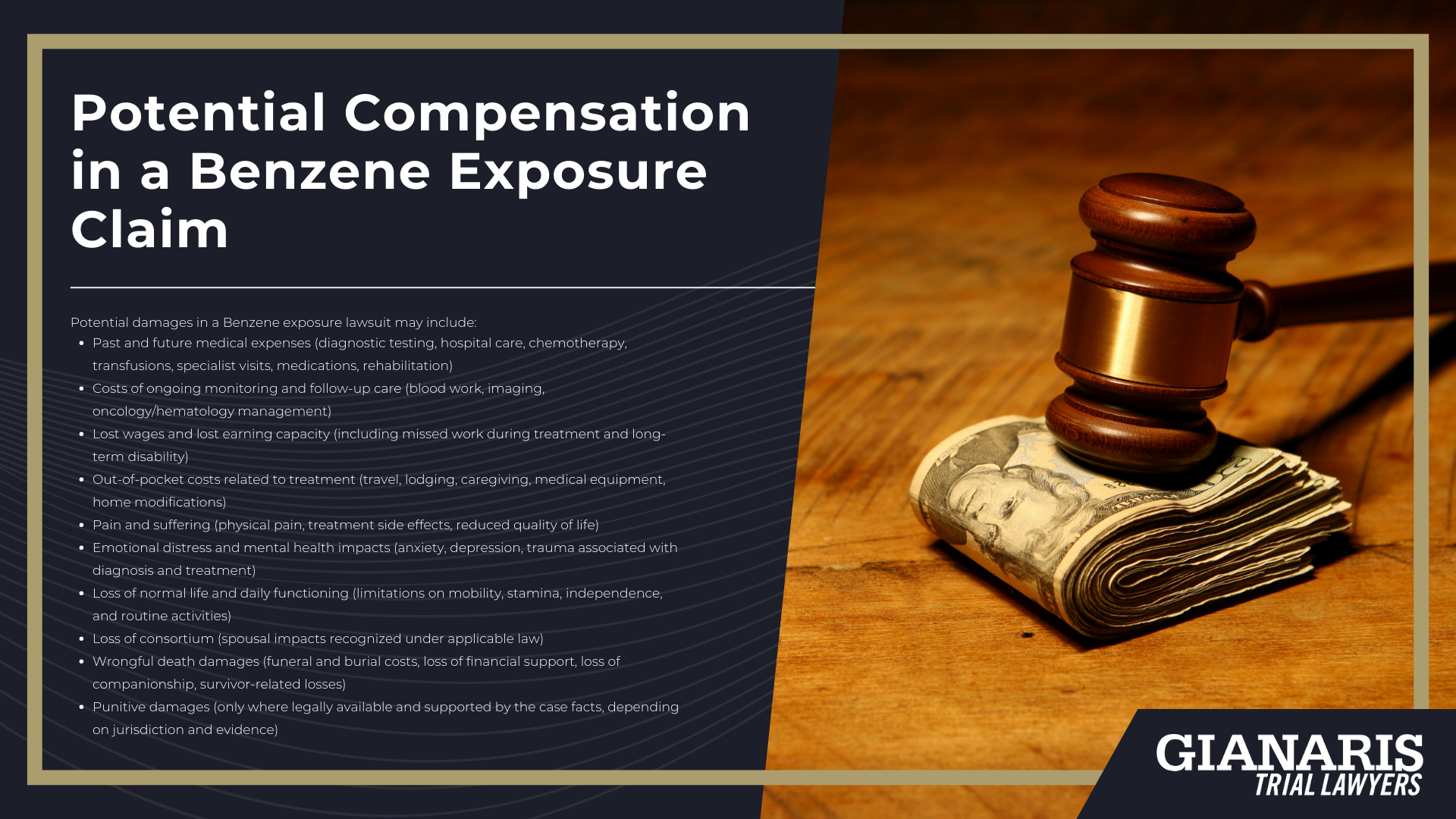
Potential damages in a Benzene exposure lawsuit may include:

  • Past and future medical expenses (diagnostic testing, hospital care, chemotherapy, transfusions, specialist visits, medications, rehabilitation)
  • Costs of ongoing monitoring and follow-up care (blood work, imaging, oncology/hematology management)
  • Lost wages and lost earning capacity (including missed work during treatment and long-term disability)
  • Out-of-pocket costs related to treatment (travel, lodging, caregiving, medical equipment, home modifications)
  • Pain and suffering (physical pain, treatment side effects, reduced quality of life)
  • Emotional distress and mental health impacts (anxiety, depression, trauma associated with diagnosis and treatment)
  • Loss of normal life and daily functioning (limitations on mobility, stamina, independence, and routine activities)
  • Loss of consortium (spousal impacts recognized under applicable law)
  • Wrongful death damages (funeral and burial costs, loss of financial support, loss of companionship, survivor-related losses)
  • Punitive damages (only where legally available and supported by the case facts, depending on jurisdiction and evidence)

Who Typically Does NOT Qualify for a Benzene Exposure Lawsuit?

Not every benzene exposure claim qualifies for litigation, even when a person believes benzene played a role in their health condition.

In most cases, disqualification happens when the exposure cannot be documented in a meaningful way or when the medical diagnosis does not align with conditions commonly associated with benzene’s bone marrow toxicity.

Cases may also fall short when exposure was brief or incidental and there is no evidence of sustained contact at levels that would plausibly elevate cancer risk.

Another common issue is causation: if medical records and history suggest a more likely non-benzene cause, the claim may not be medically supportable without stronger exposure documentation.

Finally, some claims fail because they are filed too late under the applicable statute of limitations, which can bar otherwise valid cases depending on state law.

Understanding Eligibility in Benzene Exposure Claims; Why Benzene Lawsuits Focus on Exposure History and Medical Diagnosis; Documented Benzene Exposure_ The First Qualification Requirement; Occupational Benzene Exposure_ High-Risk Industries and Job Roles; Environmental and Community Exposure to Benzene; Medical Conditions Commonly Associated With Benzene Exposure; Other Blood and Bone Marrow Disorders Linked to Benzene Exposure; Acute Myeloid Leukemia (AML) and Related Leukemias; Diagnosis Can Often Come Years After Initial Exposure to Benzene; Do You Qualify for a Benzene Exposure Lawsuit; Common Evidence Used in a Benzene Exposure Lawsuit; Potential Compensation in a Benzene Exposure Claim; Who Typically Does NOT Qualify for a Benzene Exposure Lawsuit

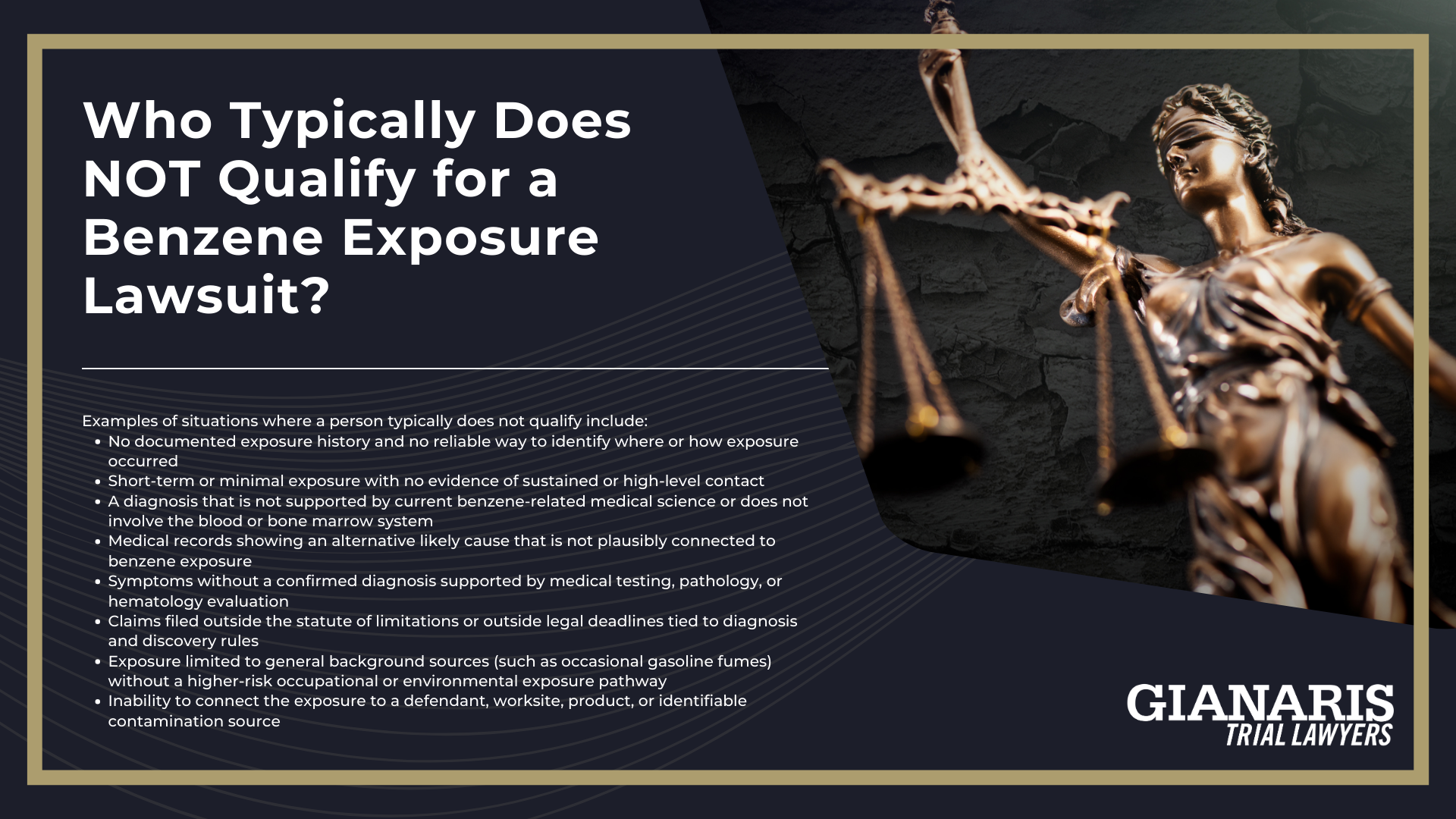
Examples of situations where a person typically does not qualify include:

  • No documented exposure history and no reliable way to identify where or how exposure occurred
  • Short-term or minimal exposure with no evidence of sustained or high-level contact
  • A diagnosis that is not supported by current benzene-related medical science or does not involve the blood or bone marrow system
  • Medical records showing an alternative likely cause that is not plausibly connected to benzene exposure
  • Symptoms without a confirmed diagnosis supported by medical testing, pathology, or hematology evaluation
  • Claims filed outside the statute of limitations or outside legal deadlines tied to diagnosis and discovery rules
  • Exposure limited to general background sources (such as occasional gasoline fumes) without a higher-risk occupational or environmental exposure pathway
  • Inability to connect the exposure to a defendant, worksite, product, or identifiable contamination source

Gianaris Trial Lawyers: Investigating Benzene Lawsuits

Benzene exposure cases often turn on details that are not obvious at first glance: where exposure happened, how long it lasted, what products or emissions were involved, and whether the medical record supports a benzene-related blood or bone marrow diagnosis.

Many individuals were exposed years before symptoms appeared, and the documentation needed to evaluate a claim may be spread across employment records, safety materials, medical testing, and environmental reports.

A focused review can clarify whether a claim is medically consistent with benzene toxicity, whether the exposure can be supported through available evidence, and whether the case is still within the applicable statute of limitations.

Gianaris Trial Lawyers is investigating benzene exposure lawsuits involving leukemia and other serious blood-related conditions, including cases arising from occupational exposure and long-term community contamination.

Understanding Eligibility in Benzene Exposure Claims; Why Benzene Lawsuits Focus on Exposure History and Medical Diagnosis; Documented Benzene Exposure_ The First Qualification Requirement; Occupational Benzene Exposure_ High-Risk Industries and Job Roles; Environmental and Community Exposure to Benzene; Medical Conditions Commonly Associated With Benzene Exposure; Other Blood and Bone Marrow Disorders Linked to Benzene Exposure; Acute Myeloid Leukemia (AML) and Related Leukemias; Diagnosis Can Often Come Years After Initial Exposure to Benzene; Do You Qualify for a Benzene Exposure Lawsuit; Common Evidence Used in a Benzene Exposure Lawsuit; Potential Compensation in a Benzene Exposure Claim; Who Typically Does NOT Qualify for a Benzene Exposure Lawsuit; Gianaris Trial Lawyers_ Investigating Benzene Lawsuits

If you believe benzene exposure may have contributed to your diagnosis or to the death of a family member, contact Gianaris Trial Lawyers to request a confidential case review.

You can also use the chat feature on this page to get in touch with our benzene lawyers.

Frequently Asked Questions

  • How do benzene exposure lawsuits work?

    Benzene exposure lawsuits are usually handled as toxic tort claims, which means the case must prove that exposure to a toxic chemical contributed to a specific medical injury.

    These cases are evidence-heavy and typically rely on expert witnesses, including physicians, toxicologists, and industrial hygienists, to explain how the exposure occurred and how it relates to the diagnosis.

    Success often depends on causation, meaning the plaintiff must show a defensible link between benzene exposure and illness through expert testimony and medical records.

    Benzene cases may involve multiple defendants, including product manufacturers, suppliers, contractors, and premises owners, depending on how and where the exposure occurred.

    Many cases resolve through negotiated settlements rather than trial, but strong claims can lead to significant jury verdicts and settlements for victims and families.

  • What is the lawsuit process for benzene exposure cases?

    While every case is different, most benzene exposure cases follow a similar sequence:

    1. Initial case review and screening: A toxic tort attorney reviews medical diagnosis, work history, possible exposure sources, and whether the case appears legally and medically supportable.
    2. Evidence collection and exposure reconstruction: The legal team gathers employment records, job duty documentation, product information, and exposure history to determine how benzene exposure likely occurred.
    3. Medical documentation and causation development: Medical records, pathology reports, blood work trends, and treatment history are compiled and evaluated to determine whether the diagnosis aligns with benzene-related disease patterns.
    4. Expert witness review and reporting: Toxic tort claims generally require experts to connect the chemical exposure to the harm. Experts may include occupational medicine specialists, toxicologists, and industrial hygiene professionals.
    5. Filing the lawsuit and identifying defendants: The case may name multiple defendants, including manufacturers, suppliers, contractors, or premises owners, based on the exposure sources and theories of liability.
    6. Discovery and depositions: Both sides exchange evidence, conduct depositions, review corporate documents, and test exposure and causation arguments under oath.
    7. Settlement negotiations or trial: Many benzene lawsuits are resolved through negotiated settlements, but some proceed to trial if the defendants dispute liability or causation.
  • Who can be sued in a benzene exposure case?

    Benzene exposure lawsuits can involve multiple defendants, depending on the exposure scenario.

    In many workplace cases, the employer may be shielded from lawsuits by workers’ compensation laws, meaning lawsuits often target third parties such as:

    • product manufacturers (fuel, solvents, degreasers, benzene-containing chemicals)
    • suppliers and distributors
    • contractors and maintenance entities
    • premises owners (premises liability claims)
    • companies responsible for releases or contamination in community exposure cases
  • What evidence is needed to file a benzene exposure lawsuit?

    Evidence gathering in benzene cases typically includes medical records, exposure history, and expert testimony, and the strongest claims usually have:

    • employment records showing where the person worked and what they did
    • documentation of job duties involving fuels, solvents, or industrial chemicals
    • medical diagnosis and treatment records (including pathology/biopsy reports where applicable)
    • laboratory results showing blood abnormalities over time
    • expert testimony supporting causation (toxicology, industrial hygiene, occupational medicine)

    The evidence requirements for successful claims usually include employment records, medical documentation, and expert testimony, particularly in cases involving leukemia or marrow disorders.

  • What do benzene lawsuits have to prove?

    The core issue is causation. Success hinges on proving a direct link between benzene exposure and illness through expert testimony and medical records. In practice, this often involves:

    • showing that meaningful exposure occurred (frequency, intensity, duration)
    • identifying a plausible exposure pathway (inhalation, skin contact, contaminated water)
    • demonstrating that the diagnosis is medically consistent with benzene toxicity
    • addressing alternative explanations raised by defendants
  • What legal theories are used in benzene exposure lawsuits?

    Several theories of liability may apply depending on the exposure source, including:

    • product liability (defective design, inadequate warnings, unsafe formulation)
    • premises liability (unsafe conditions at an industrial site or facility)
    • negligence (unsafe practices, preventable releases, failure to control hazards)
    • in some cases, claims may involve allegations related to concealment or failure to warn

    The appropriate theory depends on whether the exposure came from a product, a workplace environment, a contaminated property, or a combination of sources.

  • Do benzene lawsuits settle, or do they go to trial?

    Many benzene lawsuits are resolved through negotiated settlements rather than going to trial, especially when exposure and diagnosis evidence is strong.

    That said, benzene exposure lawsuits have also resulted in significant jury verdicts and settlements for victims and their families, particularly in cases involving leukemia and wrongful death.

  • What compensation is available in a benzene exposure case?

    Compensation can vary depending on diagnosis severity, medical treatment needs, age, earning capacity, and other case factors.

    In general, compensation in benzene exposure cases may cover:

    • medical costs and future care
    • lost income and loss of earning capacity
    • pain and suffering
    • emotional distress
    • wrongful death losses for surviving families

    In some cases, compensation may include punitive damages, which can be awarded when evidence shows extreme misconduct or reckless disregard for safety.

    Successful lawsuits can lead to punitive damages in cases involving severe corporate wrongdoing, depending on state law and the facts proven.

  • Is there a deadline to file a benzene exposure lawsuit?

    Yes.

    The statute of limitations varies by state and typically starts from the date of diagnosis or the date a person reasonably should have discovered the connection between illness and exposure.

    Because latency periods can be long and deadlines can be strict, consultation with a specialized toxic tort attorney is recommended as soon as a benzene-related diagnosis is confirmed.

  • Should I talk to a lawyer before gathering evidence on my own?

    Yes.

    Benzene cases are highly technical, often involve multiple defendants, and require expert support.

    Consulting with a specialized toxic tort attorney can help preserve evidence early, identify viable defendants beyond an employer, and assess whether medical and exposure documentation can support causation.

Published by:
Share
Picture of Ted Gianaris
Ted Gianaris

With nearly 30 years of legal experience, Attorney Ted Gianaris has secured over $350 million in compensation for Illinois injury victims, car accident victims, and surviving family members of wrongful death victims.

This article has been written and reviewed for legal accuracy and clarity by the team of writers and attorneys at Gianaris Trial Lawyers and is as accurate as possible. This content should not be taken as legal advice from an attorney. If you would like to learn more about our owner and experienced Illinois injury lawyer, Ted Gianaris, you can do so here.

Gianaris Trial Lawyers does everything possible to make sure the information in this article is up to date and accurate. If you need specific legal advice about your case, contact us. This article should not be taken as advice from an attorney.

Additional Benzene Lawsuits resources on our website:
All
FAQs
Injuries & Conditions
Legal Help
Occupations
Settlements & Compensation
You can learn more about Benzene Lawsuits below:
Benzene Exposure FAQs
Benzene Lawsuits

Other Benzene Lawsuits Resources

All
FAQs
Injuries & Conditions
Legal Help
Occupations
Settlements & Compensation