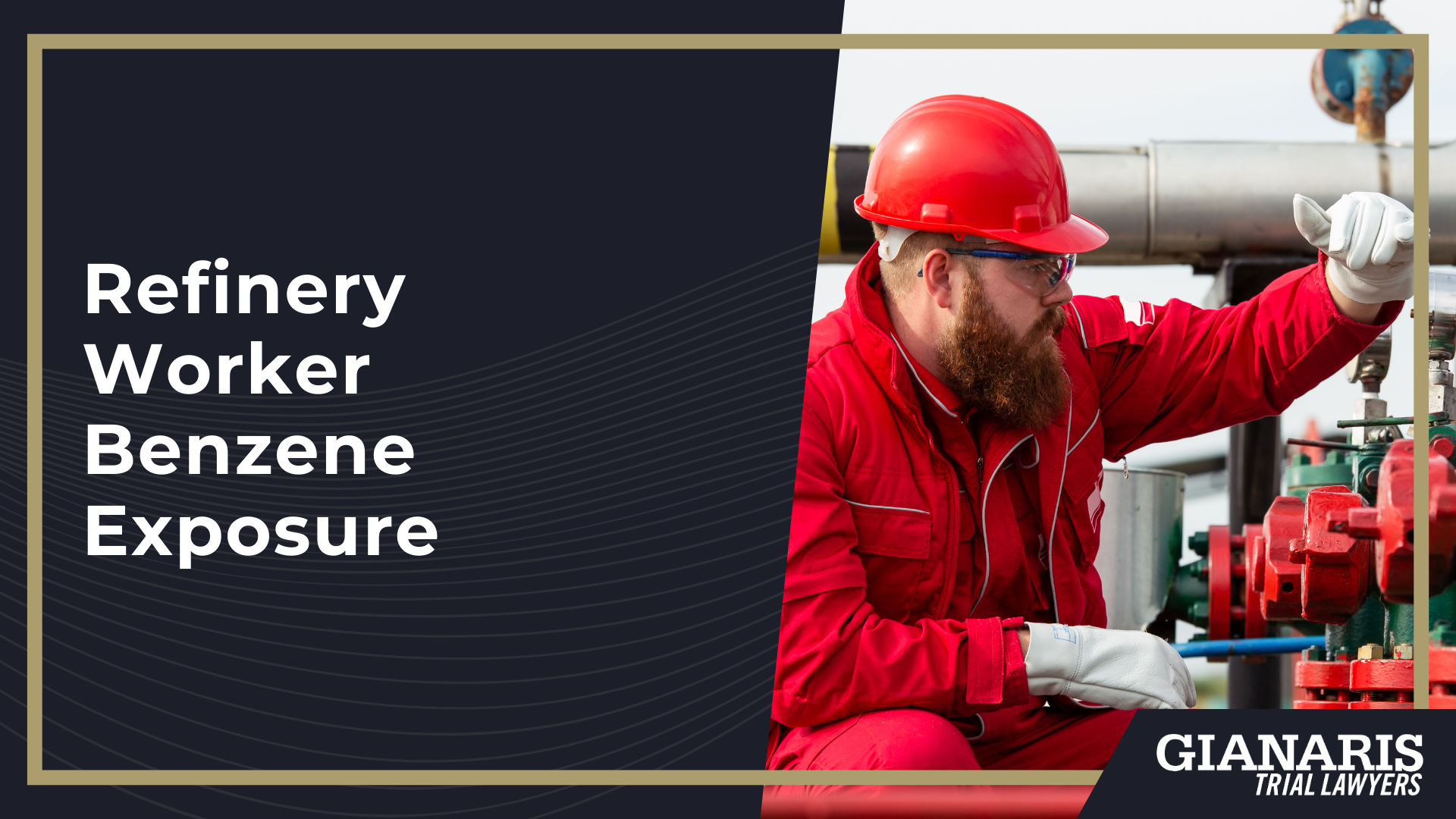
You may qualify if your refinery work involved repeated benzene exposure and you later developed serious health problems consistent with benzene-related disease.
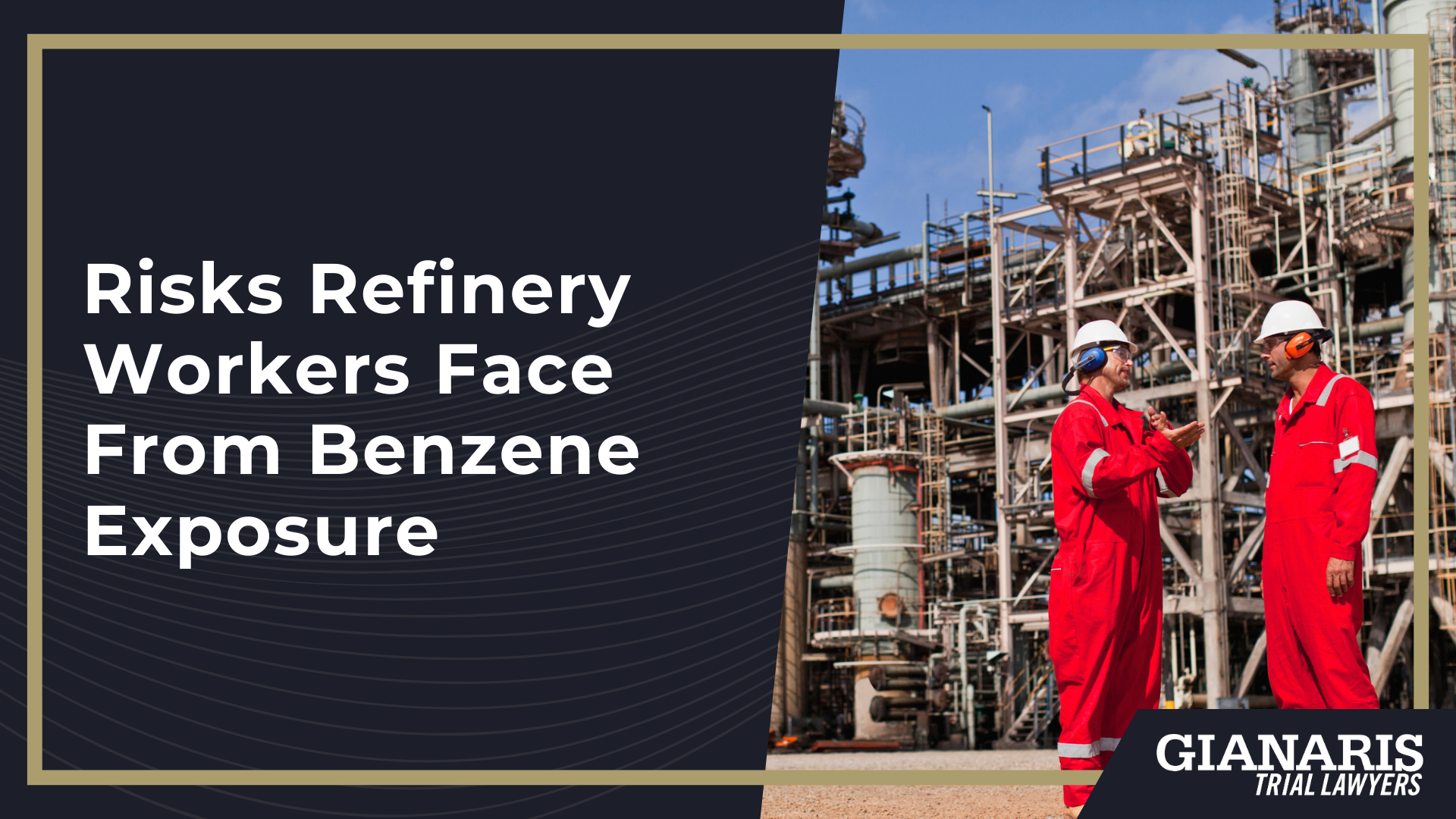
Many claims center on certain industries where benzene is routinely present, especially refinery operations where workers encounter vapors, residues, and fuel streams that can raise levels of benzene in the breathing zone.
Exposure can occur through inhaling gasoline fumes and process vapors, and through skin contact when benzene touches unprotected skin during sampling, maintenance, line breaks, or cleanup.
The risk often increases when safety controls are weak, when monitoring is inconsistent, or when conditions allow benzene increases during upset events, turnarounds, or equipment failures.
Public exposure sources, such as idling car engines, secondhand smoke, and other human activities, can add to background exposure, but refinery claims typically focus on whether workplace exposure meaningfully increased risk beyond normal daily life.
In some cases, people also have concerns about drinking water or contaminated water exposure near industrial activity, and those facts may matter if they reinforce a broader exposure picture.
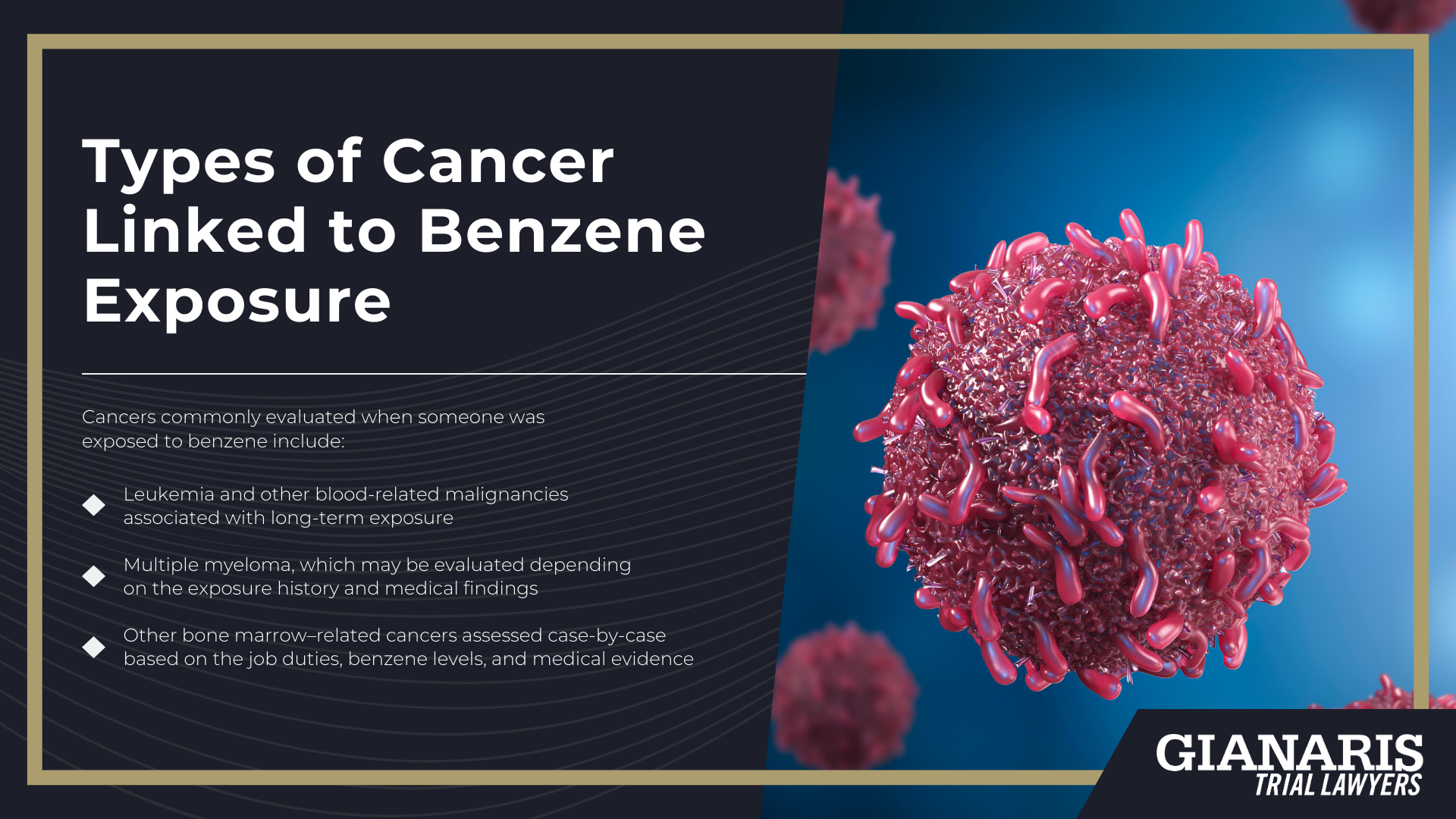
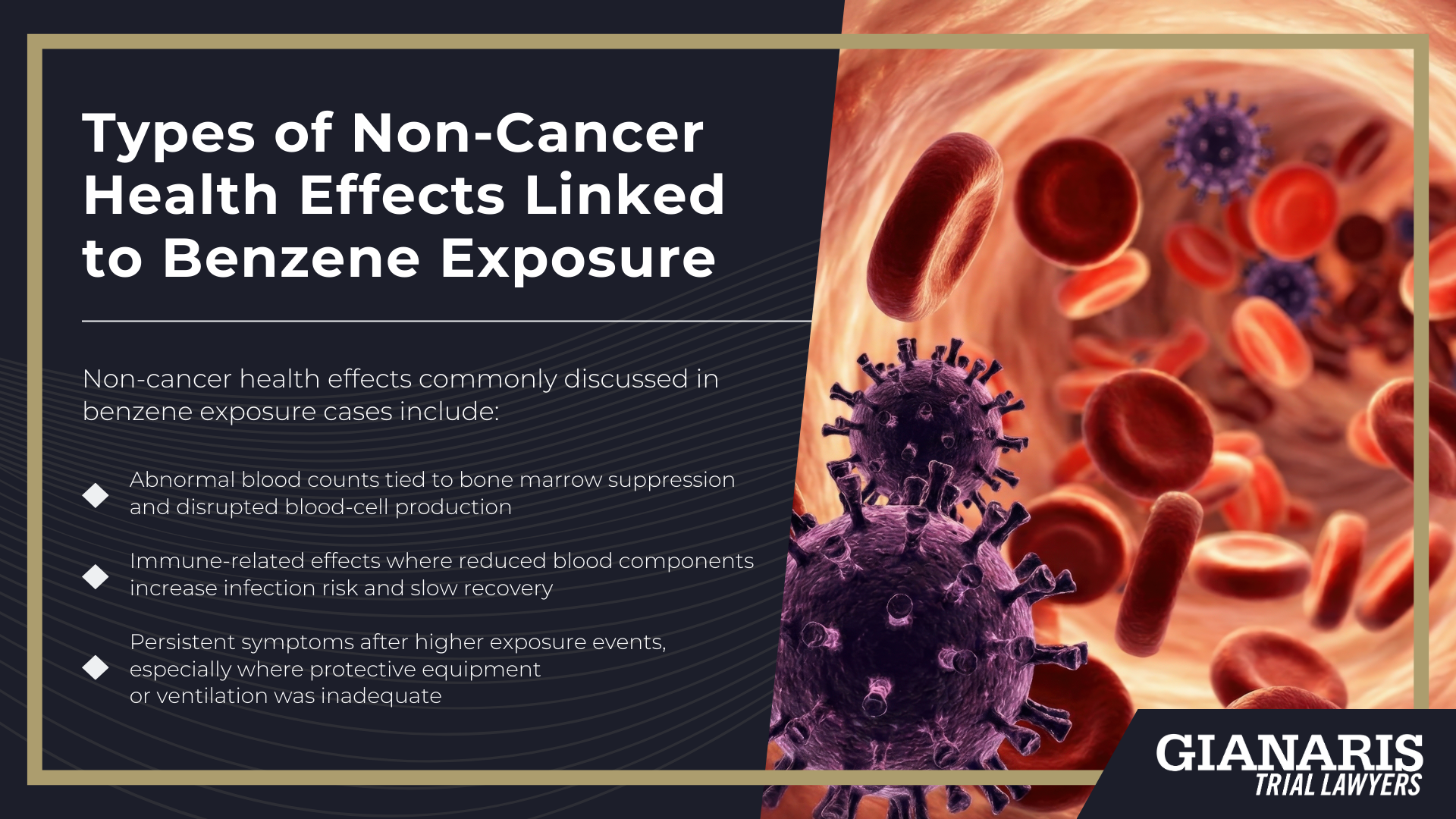
Health outcomes evaluated in these cases can include blood related cancers, abnormal blood counts, and bleeding complications such as excessive bleeding, depending on the medical findings.
Some individuals also report reproductive and hormonal issues, including irregular menstrual periods, and those symptoms should be documented and evaluated by medical providers.
If you’re unsure whether your exposure exceeds what was benzene allowed under workplace standards, a lawyer can review the facts, the job conditions, and any available monitoring data to assess whether you may have a viable claim, including the kinds of filed lawsuits that have been brought in similar exposure scenarios.
Gathering Evidence for a Benzene Exposure Case
Refinery benzene cases are built on proof of exposure and proof of harm, tied together with a clear timeline.
Your legal team will often start by identifying where benzene was present, how exposure occurred, and whether any monitoring exists showing levels of benzene during relevant work tasks.
Evidence can include maintenance and safety records, job assignments, SDS documents, and testimony from coworkers who can confirm how exposure happened in real life, especially where vapors, spills, and contaminated surfaces were routine.
If exposure involved direct contact, details matter, including whether benzene touched the skin, whether wash stations were available, and whether workers were told to seek fresh air after an exposure incident.
Odor reports can also be relevant, some workers describe a sweet smell, but dangerous exposure can occur even when there is no obvious odor.
Depending on the circumstances, public records or a disease registry may help support exposure context, and references from a national institute or a US departmentinvolved in occupational or public health oversight may provide guidance or benchmarks that help explain what limits existed and what was considered benzene allowed in the relevant period.
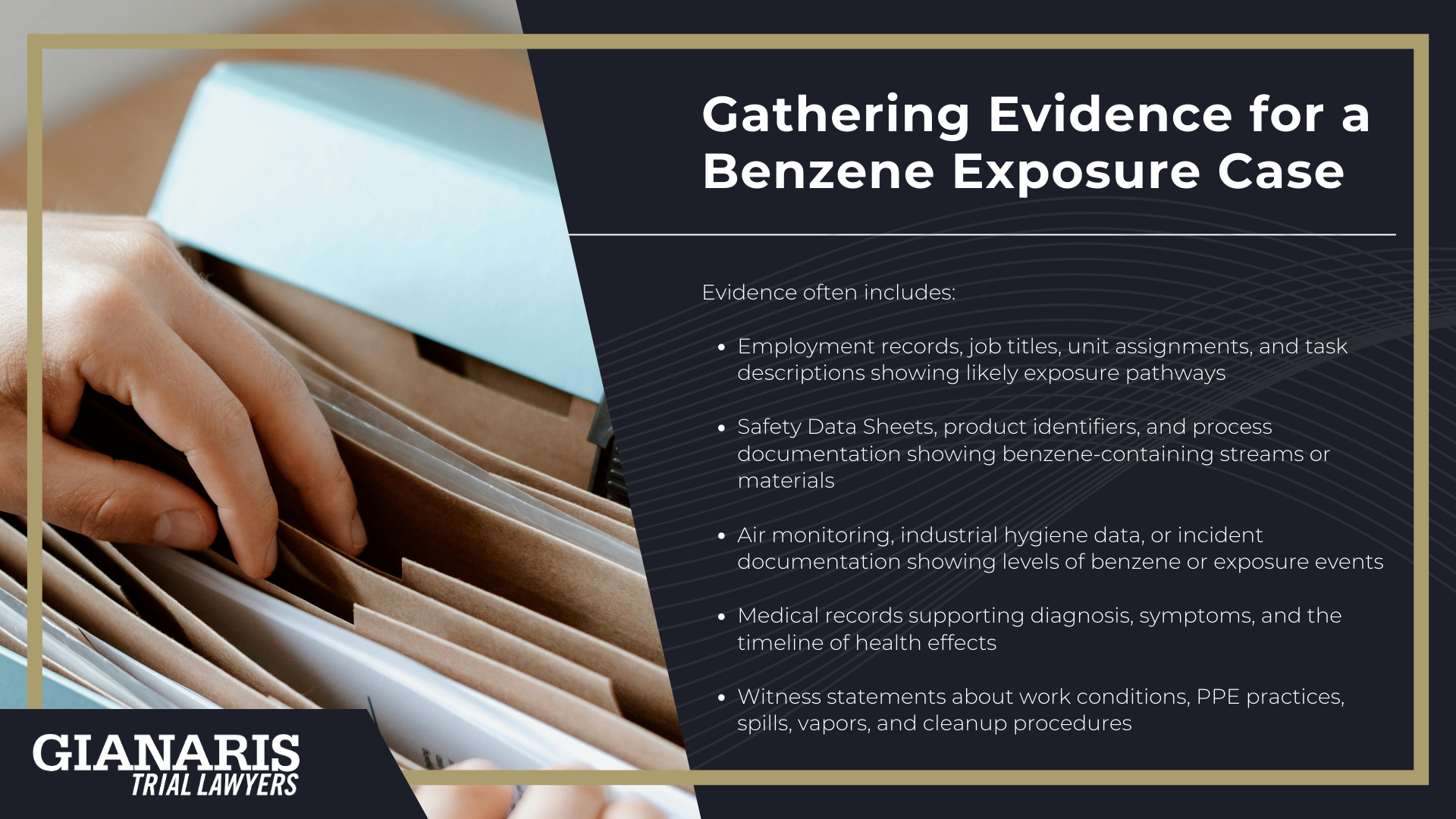
Evidence often includes:
- Employment records, job titles, unit assignments, and task descriptions showing likely exposure pathways
- Safety Data Sheets, product identifiers, and process documentation showing benzene-containing streams or materials
- Air monitoring, industrial hygiene data, or incident documentation showing levels of benzene or exposure events
- Medical records supporting diagnosis, symptoms, and the timeline of health effects
- Witness statements about work conditions, PPE practices, spills, vapors, and cleanup procedures
Because some benzene-related diseases take time to emerge, early collection of records can be critical, especially before sites change, units are modified, or documents are lost.
Damages in a Refinery Worker Benzene Exposure Lawsuit
Damages in a refinery worker benzene exposure lawsuit are intended to reflect the full scope of harm tied to occupational exposure and its long-term consequences.
These claims often account for both immediate medical needs and the ongoing care required for blood disorders or benzene-related cancers that develop over time.
When illness interferes with a refinery worker’s ability to remain employed, damages may also address lost wages and diminished earning capacity.
Courts also consider how chronic symptoms and treatment demands alter daily life, mental health, and future stability.
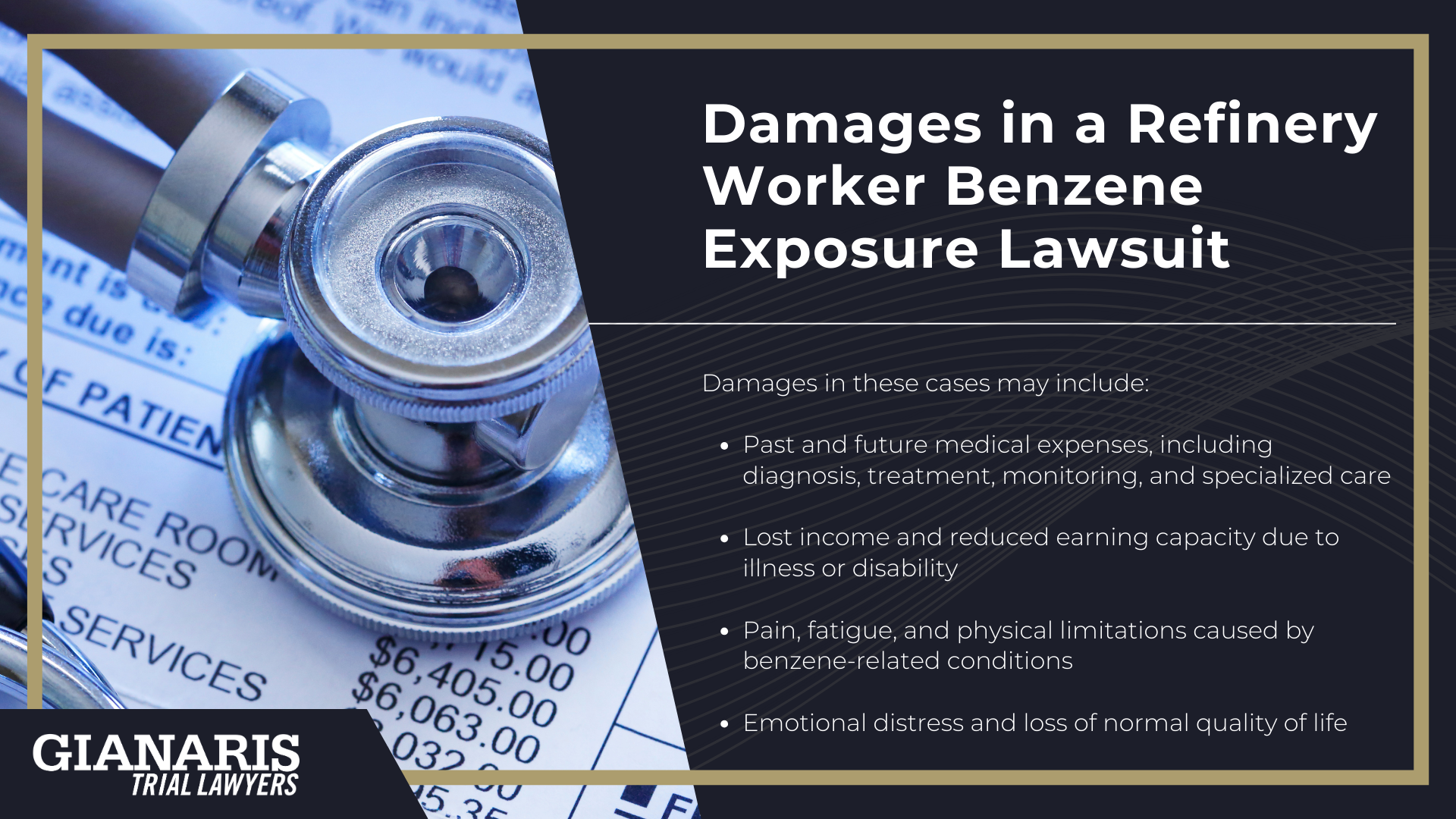
Damages in these cases may include:
- Past and future medical expenses, including diagnosis, treatment, monitoring, and specialized care
- Lost income and reduced earning capacity due to illness or disability
- Pain, fatigue, and physical limitations caused by benzene-related conditions
- Emotional distress and loss of normal quality of life