No fees unless we win.
Get a free consultation
128 Reviews
5.0
★★★★★

Health Effects of Benzene Exposure

Overview of the Health Effects of Benzene Exposure

Benzene Exposure claims allow workers and community members to hold companies accountable when preventable contact with a known toxic chemical causes serious harm.

Found in fuels, industrial solvents, and certain manufacturing emissions, benzene is widely recognized as a dangerous carcinogen and has been associated with life-altering illnesses, including blood cancers and bone marrow disorders.

When exposure leads to disease, a legal claim can help recover compensation for medical care, lost income, and the long-term consequences of avoidable toxic exposure.

Health Effects of Benzene Exposure

What are the Health Effects of Benzene Exposure?

Benzene exposure is a serious safety issue because it can harm the body in ways that are not always immediate or obvious.

The health effects of benzene exposure can range from short-term symptoms like headaches, dizziness, nausea, and irritation to long-term, life-altering disease after repeated contact.

Many workers ask, is benzene a carcinogen, and the answer is yes.

Benzene is widely recognized as a carcinogen with well-documented toxic effects on blood and bone marrow.

People also ask, does benzene cause cancer, and benzene has been associated with several blood-related cancers and disorders that can permanently change a person’s health and ability to work.

These health effects of benzene may develop after months or years of exposure, especially in jobs involving fuels, solvents, degreasing agents, and industrial processes where vapors can be inhaled or absorbed.

Because benzene can damage the bone marrow, it may contribute to abnormal blood counts, immune suppression, and conditions that increase vulnerability to infection and fatigue.

For some individuals, the most devastating outcome is benzene cancer, including leukemia and other blood cancers tied to prolonged exposure.

When the facts support it, a benzene lawsuit can hold the responsible parties accountable for unsafe practices, missing warnings, and preventable exposure conditions.

These cases often depend on careful documentation of work history, exposure pathways, and medical evidence connecting benzene and cancer to the diagnosed condition.

If you are dealing with the health effects of benzene exposure and want to understand your legal options, contact Gianaris Trial Lawyers today to discuss whether you may qualify for a benzene cancer lawsuit.

You can also use the chatbot on this page to see if you qualify immediately.

What Is Benzene?

Benzene is a light yellow liquid chemical (sometimes described as colorless) that evaporates easily and can become a breathing hazard when it builds up in the air.

It is a basic building-block chemical used in industry and is also present in petroleum-related products, including crude oil and gasoline-related mixtures.

Because of its well-documented carcinogenic risks, many people ask about the health effects of benzene exposure and whether long-term contact can lead to serious disease.

Major public-health authorities recognize benzene as a human carcinogen, including the International Agency for Research on Cancer (IARC), which is part of the World Health Organization, and the U.S. government’s National Toxicology Program under health and human services.

How Are People Exposed To Benzene?

Exposure to benzene, a known human carcinogen regularly monitored by the US Environmental Protection Agency (EPA) under federal and state toxic substances regulations, can occur through breathing contaminated air, skin contact with benzene-containing materials, or, less commonly, ingestion of contaminated water or soil.

Benzene is present in several consumer products and industrial materials, but the most significant and risky exposure to benzene historically has occurred through occupational exposures and environmental contamination.

Everyday inhalation of benzene vapors contributes to general population exposure, especially near motor vehicle exhaust, gas stations, industrial emissions, and cigarette smoke, while direct contact and ingestion pathways are more likely in specific settings where contamination has occurred.

Acute, high-level benzene exposure can produce serious health effects, which is why public guidance emphasizes removing oneself from the source and seeking medical care when exposure is suspected.
Common routes of exposure to benzene include:

  • Breathing ambient or indoor air containing benzene from motor vehicle exhaust, gasoline service stations, industrial emissions, and tobacco smoke.
  • Direct skin contact or inhalation during work in industries that produce or use benzene, including petrochemical and petroleum refining, coke and coal chemical manufacturing, rubber and tire production, gas station attendants, printing and laboratory technicians, and firefighters.
  • Exposure to benzene vapors from consumer products that may contain it as a solvent or impurity, such as paints, glues, furniture waxes, and detergents.
  • Ingestion or inhalation of benzene from contaminated water or soil, often due to leaks from underground storage tanks, hazardous waste sites, or industrial spills.

Occupational Exposure to Benzene

Occupational exposure to benzene has historically occurred in workplaces where petroleum products, fuels, solvents, or chemical intermediates are produced, stored, or handled, particularly in environments with limited ventilation.

Workers may be exposed while performing routine tasks such as fueling operations, tank cleaning, equipment maintenance, chemical processing, or handling benzene-containing materials, often without immediate symptoms that signal harm.

The primary concern in occupational settings is long-term exposure, where repeated inhalation or skin contact over months or years has been associated with bone marrow suppression, blood disorders, and increased leukemia risk.

Because these risks are well documented, occupational benzene exposure is regulated through federal and state safety standards that address air monitoring, permissible exposure limits, and workplace controls.
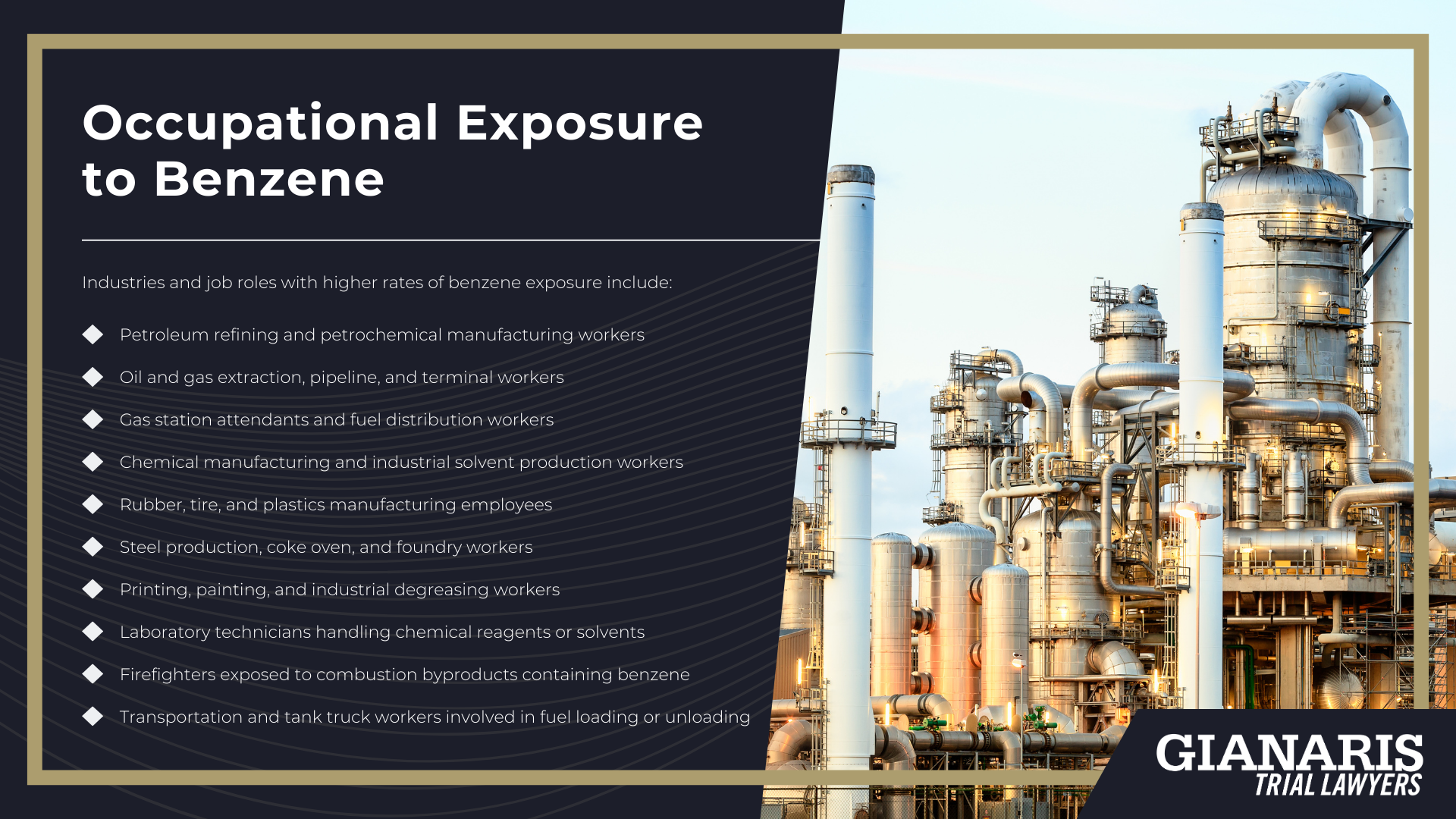
Industries and job roles with higher rates of benzene exposure include:

  • Petroleum refining and petrochemical manufacturing workers
  • Oil and gas extraction, pipeline, and terminal workers
  • Gas station attendants and fuel distribution workers
  • Chemical manufacturing and industrial solvent production workers
  • Rubber, tire, and plastics manufacturing employees
  • Steel production, coke oven, and foundry workers
  • Printing, painting, and industrial degreasing workers
  • Laboratory technicians handling chemical reagents or solvents
  • Firefighters exposed to combustion byproducts containing benzene
  • Transportation and tank truck workers involved in fuel loading or unloading

Environmental Exposure

Environmental exposure usually happens when benzene is released into the air from combustion or fuel-related sources, including motor vehicle exhaust, gasoline handling, and industrial emissions.

People can also be exposed through tobacco smoke and cigarette smoke, which can increase indoor air concentrations and contribute to ongoing, low-level chemical exposure.

In some communities, benzene contamination can become a concern after fuel spills, industrial releases, or other events that affect local conditions and prompt monitoring by public agencies, including the Environmental Protection Agency and disease control authorities.

When environmental exposure is suspected, reducing contact, especially by moving to fresh air during acute events, and getting medical guidance can be important steps to protect health.

Health Effects Linked To Benzene Exposure

Benzene is a toxic substance that can harm the body in both the short and long term, especially when someone is repeatedly exposed to benzene at work or through sustained environmental contact.

One of the most serious health consequences is benzene’s impact on the blood-forming system (particularly bone marrow cells) which is why benzene is classified as a known human carcinogen and a human carcinogen by major public-health authorities.

Long-term exposure can damage the bone marrow and disrupt normal production of blood cells, including red blood cells and white blood cells, which can lead to anemia, infection risk, and other complications.

High-level exposure events can also cause acute symptoms sometimes described as benzene poisoning, and public guidance often emphasizes moving to fresh air and seeking medical evaluation when exposure is suspected.

Because these risks are well established, occupational safety practices and hazard controls are central to prevention, and the best protection is to avoid exposure whenever possible.

Types of Cancer Linked to Benzene Exposure

Benzene is widely recognized as a cancer causing chemical, and the strongest evidence links benzene exposure to leukemia

This matters because leukemia is a cancer of blood-forming tissues, meaning benzene’s effects on bone marrow and blood production are directly connected to the cancer risk profile described in medical and toxicology research.

Cancers linked to benzene exposure include:

  • Acute myeloid leukemia (AML)
  • Other leukemias and blood-related cancers that affect the bone marrow and blood-forming system
  • Other blood cancers and disorders that may be evaluated depending on the exposure history and medical findings

In many occupational settings, exposure may occur alongside other chemicals and mixed hazards, which is why a careful exposure history and medical evaluation are often necessary when a worker develops a blood cancer.

Public-health agencies within health administration and the broader public health service ecosystem (including HHS programs like the National Toxicology Program) recognize this cancer link and use it to guide safety standards and worker protections.

Non-Cancer Health Effects of Benzene Exposure

Not every benzene-related condition is cancer, and many people experience serious non-cancer harms that still change daily life and work capacity.

Long-term exposure can suppress blood production and contribute to blood disorders and other blood disorders by reducing or damaging the cells the body uses to carry oxygen, fight infection, and clot normally.

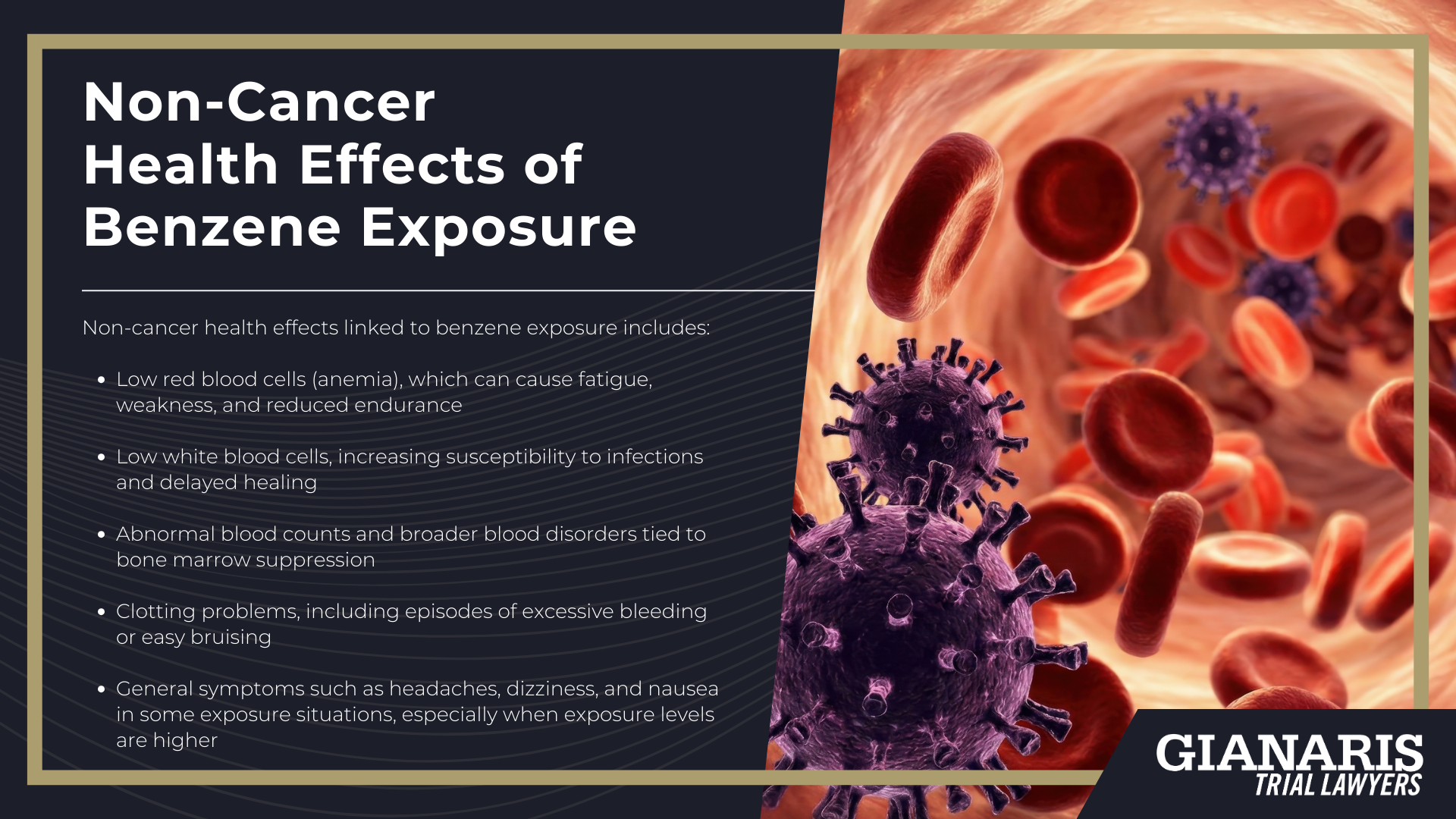
Non-cancer health effects linked to benzene exposure includes:

  • Low red blood cells (anemia), which can cause fatigue, weakness, and reduced endurance
  • Low white blood cells, increasing susceptibility to infections and delayed healing
  • Abnormal blood counts and broader blood disorders tied to bone marrow suppression
  • Clotting problems, including episodes of excessive bleeding or easy bruising
  • General symptoms such as headaches, dizziness, and nausea in some exposure situations, especially when exposure levels are higher

These effects are part of why occupational standards focus so heavily on limiting long-term exposure and monitoring workers in higher-risk roles.

Were You Exposed to Benzene and Had Adverse Health Effects?

Benzene is a volatile chemical with a sometimes noticeable sweet odor or sweet smell, but dangerous exposure can still occur even when you don’t detect it.

Benzene exposure can happen through breathing contaminated outdoor air near fuel sources, through skin absorption when benzene touches unprotected skin, or through repeated contact in certain work settings.

People exposed at higher risk often include workers around fuels and solvents, including at gas stations, industrial sites, and maintenance environments where benzene is found in fuel-related products.

Exposure can come from human activities (fuel handling, industrial processes, traffic) and natural sources (including certain combustion events), and the risk may increase when levels of benzene rise in enclosed or poorly ventilated areas.

Some individuals also have exposure concerns tied to secondhand smoke, which can add to overall chemical exposure in daily life.

Gathering Evidence for a Benzene Lawsuit

A strong benzene case is built on proof of exposure and proof of harm, tied together with a clear timeline.

Your legal team may start by identifying where benzene was found, how contact occurred, and whether the exposure exceeded what was benzene allowed under applicable state regulations or workplace standards.

Evidence often includes work history, job duties, product information, and any monitoring data showing levels of benzene in the environment.

In some situations, agencies such as disease control and prevention authorities, a disease registry, or a U.S. department involved in occupational or environmental oversight may have records, guidance, or investigation materials that help validate the exposure pathway.

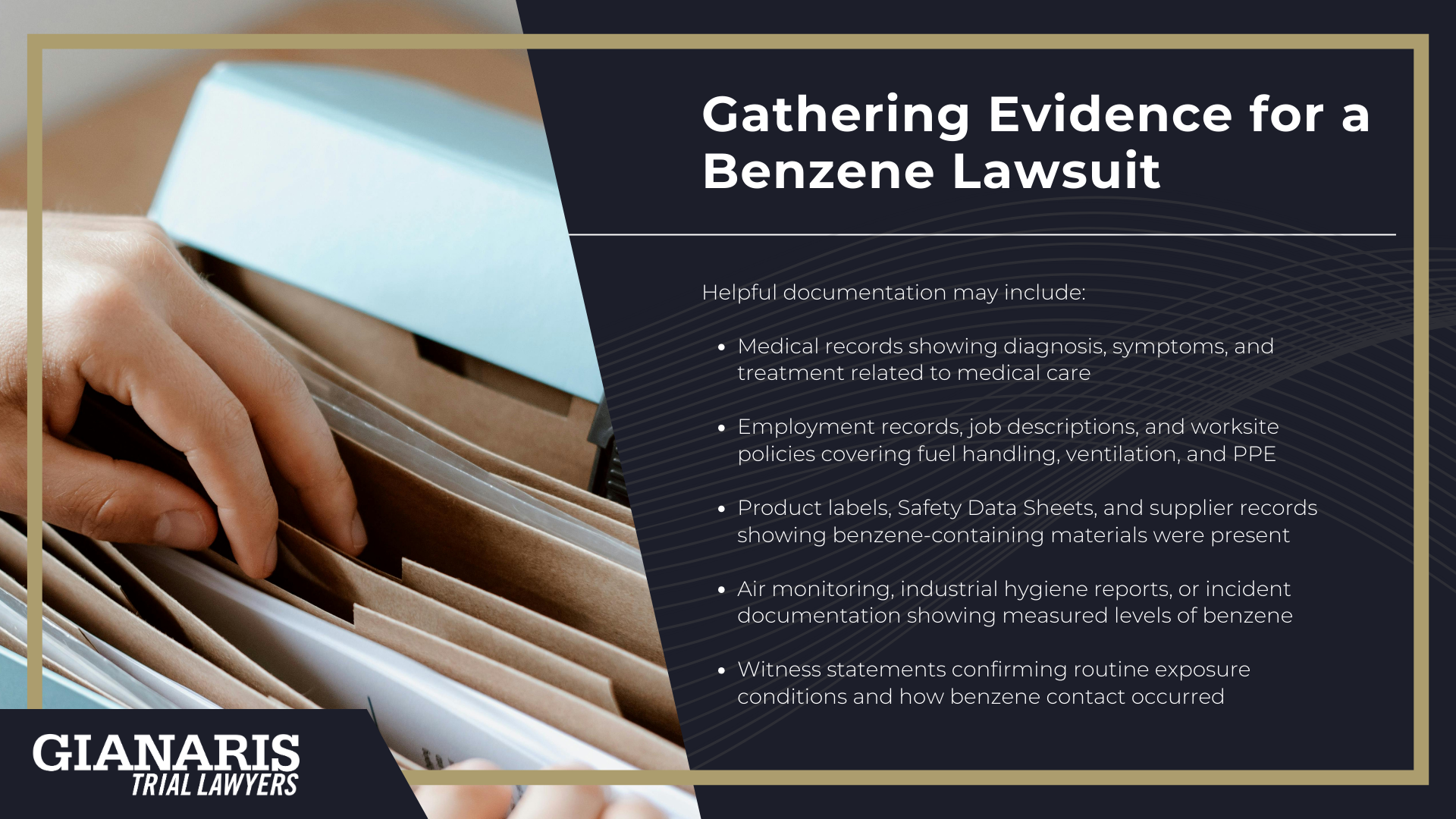
Helpful documentation may include:

  • Medical records showing diagnosis, symptoms, and treatment related to medical care
  • Employment records, job descriptions, and worksite policies covering fuel handling, ventilation, and PPE
  • Product labels, Safety Data Sheets, and supplier records showing benzene-containing materials were present
  • Air monitoring, industrial hygiene reports, or incident documentation showing measured levels of benzene
  • Witness statements confirming routine exposure conditions and how benzene contact occurred

If exposure involved direct handling, details about skin contact protection can matter, whether workers used rubber gloves, whether they were instructed to wear rubber gloves, and whether contamination control was in place.

Even seemingly small facts (like whether contaminated items were sealed in a plastic bag to prevent ongoing contact) can help establish how exposure was managed and whether safer steps were ignored.

Damages in a Benzene Lawsuit

Damages are meant to measure what the exposure has cost you and what it will continue to cost.

That often includes medical expenses for diagnosis and treatment, follow-up monitoring, and future care needs tied to bone-marrow or immune-system impacts.

If the illness affects your ability to work, damages may also include lost income, reduced earning capacity, and the cost of long-term limitations.

Many cases also seek compensation for the daily impact of living with a serious diagnosis: fatigue, pain, disruption to normal life, and the emotional toll of uncertainty and ongoing treatment.

Where the exposure created serious health consequences involving blood cancers or conditions like multiple myeloma, the case typically focuses on documenting the full, long-term burden, not just the initial bills.

Gianaris Trial Lawyers: Contact Us Today if You Were Exposed to Benzene

Gianaris Trial Lawyers investigates benzene exposure claims with a focus on building clear, evidence-supported cases that hold the right parties accountable.

We look closely at where benzene was present, how people exposed were put at risk, what controls were missing, and whether exposure levels exceeded what was allowed under safety standards and state regulations.

We also work to connect the exposure timeline to the medical record, especially when the illness involves bone marrow damage, immune suppression, or blood-cancer diagnoses, and we build the claim around the real-world cost of treatment and life disruption.

If you were exposed to benzene and you’re dealing with serious health effects, contact Gianaris Trial Lawyers to discuss your options.

You can also use the chatbot on this page to see if you may qualify immediately.

Frequently Asked Questions

  • What Are the Most Common Health Effects of Benzene Exposure?

    The health effects of benzene exposure often involve the blood-forming system, because benzene can damage the bone marrow where blood cells are made.

    Over time, that damage can reduce red blood cells and white blood cells, which may lead to fatigue, frequent infections, and immune system suppression.

    In some people, benzene exposure is also linked to blood disorders and clotting problems, including excessive bleeding or easy bruising that should be evaluated promptly.

  • Is Benzene Exposure Linked to Cancer, and What Cancers Are Most Often Discussed?

    Yes.

    Benzene is widely recognized as a cancer causing chemical, and long-term exposure has been associated with an increased risk of blood cancers.

    Leukemia is the cancer most commonly discussed, and some cases also evaluate other blood-related malignancies depending on the exposure history and medical findings.

    Where the diagnosis involves serious conditions like multiple myeloma, careful documentation of exposure sources and medical records becomes essential.

  • Where is Benzene Commonly Found in Everyday Life and Work Settings?

    Benzene can be found in gasoline fumes and may be present around idling car engines, especially in areas with heavy traffic or poor ventilation.

    Workers may also encounter benzene in fuel-related environments, including gas stations, refineries, and industrial settings where solvents or other chemicals are used.

    In recent decades, public health attention has also increased around community-level sources such as forest fires and certain emissions that can affect outdoor air quality.

  • Can Benzene Exposure Happen Through Skin Contact, and Who May Be At Higher Risk?

    Yes, benzene exposure can occur through skin absorption when benzene touches unprotected skin, especially during fuel handling or solvent use.

    That is why safety guidance often emphasizes PPE steps like wear rubber gloves when handling materials where benzene may be present, and promptly bagging contaminated items in a plastic bag to avoid re-contact.

    Pregnant women may be advised to avoid exposure whenever possible because benzene can affect the body broadly, including concerns involving the immune system and reproductive organs.

  • What Should I Do If I Think Benzene Exposure Caused My Health Problems?

    Start by getting medical care and asking your provider to document symptoms, lab findings, and any abnormal blood counts involving red blood cells or white blood cells.

    Then write down where benzene was found, how exposure happened (including workplace tasks, gasoline fumes, or secondhand smoke), and whether you had repeated exposure over time.

    Because about half of a strong claim is proof (work history, medical records, and exposure details) talking with a lawyer early can help preserve evidence and determine whether you may qualify to pursue a case.

Published by:
Share
Picture of Ted Gianaris
Ted Gianaris

With nearly 30 years of legal experience, Attorney Ted Gianaris has secured over $350 million in compensation for Illinois injury victims, car accident victims, and surviving family members of wrongful death victims.

This article has been written and reviewed for legal accuracy and clarity by the team of writers and attorneys at Gianaris Trial Lawyers and is as accurate as possible. This content should not be taken as legal advice from an attorney. If you would like to learn more about our owner and experienced Illinois injury lawyer, Ted Gianaris, you can do so here.

Gianaris Trial Lawyers does everything possible to make sure the information in this article is up to date and accurate. If you need specific legal advice about your case, contact us. This article should not be taken as advice from an attorney.

Additional Benzene Lawsuits resources on our website:
All
FAQs
Injuries & Conditions
Legal Help
Occupations
Settlements & Compensation
You can learn more about Benzene Lawsuits below:
Benzene Exposure FAQs
Benzene Lawsuits
Who Qualifies for a Benzene Exposure Lawsuit?

Other Benzene Lawsuits Resources

All
FAQs
Injuries & Conditions
Legal Help
Occupations
Settlements & Compensation