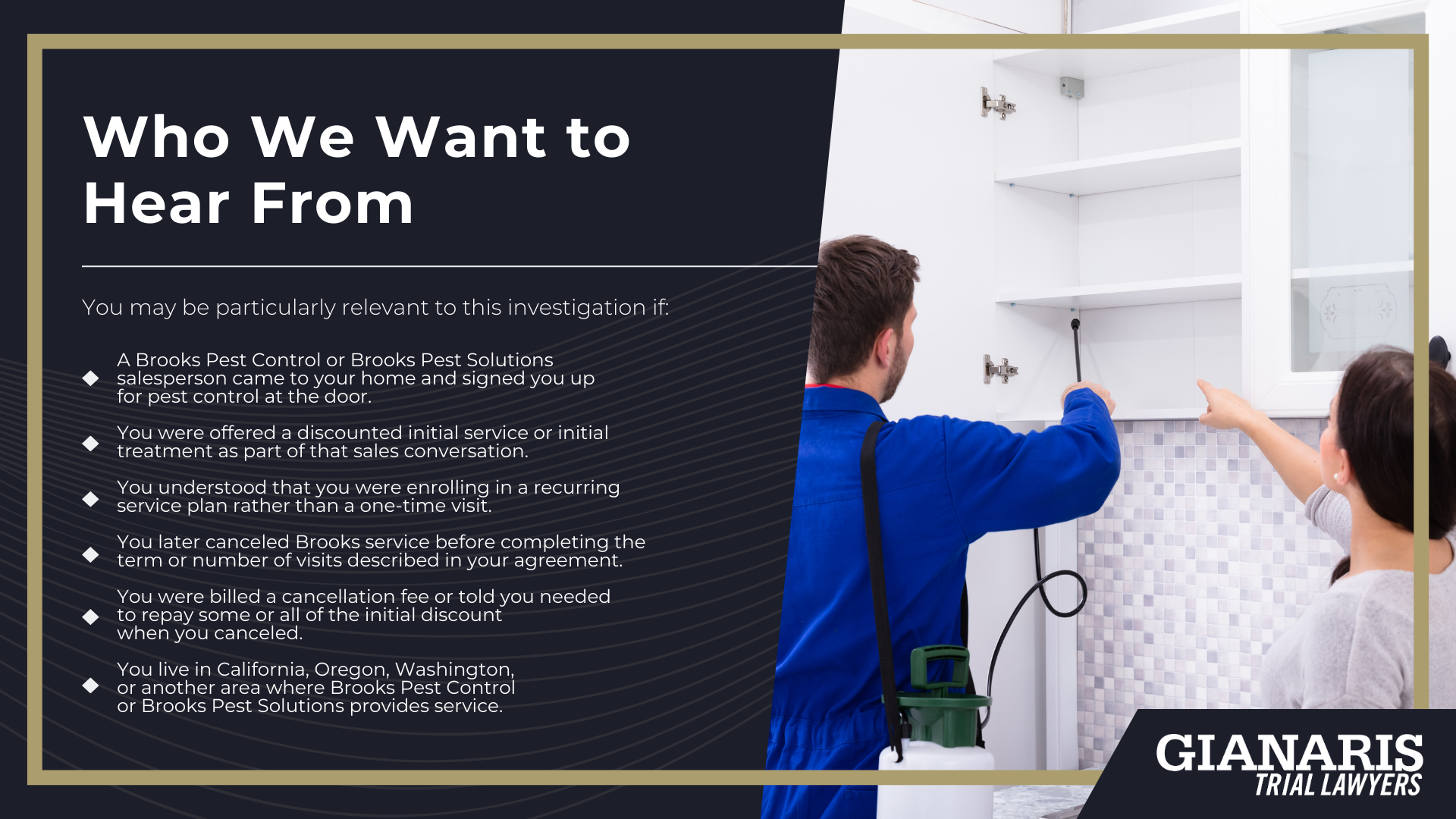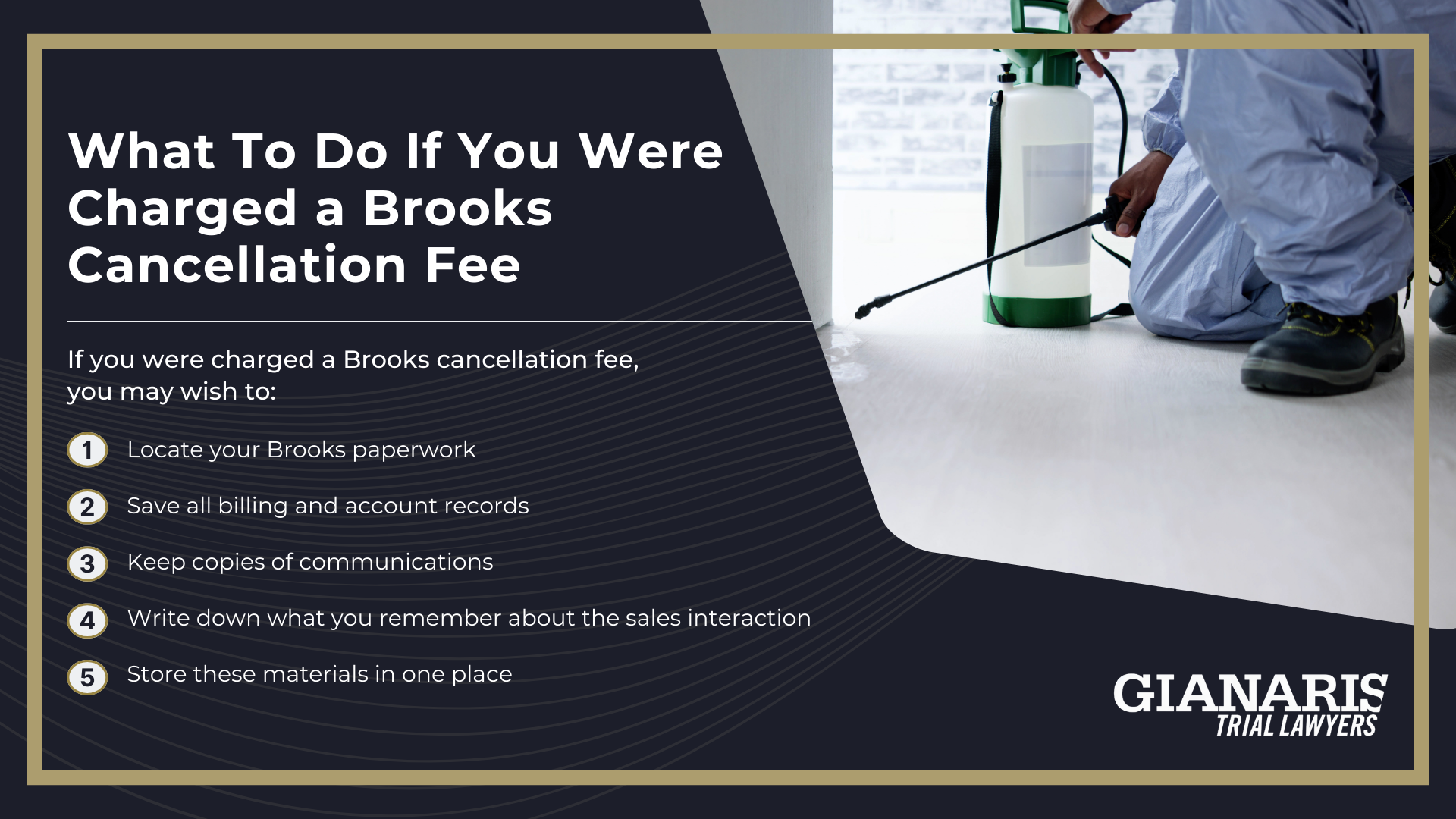

Publicly available job postings and sales materials indicate that Brooks Pest Control grows its customer base in part through a dedicated door-to-door sales force, including full-time representatives and seasonal sales teams.
These sales reps go into neighborhoods in Brooks’s service areas, such as cities across California, Oregon, and Washington, and approach homeowners at their front door to offer recurring pest control plans.
Sales positions are described as focused on “selling pest control services door-to-door,” engaging with homeowners, explaining the services, and closing accounts as part of a structured sales program.
In a typical interaction, the salesperson presents an ongoing pest control program that includes regular visits from a technician to treat for common household pests, often coupled with a discounted price for the initial service or initial treatment.

Homeowners are usually asked to complete a quick sign-up process using a mobile device or electronic form, which sets up the account, schedules service, and incorporates the terms of a recurring agreement.
Once enrolled, customers are placed on a recurring service schedule, and technicians return for follow-up treatments according to the plan the homeowner selected.
Third-party cancellation guides and consumer Q&A discussions describe Brooks contracts as formal service agreements that may include a minimum term, notice requirements, and potential fees if service is ended before the agreement is completed.
Some customers report that when they later tried to cancel, they were told that early termination could involve a cancellation fee or a charge connected to the discount they received on the initial service.
Brooks Pest Control’s Initial Service Discount and Cancellation Fee
According to Brooks Pest Control’s own marketing, new customers are often offered a reduced price on the initial service or initial treatment, such as a stated amount off the first visit, when they sign up for a recurring pest control plan.
This discount is typically presented as a benefit of starting service now, often in the context of a door-to-door sales interaction where a representative is already at the home.
These discounted initial services are tied to an ongoing service agreement rather than a one-time treatment.
Some customers later report that when they canceled their Brooks service before completing a specified term or number of visits, they were told they owed a cancellation fee or a charge characterized as a repayment of the initial discount.
The company’s position is that these charges are permitted under the terms of the service agreement and are associated with early termination.
Homeowners who believed they were agreeing to a discounted first visit sometimes state that they did not understand how the discount was connected to future cancellation-related charges.
How this initial discount is described at the point of sale, and how any related fees are set out in the contract, are central issues in the current investigation.
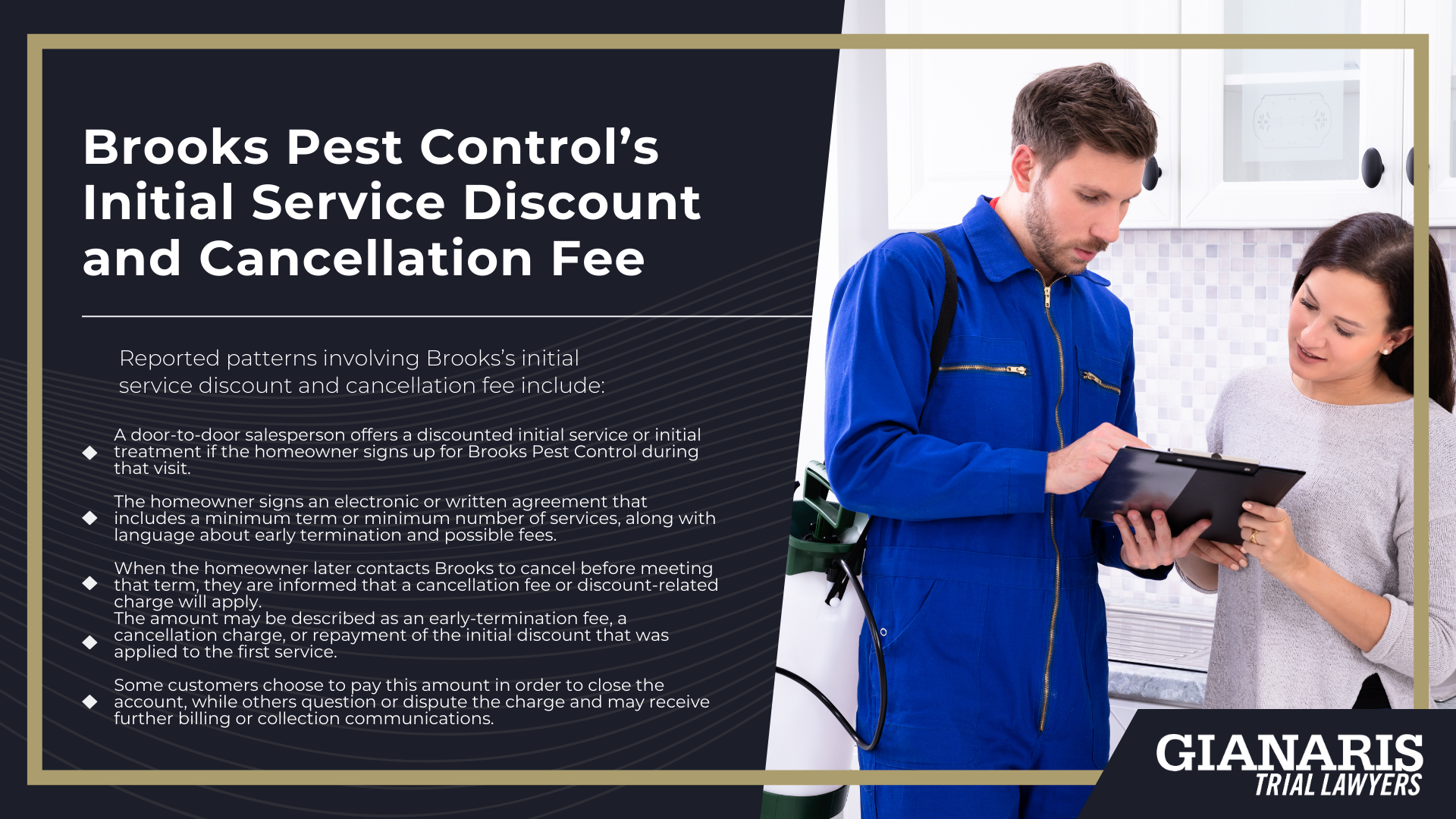
Reported patterns involving Brooks’s initial service discount and cancellation fee include:
- A door-to-door salesperson offers a discounted initial service or initial treatment if the homeowner signs up for Brooks Pest Control during that visit.
- The homeowner signs an electronic or written agreement that includes a minimum term or minimum number of services, along with language about early termination and possible fees.
- When the homeowner later contacts Brooks to cancel before meeting that term, they are informed that a cancellation fee or discount-related charge will apply.
- The amount may be described as an early-termination fee, a cancellation charge, or repayment of the initial discount that was applied to the first service.
- Some customers choose to pay this amount in order to close the account, while others question or dispute the charge and may receive further billing or collection communications.
The investigation is focused on whether customers were clearly advised that accepting the initial service discount could lead to additional charges if they ended the agreement early, and how those obligations were presented in Brooks’s contracts and sales materials.