No fees unless we win.
Get a free consultation
128 Reviews
5.0
★★★★★

Refinery Worker Benzene Exposure Lawyer

Overview of Refinery Workers Exposed to Benzene

Benzene Lawsuits give Refinery Workers and other employees the opportunity to hold companies accountable for exposing them to a dangerous, well-documented carcinogen on the job.

Found in crude oil, gasoline streams, process units, and refinery solvents and degreasers, benzene exposure has been linked to life-threatening cancers and serious blood and bone marrow disorders.

When preventable exposure leads to disease, legal action can provide vital compensation for medical care, lost income, and the lasting impact of toxic exposure in the workplace.

Refinery Worker Benzene Exposure Lawyer

Lawyers for Refinery Worker Benzene Exposure

Refineries are high-exposure environments, and refinery worker benzene exposure is a serious risk when volatile chemicals are present during daily operations.

Benzene exposure can occur while working around crude processing, tank work, sampling, maintenance, turnaround work, and other tasks where vapors are released and contact is repeated over time.

In an oil refinery, workers may be exposed to benzene through inhalation and skin contact, especially when leaks, poor ventilation, open systems, or rushed procedures leave little margin for safety.

The risk is often tied to the reality that benzene in oil and fuel streams can become airborne quickly, and even small releases can add up across long shifts.

Workers in an oil refinery may also encounter benzene during cleaning, degreasing, line breaks, and handling contaminated equipment where residue and fumes linger.

Because benzene oil is associated with well-documented blood and bone-marrow harm, these cases demand a careful exposure history and strong medical documentation.

Our team investigates the worksite conditions, the specific processes and products involved, and whether warnings, training, monitoring, and protective measures were missing or inadequate.

We preserve evidence early (maintenance records, safety materials, exposure data, and witness accounts) because companies often move quickly to reshape the story after a serious diagnosis.

A benzene lawsuit may focus on preventable failures in safety controls, hazard communication, and exposure reduction measures that should have protected workers long before symptoms appeared.

If you believe refinery worker benzene exposure harmed your health, contact Gianaris Trial Lawyers today to discuss whether you may qualify for benzene exposure lawsuits and learn your next steps.

You can also use the chatbot on this page to see if you qualify immediately.

What Is Benzene?

Benzene is a light yellow liquid chemical (often described as colorless) that evaporates quickly and can become a serious inhalation hazard when it builds up in the air.

It is closely tied to crude oil and fuel production and is also used as a building-block chemical in many industrial applications.

Because benzene is one of the most studied toxic substances in occupational and environmental health, major public-health authorities recognize its carcinogenic risks and its ability to damage the blood-forming system.

That includes recognition by the World Health Organization and an international agency that evaluates cancer hazards, as well as U.S. agencies under health and human services, including the National Toxicology Program and sources connected to the National Cancer Institute.

In practical terms, the primary health concern is benzene’s impact on the bone marrow, where blood cells are produced.

How Are People Exposed to Benzene?

Exposure to benzene most commonly occurs through inhalation of vapors and through skin contact with benzene-containing liquids and residues.

For the general public, benzene can be present in air from motor vehicle exhaust, industrial emissions, and other combustion-related sources, which is why air monitoring and regulation can involve agencies like the U.S. Environmental Protection Agency (also referenced as the US Environmental Protection Agency) and disease control authorities in certain events.

People may also face benzene exposure in communities affected by benzene contamination, where air, soil, or water conditions become a concern after releases or industrial activity.

In workplaces, exposure is often more intense because it can involve higher concentrations, direct handling, and repeated contact.

Long term exposure becomes the central issue, because repeated contact is more strongly associated with serious health outcomes than a single brief exposure.

Refinery Worker Benzene Exposure

Refinery worker benzene exposure can occur because refinery operations routinely involve fuel streams and process environments where benzene may be present as part of crude and intermediate products.

Workers may experience benzene exposure during sampling, gauging, tank work, line breaks, maintenance, turnarounds, and equipment cleaning, especially when systems are opened and vapors are released.

Exposure can also occur when contaminated equipment is handled, when residues remain on tools or PPE, or when workers are positioned downwind of vapor sources.

Because refineries often involve multiple units and mixed hazards, exposure may happen alongside other chemicals, which can complicate symptom evaluation and make a precise exposure history critical.

The concern is occupational patterns that repeat across shifts and years, not just one incident.

Causes of Benzene Exposure For Refinery Workers

Benzene exposure for refinery workers often stems from predictable operational realities and preventable safety gaps.

Common causes include routine contact with benzene-containing streams, leaks or releases from equipment, inadequate ventilation in certain work areas, and work practices that increase vapor generation when lines are opened or materials are transferred.

Exposure may also rise during upset conditions, maintenance events, and turnarounds where time pressure and staffing decisions can lead to shortcuts.

Safety failures such as missing monitoring, weak hazard communication, outdated procedures, or inconsistent PPE use can turn foreseeable risk into repeated exposure.

Because refineries operate under occupational safety expectations shaped by federal and state regulations, evidence of gaps in training, monitoring, and controls often becomes a central issue in evaluating a claim.

In broader releases affecting nearby areas, agencies like the Environmental Protection Agency and disease-control authorities may be involved, and those records can help document benzene pathways and conditions.

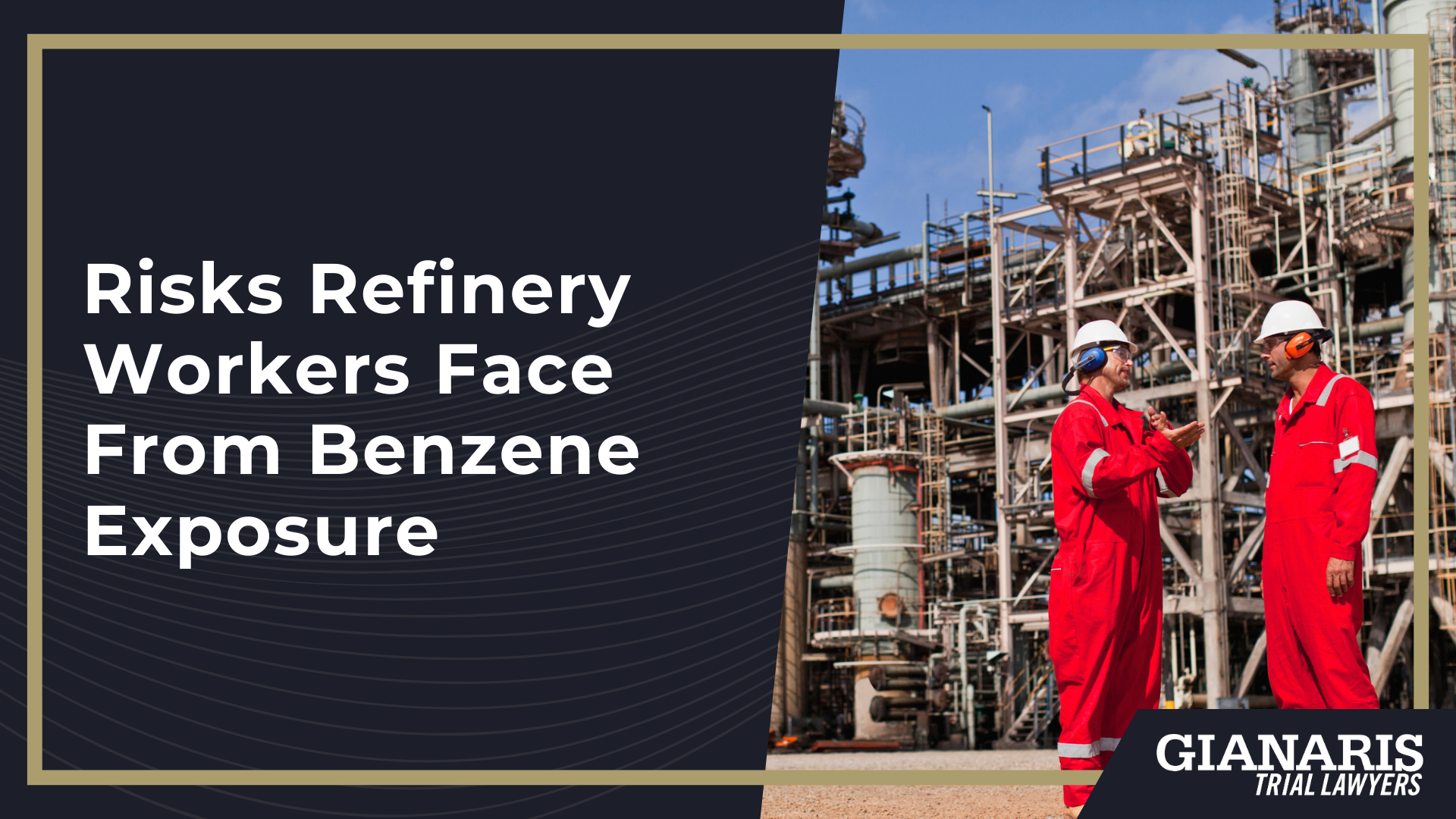
Risks Refinery Workers Face From Benzene Exposure

The most serious health risks involve benzene’s effects on the blood-forming system, which is why it is closely associated with bone marrow toxicity and certain blood cancers.

Benzene can damage the bone marrow, interfere with normal blood-cell production, and contribute to conditions that weaken the body’s defenses over time.

In cancer discussions, benzene exposure is linked most strongly to leukemia, including acute myeloid leukemia (a diagnosis frequently evaluated in occupational cases involving prolonged exposure).

The risk is often tied to the frequency and duration of exposure, which is why occupational exposure history and documentation of long term exposure are so important in refinery cases.

Because refinery work can involve multiple exposure routes and mixed chemical environments, a careful medical and exposure review is often needed to separate benzene’s role from background sources like motor vehicle exhaust or ambient industrial emissions.

When evidence supports it, the focus becomes whether the exposure was preventable under occupational safety standards and whether the responsible parties failed to reduce known carcinogenic risks.

Health Effects of Benzene

Benzene is a flammable liquid that evaporates quickly, and in industrial settings it can become an inhalation and skin-contact hazard even when it’s not obvious.

In workplaces like oil refineries and chemical plants, benzene may be present in fuel streams, solvents, and processes, and workers exposed can face risk through routine contact, not just one major spill.

Benzene is widely recognized as a human carcinogen and a known carcinogen, which is why controlling chemical hazards and monitoring benzene levels are central to workplace safety programs.

Exposure can happen from “pure” sources, including pure benzene, and from fuel-related sources where benzene may appear as part of a gasoline additive or in petroleum mixtures.

People can also be exposed outside of work through background sources like outdoor air, gas stations, and traffic-related emissions, as well as tobacco smoke and cigarette smoke, which can add to overall exposure burden.

The most serious long-term harm involves the blood-forming system, but benzene can also cause short-term symptoms after higher-level contact, depending on dose and duration.

Because exposure is often cumulative, repeated exposure over months or years is typically the biggest concern in occupational cases.

The best protection is to avoid exposure where possible and use effective controls, including ventilation and appropriate personal protective equipment when benzene-containing materials are present.

When a serious diagnosis occurs, benzene lawyers often focus on what controls existed, whether benzene levels were monitored, and whether preventable safety failures increased risk.

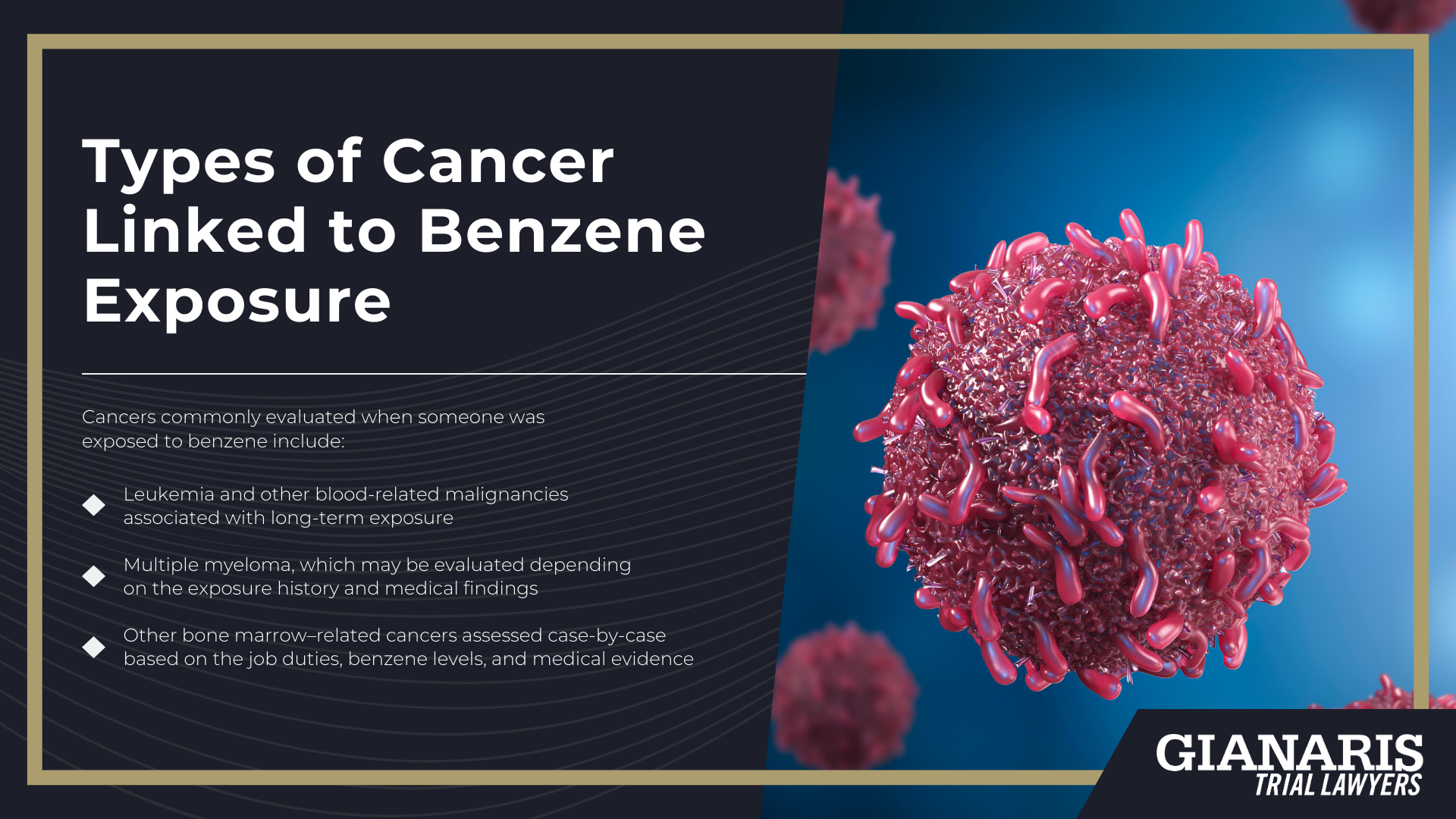
Types of Cancer Linked to Benzene Exposure

Benzene’s strongest cancer association involves blood and bone-marrow cancers, which aligns with how benzene affects blood-cell production over time.

In workplaces such as oil refineries and chemical plants, the key question is often whether repeated exposure and elevated benzene levels were preventable through reasonable controls and protective equipment.

Public-health frameworks and health administration guidance, often shaped by the public health service and informed by agencies like the Centers for Disease Control, reflect the long-standing concern about benzene as a known carcinogen in higher-risk work settings.

Cancers commonly evaluated when someone was exposed to benzene include:

  • Leukemia and other blood-related malignancies associated with long-term exposure
  • Multiple myeloma, which may be evaluated depending on the exposure history and medical findings
  • Other bone marrow–related cancers assessed case-by-case based on the job duties, benzene levels, and medical evidence

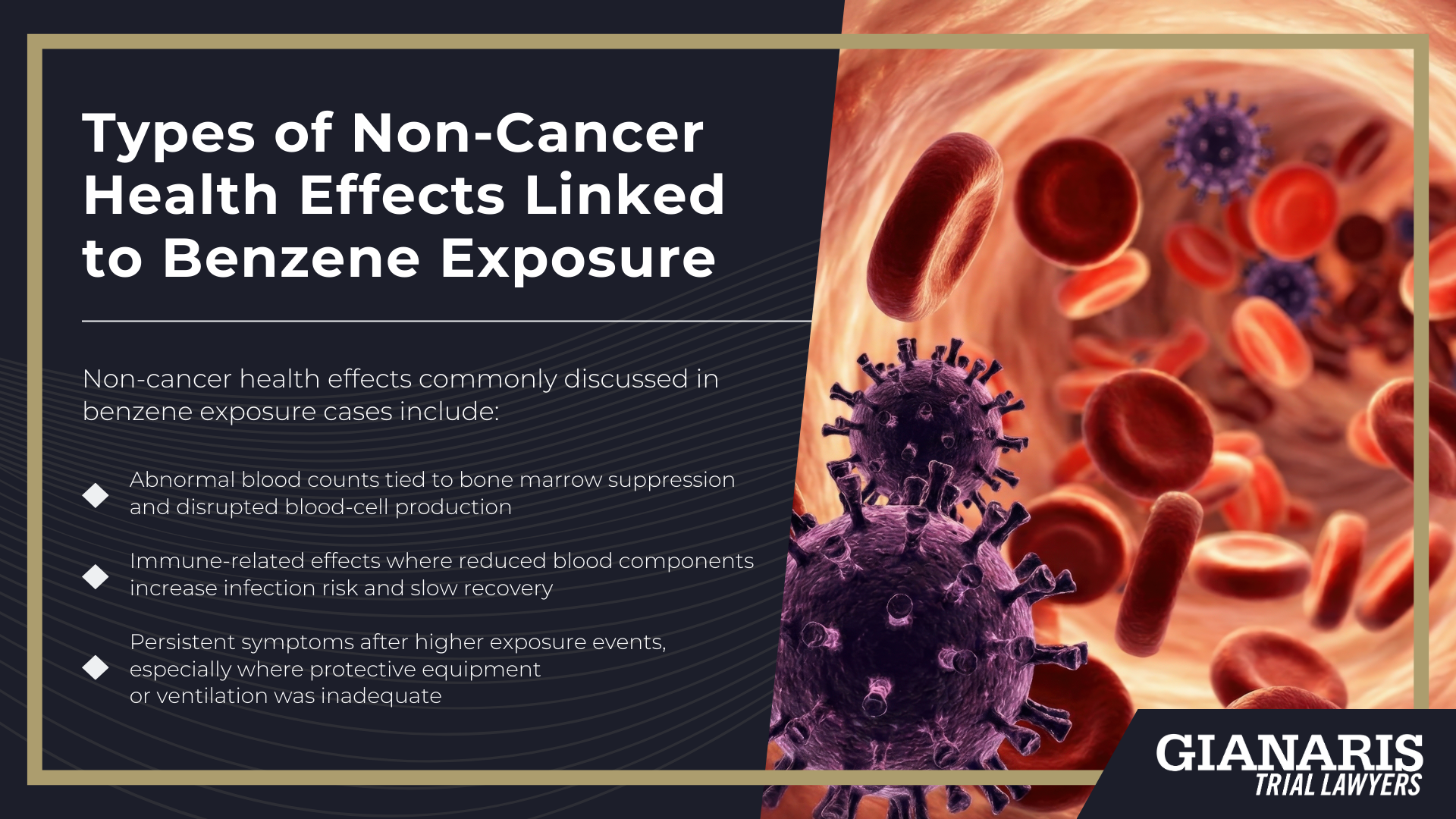
Types of Non-Cancer Health Effects Linked to Benzene Exposure

Not every benzene-related condition is cancer, and many workers exposed develop serious non-cancer effects that still require long-term monitoring and treatment.

Benzene can suppress normal blood production, which may lead to fatigue, weakness, and increased susceptibility to infection when blood counts are affected.

These risks are especially concerning in work environments with ongoing chemical hazards, such as oil refineries, chemical plants, and jobs involving fuel handling, where repeated exposure can become routine without strong controls.

Non-cancer effects can also be overlooked when workers have other exposures in the same environment or when outside sources like cigarette smoke and outdoor air contribute to background risk, making careful medical documentation important.

Non-cancer health effects commonly discussed in benzene exposure cases include:

  • Abnormal blood counts tied to bone marrow suppression and disrupted blood-cell production
  • Immune-related effects where reduced blood components increase infection risk and slow recovery
  • Persistent symptoms after higher exposure events, especially where protective equipment or ventilation was inadequate

Because benzene is a known carcinogen and a toxic chemical, prevention depends on reducing exposure at the source, monitoring benzene levels, and using protective equipment consistently, especially in high-risk environments where repeated exposure is foreseeable.

Do You Qualify For a Refinery Worker Benzene Exposure Lawsuit

You may qualify if your refinery work involved repeated benzene exposure and you later developed serious health problems consistent with benzene-related disease.

Many claims center on certain industries where benzene is routinely present, especially refinery operations where workers encounter vapors, residues, and fuel streams that can raise levels of benzene in the breathing zone.

Exposure can occur through inhaling gasoline fumes and process vapors, and through skin contact when benzene touches unprotected skin during sampling, maintenance, line breaks, or cleanup.

The risk often increases when safety controls are weak, when monitoring is inconsistent, or when conditions allow benzene increases during upset events, turnarounds, or equipment failures.

Public exposure sources, such as idling car engines, secondhand smoke, and other human activities, can add to background exposure, but refinery claims typically focus on whether workplace exposure meaningfully increased risk beyond normal daily life.

In some cases, people also have concerns about drinking water or contaminated water exposure near industrial activity, and those facts may matter if they reinforce a broader exposure picture.

Health outcomes evaluated in these cases can include blood related cancers, abnormal blood counts, and bleeding complications such as excessive bleeding, depending on the medical findings.
Some individuals also report reproductive and hormonal issues, including irregular menstrual periods, and those symptoms should be documented and evaluated by medical providers.

If you’re unsure whether your exposure exceeds what was benzene allowed under workplace standards, a lawyer can review the facts, the job conditions, and any available monitoring data to assess whether you may have a viable claim, including the kinds of filed lawsuits that have been brought in similar exposure scenarios.

Gathering Evidence for a Benzene Exposure Case

Refinery benzene cases are built on proof of exposure and proof of harm, tied together with a clear timeline.

Your legal team will often start by identifying where benzene was present, how exposure occurred, and whether any monitoring exists showing levels of benzene during relevant work tasks.

Evidence can include maintenance and safety records, job assignments, SDS documents, and testimony from coworkers who can confirm how exposure happened in real life, especially where vapors, spills, and contaminated surfaces were routine.

If exposure involved direct contact, details matter, including whether benzene touched the skin, whether wash stations were available, and whether workers were told to seek fresh air after an exposure incident.

Odor reports can also be relevant, some workers describe a sweet smell, but dangerous exposure can occur even when there is no obvious odor.

Depending on the circumstances, public records or a disease registry may help support exposure context, and references from a national institute or a US departmentinvolved in occupational or public health oversight may provide guidance or benchmarks that help explain what limits existed and what was considered benzene allowed in the relevant period.
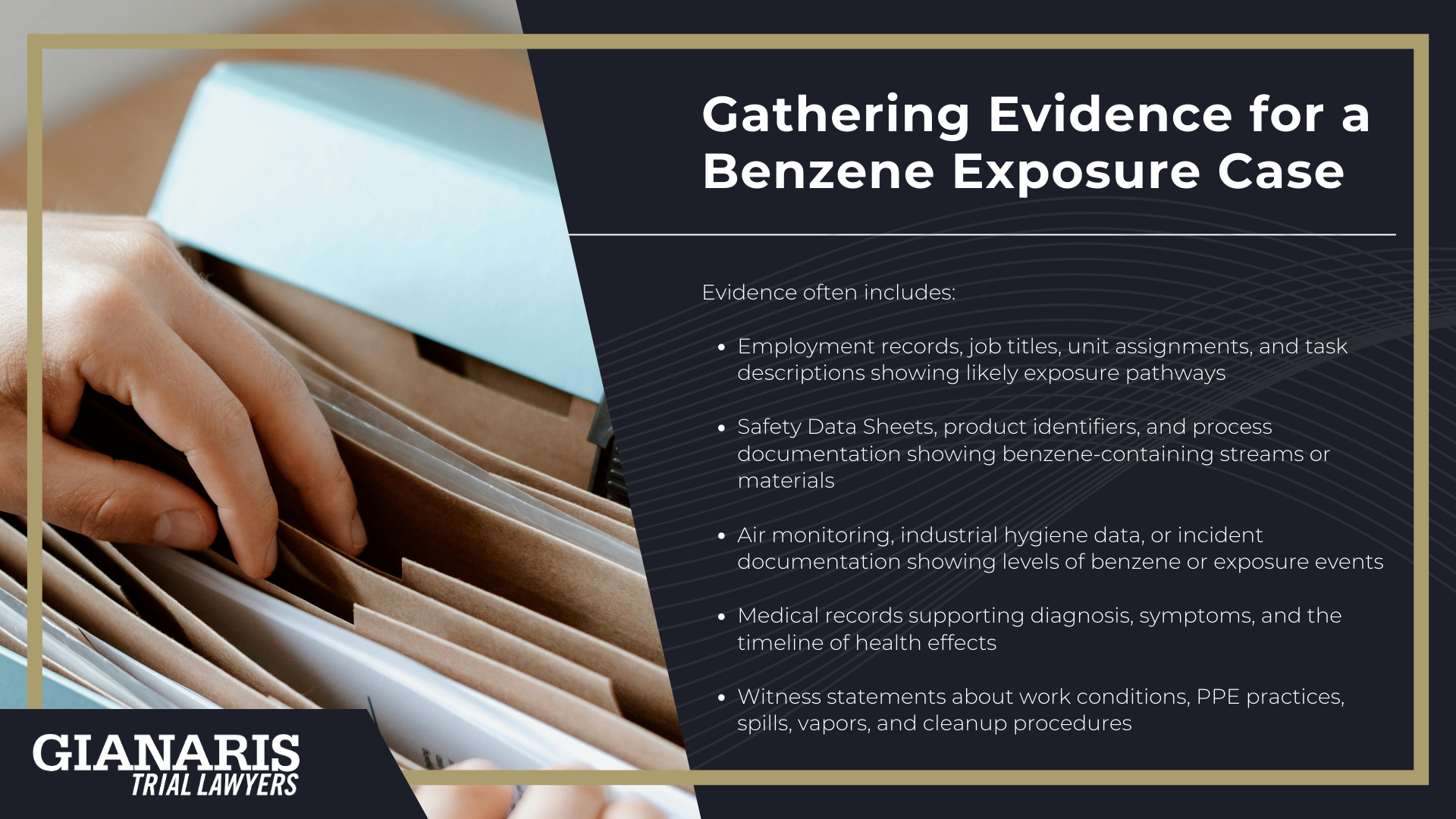
Evidence often includes:

  • Employment records, job titles, unit assignments, and task descriptions showing likely exposure pathways
  • Safety Data Sheets, product identifiers, and process documentation showing benzene-containing streams or materials
  • Air monitoring, industrial hygiene data, or incident documentation showing levels of benzene or exposure events
  • Medical records supporting diagnosis, symptoms, and the timeline of health effects
  • Witness statements about work conditions, PPE practices, spills, vapors, and cleanup procedures

Because some benzene-related diseases take time to emerge, early collection of records can be critical, especially before sites change, units are modified, or documents are lost.

Damages in a Refinery Worker Benzene Exposure Lawsuit

Damages in a refinery worker benzene exposure lawsuit are intended to reflect the full scope of harm tied to occupational exposure and its long-term consequences.

These claims often account for both immediate medical needs and the ongoing care required for blood disorders or benzene-related cancers that develop over time.

When illness interferes with a refinery worker’s ability to remain employed, damages may also address lost wages and diminished earning capacity.

Courts also consider how chronic symptoms and treatment demands alter daily life, mental health, and future stability.
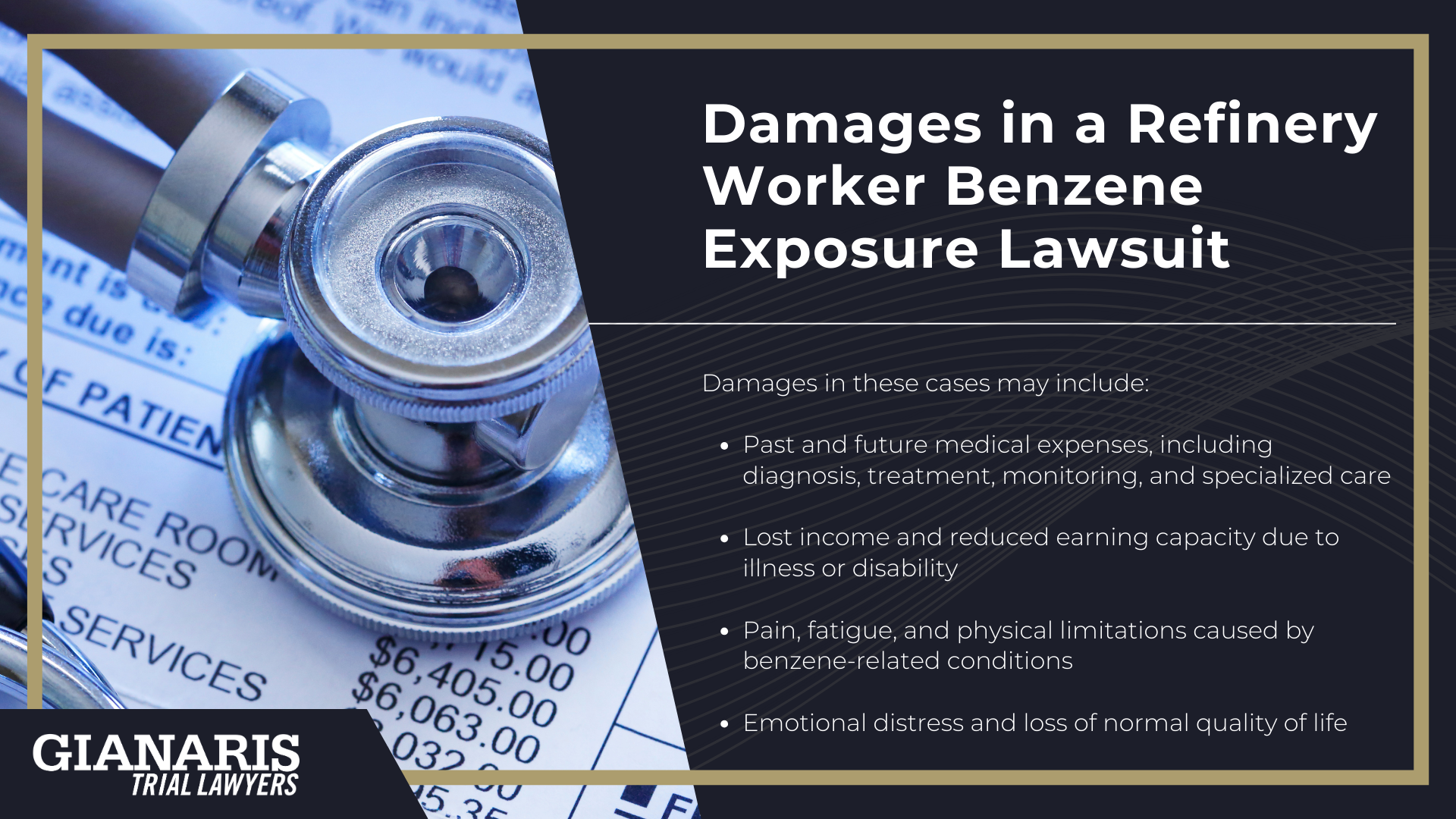
Damages in these cases may include:

  • Past and future medical expenses, including diagnosis, treatment, monitoring, and specialized care
  • Lost income and reduced earning capacity due to illness or disability
  • Pain, fatigue, and physical limitations caused by benzene-related conditions
  • Emotional distress and loss of normal quality of life

Gianaris Trial Lawyers: Lawyers for Refinery Worker Benzene Exposure

Gianaris Trial Lawyers represents refinery workers harmed by benzene exposure and builds cases designed to hold the right parties accountable for preventable risk.

We investigate how exposure occurred, whether workplace conditions caused benzene increases during routine operations, and whether the employer or other responsible parties failed to control known hazards tied to gasoline fumes, skin contact, and repeated vapor exposure.

Our team works to secure monitoring data, safety documents, and witness accounts to prove levels of benzene and show whether exposures exceeded what was benzene allowed under applicable standards at the time.

We also build the medical record, connecting symptoms and diagnosis to the exposure timeline, so the claim reflects the real health effects and the full cost of medical care.

If you were exposed to benzene in refinery work and you’re dealing with serious health problems, contact Gianaris Trial Lawyers to discuss your options and learn what it takes to pursue compensation.

You can also use the chatbot on this page to see if you qualify today.

Frequently Asked Questions

  • Does benzene exposure in an oil refinery qualify for a lawsuit?

    Yes, potentially.

    Refinery worker benzene exposure can support a claim when preventable worksite conditions or safety failures allowed repeated contact with benzene.

    These cases often focus on whether the refinery provided adequate monitoring, ventilation, training, and protective equipment while workers handled crude streams, sampling, tank work, line breaks, and maintenance tasks.

    If you were exposed over time and later developed serious health effects, a benzene lawsuit may be a way to pursue compensation and accountability.

  • What should I do if I was exposed to benzene at an oil refinery?

    Start by taking symptoms seriously and getting medical care, even if the exposure seemed “routine” at the time.

    Report the exposure to a supervisor and request documentation of the event or conditions, including any available air-monitoring data and Safety Data Sheets for the materials involved.

    Then preserve your own records (job assignments, unit locations, and coworker names) because exposure history and timing are often the foundation of refinery worker benzene exposure cases.

  • What health conditions are linked to benzene exposure at an oil refinery?

    Benzene is strongly associated with blood and bone marrow harm, which is why the most serious outcomes often involve blood cancers and disorders tied to abnormal blood-cell production.

    People exposed to benzene may face increased risk of leukemia and other blood-related diagnoses, along with non-cancer effects such as abnormal blood counts, immune suppression, and fatigue.

    The exact medical link depends on the exposure duration, intensity, and medical documentation connecting the timeline of exposure to the diagnosis.

  • How do you prove negligence in a benzene exposure lawsuit?

    Proving negligence typically means showing the refinery or another responsible party failed to control a known hazard, like allowing preventable releases, skipping monitoring, using weak procedures, or failing to enforce PPE and safe handling practices.

    Evidence often includes industrial hygiene records, maintenance logs, work procedures, incident reports, and witness statements describing how exposure actually occurred on the job.

    Medical records and expert analysis then connect that exposure history to the resulting illness in a way that holds up under scrutiny.

  • How long do I have to file a benzene exposure case?

    Deadlines vary by state and can depend on whether the claim is tied to an injury diagnosis, when you discovered the illness, and when you reasonably should have connected it to work exposure.

    In refinery worker benzene exposure cases, waiting can be risky because records can be lost and worksites change, making it harder to prove exposure and causation.

    A lawyer can evaluate the timeline quickly, confirm the applicable deadline, and take steps to preserve evidence before it disappears.

Published by:
Share
Picture of Ted Gianaris
Ted Gianaris

With nearly 30 years of legal experience, Attorney Ted Gianaris has secured over $350 million in compensation for Illinois injury victims, car accident victims, and surviving family members of wrongful death victims.

This article has been written and reviewed for legal accuracy and clarity by the team of writers and attorneys at Gianaris Trial Lawyers and is as accurate as possible. This content should not be taken as legal advice from an attorney. If you would like to learn more about our owner and experienced Illinois injury lawyer, Ted Gianaris, you can do so here.

Gianaris Trial Lawyers does everything possible to make sure the information in this article is up to date and accurate. If you need specific legal advice about your case, contact us. This article should not be taken as advice from an attorney.

Additional Benzene Lawsuits resources on our website:
All
FAQs
Injuries & Conditions
Legal Help
Occupations
Settlements & Compensation
You can learn more about Benzene Lawsuits below:
Benzene Exposure FAQs
Benzene Lawsuits
Health Effects of Benzene Exposure
Mechanic Benzene Exposure Lawyer
Who Qualifies for a Benzene Exposure Lawsuit?

Other Benzene Lawsuits Resources

All
FAQs
Injuries & Conditions
Legal Help
Occupations
Settlements & Compensation