
Benzene is a light yellow liquid chemical (sometimes described as colorless) that evaporates easily and can become a breathing hazard when it builds up in the air.
It is a basic building-block chemical used in industry and is also present in petroleum-related products, including crude oil and gasoline-related mixtures.
Because of its well-documented carcinogenic risks, many people ask about the health effects of benzene exposure and whether long-term contact can lead to serious disease.

Major public-health authorities recognize benzene as a human carcinogen, including the International Agency for Research on Cancer (IARC), which is part of the World Health Organization, and the U.S. government’s National Toxicology Program under health and human services.
How Are People Exposed To Benzene?
Exposure to benzene, a known human carcinogen regularly monitored by the US Environmental Protection Agency (EPA) under federal and state toxic substances regulations, can occur through breathing contaminated air, skin contact with benzene-containing materials, or, less commonly, ingestion of contaminated water or soil.
Benzene is present in several consumer products and industrial materials, but the most significant and risky exposure to benzene historically has occurred through occupational exposures and environmental contamination.
Everyday inhalation of benzene vapors contributes to general population exposure, especially near motor vehicle exhaust, gas stations, industrial emissions, and cigarette smoke, while direct contact and ingestion pathways are more likely in specific settings where contamination has occurred.
Acute, high-level benzene exposure can produce serious health effects, which is why public guidance emphasizes removing oneself from the source and seeking medical care when exposure is suspected.
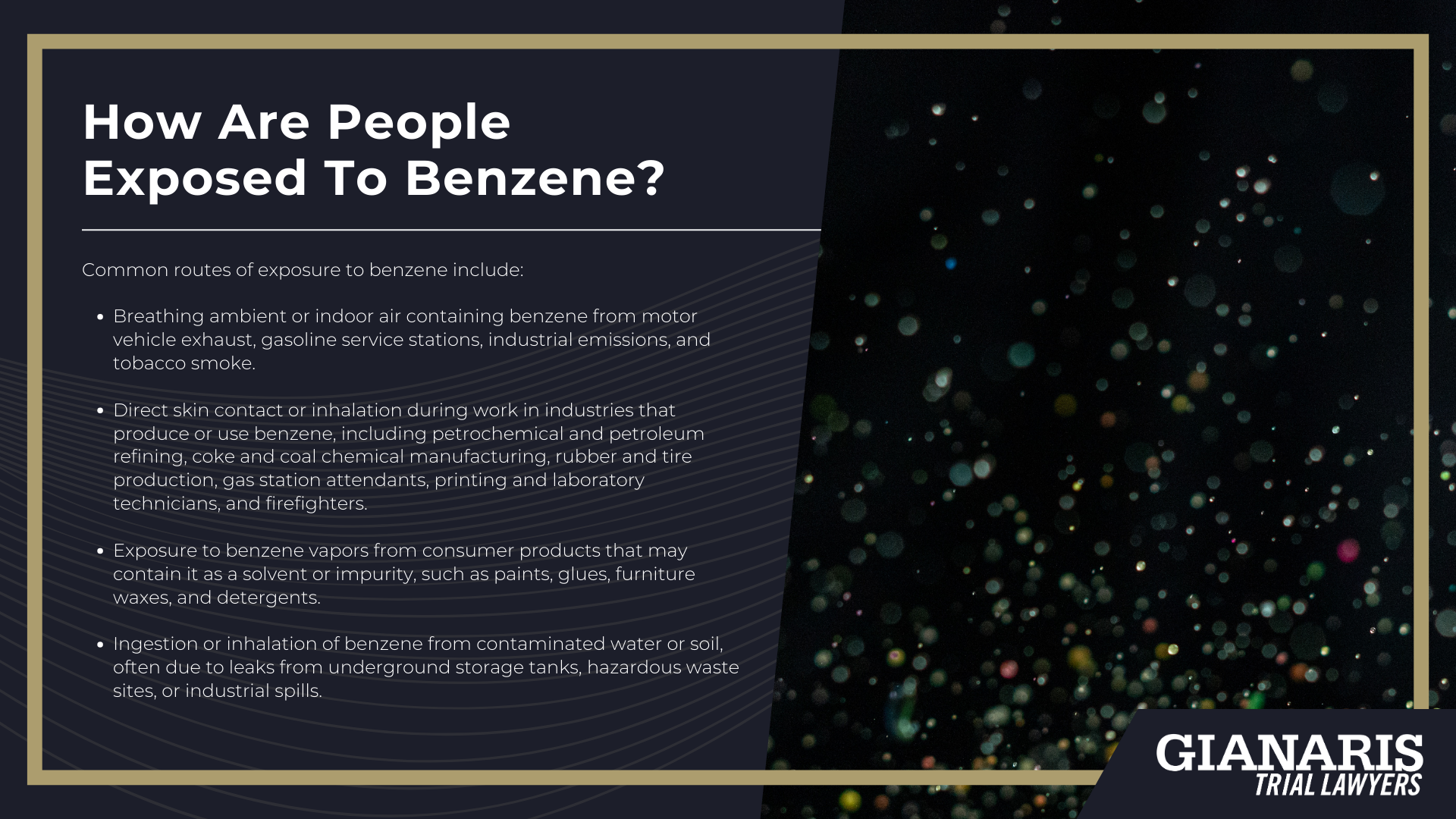
Common routes of exposure to benzene include:
- Breathing ambient or indoor air containing benzene from motor vehicle exhaust, gasoline service stations, industrial emissions, and tobacco smoke.
- Direct skin contact or inhalation during work in industries that produce or use benzene, including petrochemical and petroleum refining, coke and coal chemical manufacturing, rubber and tire production, gas station attendants, printing and laboratory technicians, and firefighters.
- Exposure to benzene vapors from consumer products that may contain it as a solvent or impurity, such as paints, glues, furniture waxes, and detergents.
- Ingestion or inhalation of benzene from contaminated water or soil, often due to leaks from underground storage tanks, hazardous waste sites, or industrial spills.
Occupational Exposure to Benzene
Occupational exposure to benzene has historically occurred in workplaces where petroleum products, fuels, solvents, or chemical intermediates are produced, stored, or handled, particularly in environments with limited ventilation.
Workers may be exposed while performing routine tasks such as fueling operations, tank cleaning, equipment maintenance, chemical processing, or handling benzene-containing materials, often without immediate symptoms that signal harm.
The primary concern in occupational settings is long-term exposure, where repeated inhalation or skin contact over months or years has been associated with bone marrow suppression, blood disorders, and increased leukemia risk.
Because these risks are well documented, occupational benzene exposure is regulated through federal and state safety standards that address air monitoring, permissible exposure limits, and workplace controls.
Industries and job roles with higher rates of benzene exposure include:
- Petroleum refining and petrochemical manufacturing workers
- Oil and gas extraction, pipeline, and terminal workers
- Gas station attendants and fuel distribution workers
- Chemical manufacturing and industrial solvent production workers
- Rubber, tire, and plastics manufacturing employees
- Steel production, coke oven, and foundry workers
- Printing, painting, and industrial degreasing workers
- Laboratory technicians handling chemical reagents or solvents
- Firefighters exposed to combustion byproducts containing benzene
- Transportation and tank truck workers involved in fuel loading or unloading
Environmental Exposure
Environmental exposure usually happens when benzene is released into the air from combustion or fuel-related sources, including motor vehicle exhaust, gasoline handling, and industrial emissions.
People can also be exposed through tobacco smoke and cigarette smoke, which can increase indoor air concentrations and contribute to ongoing, low-level chemical exposure.
In some communities, benzene contamination can become a concern after fuel spills, industrial releases, or other events that affect local conditions and prompt monitoring by public agencies, including the Environmental Protection Agency and disease control authorities.
When environmental exposure is suspected, reducing contact, especially by moving to fresh air during acute events, and getting medical guidance can be important steps to protect health.