
The Federal Employers Liability Act was passed to protect railroad workers in a dangerous and fast-moving railroad industry where serious injuries were common and safety standards were often inconsistent.
Unlike workers’ compensation systems, the law was designed to let injured railroad workers seek damages when a railroad’s negligence contributed to a railroad injury.
In practice, FELA is both a safety law and a compensation law.

It pushes railroad employers to maintain safer work conditions and gives injured railroad employees a path to pursue fair compensation when those duties are ignored.
FELA remains the core legal framework for many railroad injury cases, including a railroad slip and fall tied to unsafe footing, poor maintenance, or missing warnings.
You may also see the statute referred to as the employers liability act FELA, particularly in older documents and summaries.
Who is Covered Under FELA?
FELA generally covers railroad employees who work for railroads engaged in interstate commerce, which includes many major carriers and rail operations.
Coverage is tied to employment status and job duties, not the specific job title: train crews, yard workers, maintenance personnel, and other roles may qualify.
If you are an employee of a railroad and were hurt on the job, you may be considered one of the injured railroad workers eligible to bring a claim.

Independent contractors are not automatically covered, but some situations are complex and turn on control, supervision, and who truly directed the work.
Because a railroad slip and fall can happen in yards, terminals, locomotives, or along track areas, coverage questions often come up quickly after an incident.
Legal Requirements Under FELA
FELA requires railroad employers to provide a reasonably safe workplace, which includes safe walking surfaces, adequate lighting, appropriate tools, proper supervision, and realistic work practices.
The railroad must take reasonable steps to identify hazards and address them, especially hazards that predictably lead to a railroad slip and fall, such as debris, oil or grease, ice buildup, defective steps, or uneven surfaces.
FELA also intersects with safety statutes and regulations that may apply to rail operations.
In some cases, laws like the Locomotive Inspection Act can matter when a fall involves locomotive steps, handholds, ladders, or other locomotive-related conditions.
When these duties are violated, a railroad’s failures can become the foundation of a FELA claim.
Proving Negligence and Establishing Liability
To recover under the federal employers liability act, an injured worker must show the railroad’s negligence played a role in causing the injury.
That negligence may involve poor maintenance, inadequate inspections, missing warnings, unsafe policies, or failing to correct known hazards.
In railroad injury cases, evidence often includes incident reports, photographs, inspection and maintenance records, training materials, safety rules, and witness statements.

For slip-and-fall claims, the focus is usually on what made the surface unsafe, how long the hazard was present, and whether the railroad had notice or should have discovered it through routine inspections.
An experienced FELA lawyer or railroad injury lawyer builds the case by tying those facts to the fall and documenting the resulting harm in a way that holds up under cross-examination.
This is where an experienced railroad injury lawyer can add value: preserving evidence early and pushing back when the railroad tries to shift blame onto the worker.
Damages and Recoverable Damages Under FELA
FELA allows injured workers to pursue a broad range of damages.
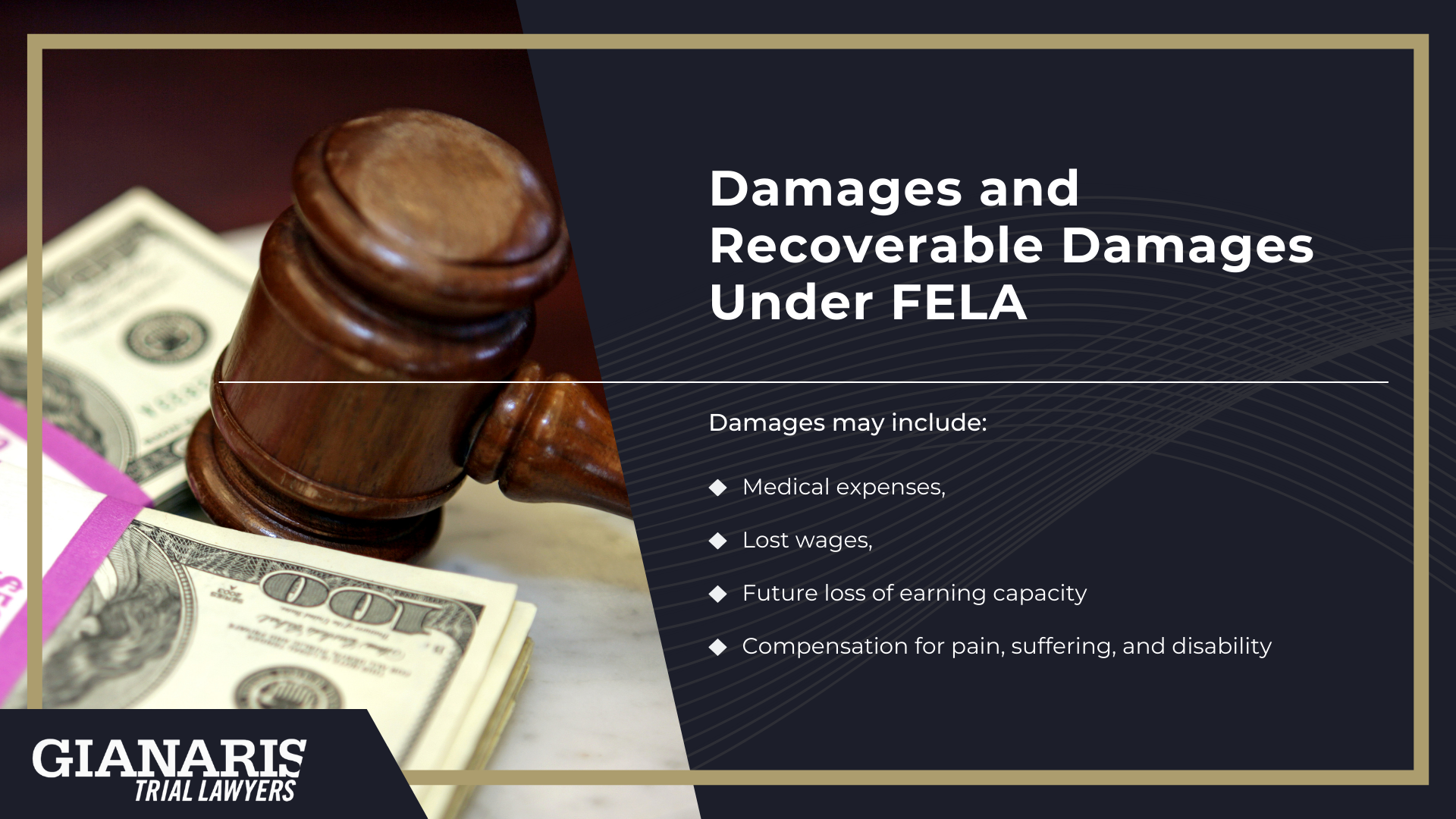
Damages may include:
- Medical expenses,
- Lost wages,
- Future loss of earning capacity
- Compensation for pain, suffering, and disability
The goal is not a quick payout.
It is fair compensation that reflects what the injury has actually taken from the person’s health, work life, and future.
In severe cases, damages may also address long-term treatment needs, limitations at work, and reduced quality of life.
If a railroad fatality occurs, families may be able to pursue damages through a wrongful death claim under FELA.
While people sometimes talk about “maximum compensation,” the real measure is what the evidence supports.
Your recovery depends on the facts, the medical proof, and the strength of the liability case.
FELA Statute of Limitations
Most FELA claims must be filed within three years of the date of injury.
For some occupational illnesses, the deadline may be tied to when the worker knew (or reasonably should have known) the condition was work-related, but the rules are fact-specific and deadlines can be contested.
If your case involves a railroad slip and fall, the timeline usually starts on the date of the accident, which makes early action important.

Waiting can also weaken the case because hazards get repaired, records get overwritten, and witnesses become harder to locate.
A railroad injury lawyer can help you identify the right deadline and preserve the evidence needed to support your claim.