
No fees unless we win.
Get a free consultation
128 Reviews
5.0
★★★★★

How is FELA Compensation Determined? [2025 Guide]

Seeking Compensation Under the Federal Employers Liability Act (FELA)

FELA compensation is determined through a fault-based system that holds railroads financially responsible when unsafe conditions or negligence cause injury or illness to their workers.

The FELA attorneys at Gianaris Trial Lawyers understand how to gather evidence, build compelling claims, and calculate the full scope of damages under federal law.

With decades of trial experience, our firm helps injured railroad workers and their families recover the compensation they deserve for medical expenses, lost income, and long-term suffering.

How is FELA Compensation Determined

What Compensation is Included in FELA Claims?

In the railroad industry, injuries and illnesses often result from demanding working conditions and exposure to hazardous environments.

Injured railroad workers are protected under the Federal Employers Liability Act (FELA), a law that allows them to pursue fair compensation when a railroad’s negligence played a role in their harm.

Unlike traditional workers’ compensation systems, FELA requires proof of fault but allows for far broader recovery.

Railroad injury cases can involve sudden on-the-job injury events (like derailments or equipment failures) or develop over time through occupational disease linked to long-term toxic exposure.

These claims often involve complex evidence, including medical documentation, safety violations, and expert testimony connecting workplace conditions to a worker’s illness or injury.

Because railroad companies have vast resources to defend against liability, hiring an experienced FELA lawyer is important to building a strong claim.

Compensation in FELA cases can cover medical expenses, lost wages, diminished earning capacity, and pain and suffering.

Each case is unique, and the value depends on the extent of the injuries and the strength of evidence proving negligence.

Understanding how FELA compensation is determined helps injured railroad employees take informed steps toward justice and financial recovery.

If you or a loved one suffered an on-the-job injury or developed an occupational disease after long-term toxic exposure in the railroad industry, you may be entitled to compensation under the Federal Employers Liability Act (FELA).

An experienced FELA lawyer can help you understand your rights, gather evidence that the railroad’s negligence played a role in your condition, and pursue the fair compensation you deserve.

Contact Gianaris Trial Lawyers today for a free consultation.

Use the chat feature on this page to find out if you qualify for a FELA claim.

Understanding How FELA Determines Compensation

The Federal Employers Liability Act (FELA) was enacted to provide railroad workers with a means to recover full and fair damages when injured on the job.

Unlike workers compensation, which offers limited and no-fault benefits, FELA litigation allows injured workers to hold negligent railroads accountable under federal law.

This system recognizes that railroad work presents unique dangers, from physical accidents to long-term toxic exposure.

To recover maximum compensation, an injured employee must prove that the railroad’s negligence (no matter how slight) contributed to their injury or illness.

This requirement forms the foundation of every FELA lawsuit and drives how damages are calculated.

Because compensation is not based on fixed schedules, each claim reflects the real financial and personal impact of the injury.

Establishing liability, causation, and damages through evidence and expert testimony is central to the legal process.

In this way, FELA provides an avenue for justice and recovery that more accurately reflects the hardships faced by railroad employees.

Common categories of recoverable compensation under FELA include:

  • Past and future medical expenses
  • Lost wages and diminished earning capacity
  • Pain, suffering, and emotional distress
  • Permanent disability or disfigurement
  • Loss of enjoyment of life and household services

Through this structure, the FELA act aims to restore an injured worker’s financial stability and quality of life as fully as possible.

Because railroad companies often deny or minimize liability, having an attorney who understands the intricacies of FELA litigation is essential.

The process requires extensive documentation, from safety violations to medical evaluations and economic loss projections.

An experienced railroad injury lawyer can use this evidence to prove negligence and push for maximum compensation.

For injured workers, this legal protection serves as both accountability for negligent railroads and a path toward long-term recovery.

Factors Influencing FELA Compensation

The value of a FELA claim depends on a range of factors that demonstrate how the injury has affected the worker’s life and earning capacity.

Central to any case is evidence of employer negligence, which must show that unsafe working conditions or a failure to follow safety regulations contributed to the worker’s injury.

When negligence is proven, injured employees can pursue compensation that reflects both their financial losses and personal suffering.

The severity of the injury, duration of recovery, and long-term medical needs all play major roles in calculating damages.

Medical costs, such as hospitalization, rehabilitation, and ongoing treatment for chronic conditions or exposure-related diseases, are a significant part of this evaluation.

Lost wages and reduced earning capacity are also measured to determine how the injury has affected financial stability and future income.

Courts and juries consider the worker’s age, occupation, and potential career trajectory in the railroad industry when calculating compensation.

The stronger the documentation and expert testimony supporting these losses, the greater the likelihood of a substantial award.

Factors influencing compensation in FELA cases include:

  • The extent of employer negligence and violation of safety standards
  • The severity and permanence of the worker’s injury
  • Evidence of unsafe working conditions or hazardous exposure
  • Total medical costs and anticipated future treatment
  • Lost wages, reduced earning capacity, and overall financial security

Because each FELA lawsuit is based on individual facts, damages vary widely from case to case.

Having skilled legal counsel is essential for accurately presenting evidence and quantifying every aspect of loss.

Experienced attorneys use expert witnesses, economists, and medical professionals to project the full value of a claim.

This approach helps railroad workers pursue compensation that truly accounts for their physical, emotional, and financial hardship.

In many cases, it is the difference between a limited recovery and the maximum compensation the law allows.

Types of Compensation Available Under FELA

FELA gives injured railroad workers the right to recover damages that reflect the true scope of their losses, both financial and personal.

Unlike workers’ comp systems, which offer predetermined payouts, FELA allows recovery through a fault-based process that holds the railroad accountable for negligence.

Compensation is divided into two main categories: economic damages and non-economic damages.

Economic Damages in FELA Claims

Economic damages represent the measurable financial losses an injured railroad worker experiences after an accident or occupational illness.

These damages aim to provide full compensation for the costs of treatment, recovery, and lost income tied directly to the injury.

Because railroad work often requires physical labor, even a partial disability can significantly affect long-term earning potential.

Economic recovery focuses on restoring financial stability and covering the real costs associated with ongoing medical attention and loss of livelihood.

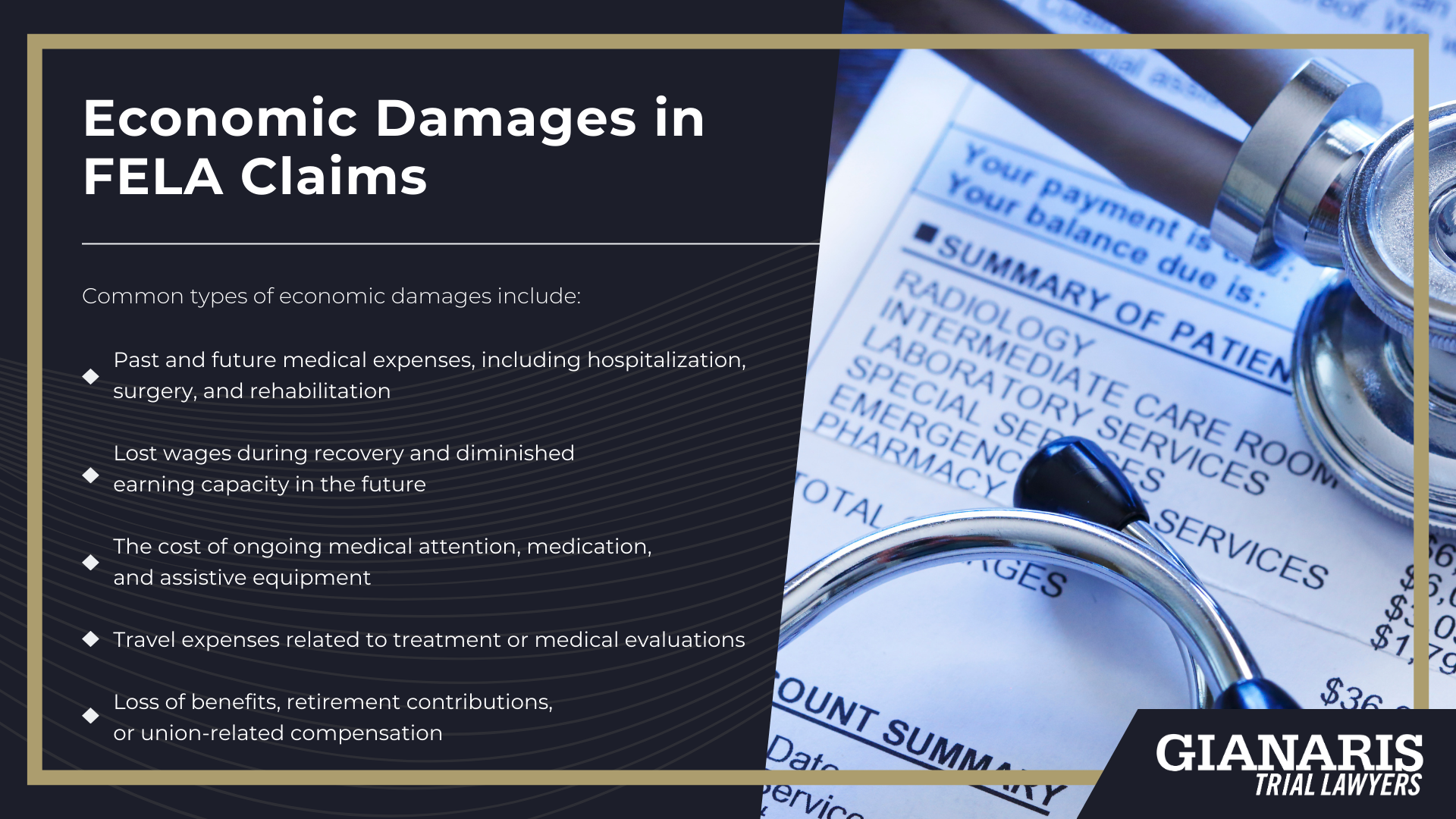
Common types of economic damages include:

  • Past and future medical expenses, including hospitalization, surgery, and rehabilitation
  • Lost wages during recovery and diminished earning capacity in the future
  • The cost of ongoing medical attention, medication, and assistive equipment
  • Travel expenses related to treatment or medical evaluations
  • Loss of benefits, retirement contributions, or union-related compensation

Non-Economic Damages in FELA Claims

Non-economic damages address the physical pain, emotional suffering, and loss of quality of life that cannot be measured in exact dollar amounts.

These damages recognize that a serious railroad injury affects more than just income, it can permanently alter a person’s health, relationships, and sense of independence.

Under FELA, injured railroad workers are entitled to full compensation for these intangible losses when the railroad’s negligence caused or contributed to their harm.

Because every person experiences pain and recovery differently, the amount awarded depends on testimony, medical evidence, and the overall impact of the injury.

Examples of non-economic damages include:

  • Physical pain and discomfort caused by the injury or medical treatment
  • Emotional distress, anxiety, depression, or post-traumatic stress
  • Loss of enjoyment of life or inability to engage in former activities
  • Permanent disfigurement or disability affecting self-image and daily life
  • Strain on family relationships or loss of companionship due to the injury

Proving and Pursuing a FELA Claim

Pursuing a claim under the Federal Employers Liability Act (FELA) requires injured railroaders to prove that their railroad employer’s negligence contributed to their injury or illness.

This means demonstrating that the company failed to provide a reasonably safe work environment, adequate equipment, or proper training for the job.

Railroad employers have a legal duty to maintain safety standards, inspect worksites, and protect employees from known hazards.

When they fall short, (by neglecting maintenance, ignoring safety protocols, or exposing workers to harmful substances) they can be held liable under federal law.

The process begins with collecting and preserving evidence that links the employer’s conduct to the injury.

Railroad accident reports, witness statements, safety manuals, and maintenance logs often serve as crucial legal documents in building a strong case.

Medical evaluations and expert testimony can further establish the connection between unsafe conditions and the resulting harm.

Because the railroad industry’s legal framework is complex, having legal support from an experienced FELA lawyer is essential for navigating the claim effectively.

A skilled FELA attorney will handle filings, negotiate with the railroad’s defense team, and prepare the case for trial if necessary.

With strong representation, an injured railroader can pursue full and fair compensation for the losses they’ve suffered.

Building a Strong Case for Railroad Negligence

Proving that a railroad company acted negligently requires a detailed investigation and strong documentation linking unsafe practices to the worker’s injury or illness.

Our legal team examines every aspect of the incident (from training procedures to equipment maintenance) to determine where the company failed to meet its safety obligations.

Because railroad work involves heavy machinery, chemical exposure, and long hours, even small oversights can lead to serious or fatal outcomes.

Whether representing an injured employee or a family member pursuing a wrongful death claim, the goal is to build a case that clearly connects the railroad’s conduct to the harm suffered.

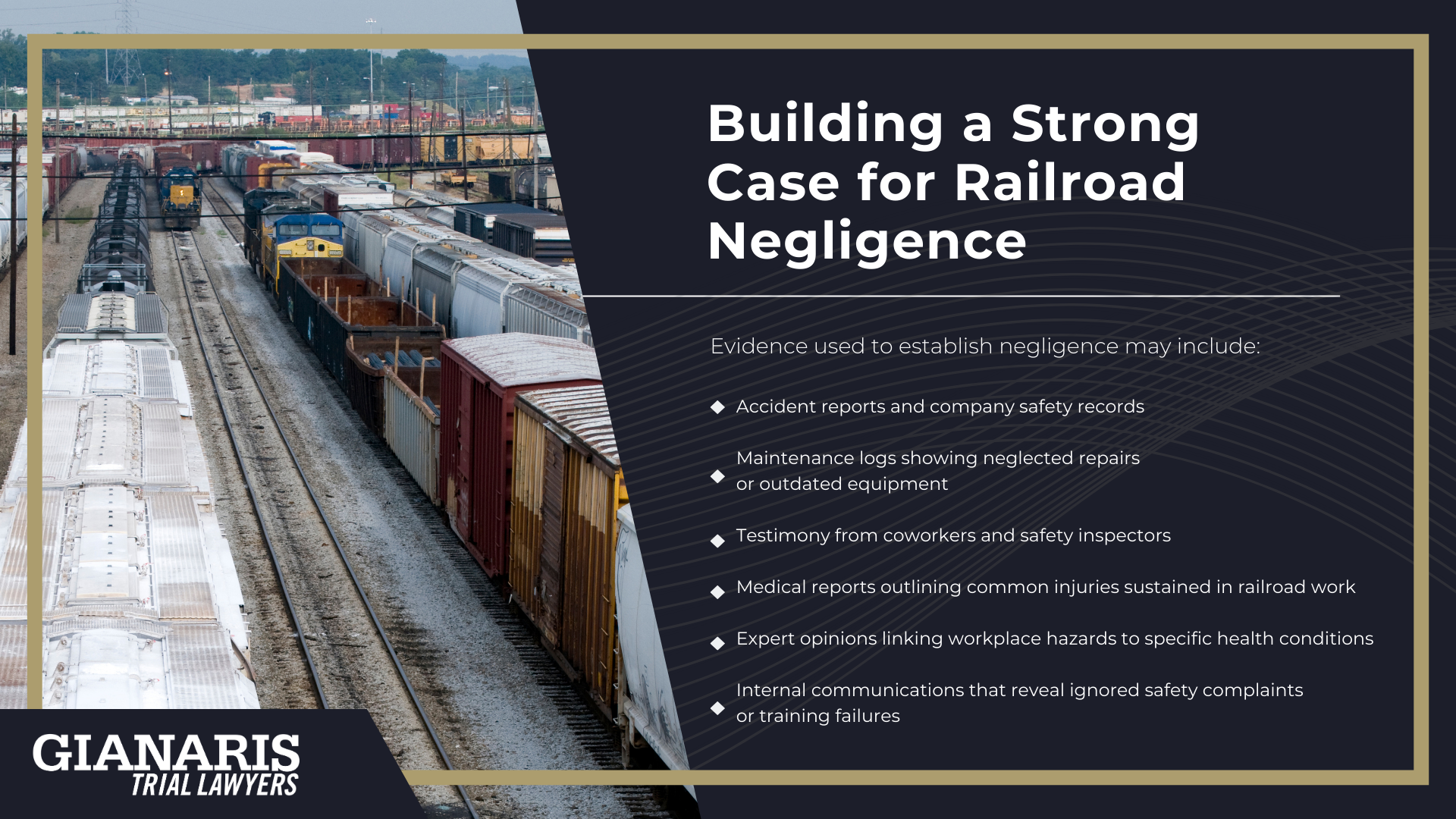
Evidence used to establish negligence may include:

  • Accident reports and company safety records
  • Maintenance logs showing neglected repairs or outdated equipment
  • Testimony from coworkers and safety inspectors
  • Medical reports outlining common injuries sustained in railroad work
  • Expert opinions linking workplace hazards to specific health conditions
  • Internal communications that reveal ignored safety complaints or training failures

An experienced personal injury lawyer will coordinate this evidence to create a compelling narrative of how the railroad’s actions (or inaction) caused the injury.

Our legal team uses expert witnesses and industry standards to show that the railroad failed to provide a safe work environment as required by federal law.

This detailed approach strengthens both settlement negotiations and trial presentations.

Through careful investigation and strategic advocacy, victims and their families can hold negligent railroads accountable and recover the compensation they deserve.

Compensation Differences in Injury and Occupational Disease Cases

While every FELA claim is based on proving railroad negligence, the type of injury determines how compensation is calculated and supported through evidence.

Traumatic injuries, such as broken bones, spinal damage, or traumatic brain injuries, are typically immediate and supported by detailed medical records documenting treatment, surgeries, and recovery.

These cases focus heavily on the physical impact, time away from work, and the long-term effects on a railroad worker’s ability to earn a living.

Occupational disease cases, on the other hand, involve conditions like cancer or chronic respiratory illness that develop gradually due to long-term exposure to toxins, diesel fumes, or asbestos.

Because the onset is slower, these claims often require expert medical opinions and exposure histories to prove causation under FELA standards.

The economic impact of these cases can be extensive, reflecting years of lost wages and lifelong medical care.

Both types of claims can lead to substantial recoveries when handled by skilled attorneys with experience in FELA litigation.

Our attorneys have recovered millions for workers and families affected by unsafe conditions.

Traumatic Injury Cases Under FELA

Traumatic injury cases are the most common type of FELA claim and typically arise from accidents involving heavy machinery, falls, or unsafe rail yard conditions.

These injuries can range from fractures and crush injuries to spinal cord damage and traumatic brain injuries.

Because these incidents are sudden and clearly documented, evidence often includes detailed medical records, safety reports, and eyewitness testimony.

The focus in these cases is on how the injury affects the worker’s physical ability to perform job duties and maintain long-term employment.

Compensation may include medical costs, lost wages, and future earning potential, as well as pain and suffering tied to lasting physical limitations.

Juries also consider whether the railroad provided proper training, safe equipment, and adequate staffing at the time of the accident.

When these standards are violated, railroad employers may face substantial liability.

With skilled representation, injured workers can recover the full value of their losses and hold the company accountable for unsafe practices.

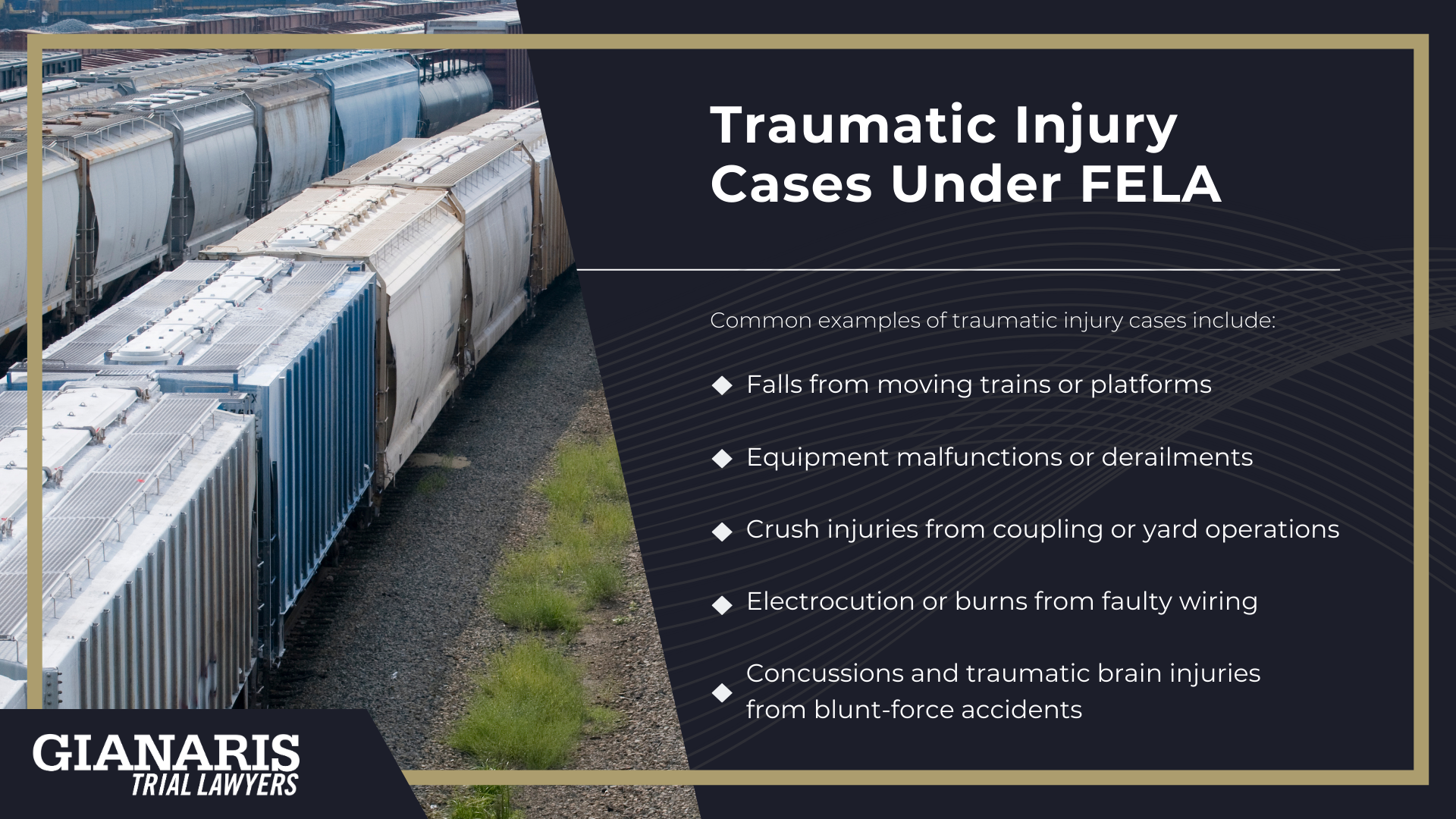
Common examples of traumatic injury cases include:

  • Falls from moving trains or platforms
  • Equipment malfunctions or derailments
  • Crush injuries from coupling or yard operations
  • Electrocution or burns from faulty wiring
  • Concussions and traumatic brain injuries from blunt-force accidents

Occupational Disease and Cancer Cases Under FELA

Occupational disease cases develop gradually over years of railroad employment, often tied to long-term exposure to diesel exhaust, asbestos, benzene, silica, or other toxins.

Unlike traumatic injuries, these conditions are harder to trace to a single event and require medical and scientific evidence to prove the connection between exposure and illness.

Medical records, pathology reports, and expert testimony are critical in establishing this link.

Common FELA-related occupational diseases include lung cancer, leukemia, mesothelioma, and chronic respiratory disorders.

These claims often involve substantial medical costs, loss of earning capacity, and shortened life expectancy, all of which factor heavily into compensation.

Attorneys who have recovered millions for railroad workers in similar cases use industrial hygiene data and exposure studies to demonstrate causation.

Families pursuing wrongful death claims under FELA can also recover damages for lost income, benefits, and the decedent’s conscious pain and suffering before death.

With the right legal strategy, workers and their families can obtain fair compensation despite the challenges of proving long-term toxic exposure.

The Role of a FELA Lawyer in Maximizing Compensation

FELA claims are complex and often heavily contested by railroad companies that have teams of adjusters and defense attorneys protecting their interests.

For injured railroad workers, having a knowledgeable FELA lawyer is critical to level the playing field and secure the maximum recovery available under federal law.

An experienced attorney understands how to investigate the accident, identify evidence of negligence, and present medical and economic data in a way that strengthens the case.

From preserving medical records to obtaining expert testimony, the lawyer’s job is to build a detailed picture of how the injury or illness has affected every aspect of the worker’s life.

Legal counsel also manages communication with railroad employers and insurance representatives, preventing clients from making statements that could harm their claim.

A skilled FELA lawyer evaluates all categories of damages (both economic and non-economic) to pursue full compensation that reflects the true extent of harm.

In cases involving traumatic brain injuries, amputations, or occupational cancers, this often includes working with medical and financial experts to calculate lifelong costs.

Attorneys with extensive experience in FELA litigation have recovered millions for railroad workers and families, helping them regain financial stability after serious injury or loss.

The process requires persistence, technical knowledge, and a deep understanding of how railroads operate and defend these cases.

With proper legal representation, injured workers and their families can hold negligent railroads accountable and move forward with greater financial and emotional security.

Should I Talk to the Railroad Claim Agent After My Injury?

You should be cautious when speaking with a railroad claim agent after a workplace injury.

These agents represent the railroad company, not you, and their goal is to reduce the company’s financial responsibility.

Anything you say can be used to minimize your claim or challenge your account of the accident.

Before giving a statement, signing paperwork, or accepting any offer, it’s best to consult a law firm experienced in FELA cases.

An attorney can handle communication with the claim agent, protect your rights, and make sure no information is used against you.

Speaking with legal counsel first gives you the best chance to recover the full compensation you’re entitled to under the law.

Gianaris Trial Lawyers: Experienced Railroad Injury Lawyers

At Gianaris Trial Lawyers, our commitment to injured railroad workers is grounded in decades of experience holding negligent railroads accountable under the Federal Employers Liability Act (FELA).

Our team understands the physical demands and dangers of railroad work and the lifelong consequences of injuries caused by unsafe conditions.

We build each case with precision, using detailed medical records, expert testimony, and industry knowledge to prove liability and secure fair, full compensation.

Whether you suffered a traumatic accident or developed an occupational disease after years of exposure, our firm fights for the recovery you and your family deserve.

As a trial-focused law firm, we do not back down from powerful railroad employers or insurance companies.

We’ve earned the trust of workers and families by consistently delivering results that restore financial stability and dignity after serious injury.

If you or a loved one has been hurt while working in the railroad industry, contact Gianaris Trial Lawyers today to speak with an experienced FELA attorney about your legal rights and next steps.

Frequently Asked Questions

  • What should I do if the railroad company offers me a settlement right after my injury?

    If a railroad representative offers you a settlement soon after your injury, you should not accept or sign anything before speaking with an experienced FELA lawyer.

    Early settlement offers are often designed to limit the railroad’s financial responsibility and prevent you from pursuing the full compensation you deserve.

    These offers rarely account for ongoing medical treatment, long-term wage loss, or the lasting effects of serious injuries such as spinal damage or traumatic brain injuries.

    A skilled attorney at Gianaris Trial Lawyers can review the offer, assess the full value of your claim, and handle negotiations directly with the railroad’s legal team.

    By allowing a lawyer to evaluate your case, you protect your right to pursue fair compensation for both economic and non-economic damages under the Federal Employers Liability Act (FELA).

  • What steps should I take after a railroad injury?

    If you’ve been injured while working for a railroad, taking the right steps immediately can make a major difference in your recovery and your potential FELA case.

    Your first priority should always be immediate medical attention, even if the injury seems minor, early treatment creates an essential record for your claim.

    After getting care, report the incident to your supervisor and union representative, but avoid giving detailed statements to company investigators or claim agents before speaking with an attorney.

    Your actions in the first few days after the accident help preserve evidence and strengthen your legal position if your case proceeds to federal court under the Federal Employers Liability Act (FELA).

    Steps to follow include:

    • Seek immediate medical attention and document all symptoms, treatments, and follow-up appointments.
    • Notify your union representative about the incident and request guidance before signing any company forms.
    • Record the scene if possible—photos, equipment details, and names of witnesses can be critical later.
    • Keep copies of all incident reports, doctor notes, and medical bills.
    • Contact an experienced FELA attorney before speaking with a railroad claim agent or accepting any offer.

    By following these steps, injured railroad workers protect their rights and lay the groundwork for a strong case.

    An experienced law firm like Gianaris Trial Lawyers can guide you through every stage of the process, from investigation to trial in federal court if necessary.

  • Can I file a claim if I'm partially at fault for my injury?

    Yes.

    Under the Federal Employers Liability Act (FELA), you can still recover compensation even if you were partially responsible for your injury.

    The law uses a system called comparative negligence, which means your compensation is reduced only by the percentage of fault assigned to you.

    For example, if a court finds that you were 20% at fault and the railroad was 80% at fault, you can still recover 80% of your total damages.

    This rule allows injured railroad workers to pursue justice even when accidents involve shared responsibility.

    At Gianaris Trial Lawyers, our attorneys thoroughly investigate every case to minimize any claims of worker fault and strengthen your position under federal law.

  • What railroad companies can be sued in a FELA claim?

    Under the Federal Employers Liability Act (FELA), injured railroad workers can file claims against their direct employer if that company’s negligence contributed to their injury or illness.

    This means that any common-carrier railroad engaged in interstate commerce can be held liable when safety rules are ignored or working conditions are unsafe.

    Major railroads frequently involved in FELA litigation include:

    • Union Pacific Railroad
    • Norfolk Southern Railway
    • CSX Transportation
    • BNSF Railway
    • Amtrak (National Railroad Passenger Corporation)
    • Canadian National Railway (CN)
    • Canadian Pacific Kansas City (CPKC)
    • Kansas City Southern Railway
    • Florida East Coast Railway
    • Illinois Central Railroad
    • Conrail Shared Assets Operations
    • Alaska Railroad Corporation
    • Genesee & Wyoming Inc.
    • Watco Companies LLC
    • Indiana Rail Road Company
    • Dakota, Minnesota & Eastern Railroad (DM&E)
    • Paducah & Louisville Railway
    • Wheeling and Lake Erie Railway
    • Iowa Interstate Railroad
    • Georgia Central Railway

    Smaller short-line and regional carriers may also face liability if they operate in interstate commerce or maintain joint operations with larger railroads.

    A FELA attorney at Gianaris Trial Lawyers can identify which company (or combination of companies) may be responsible for the unsafe conditions that caused your injury.

Published by:
Share
Picture of Ted Gianaris
Ted Gianaris

With nearly 30 years of legal experience, Attorney Ted Gianaris has secured over $350 million in compensation for Illinois injury victims, car accident victims, and surviving family members of wrongful death victims.

This article has been written and reviewed for legal accuracy and clarity by the team of writers and attorneys at Gianaris Trial Lawyers and is as accurate as possible. This content should not be taken as legal advice from an attorney. If you would like to learn more about our owner and experienced Illinois injury lawyer, Ted Gianaris, you can do so here.

Gianaris Trial Lawyers does everything possible to make sure the information in this article is up to date and accurate. If you need specific legal advice about your case, contact us. This article should not be taken as advice from an attorney.

Other FELA Lawsuits Resources
All
FAQs
Injuries & Conditions
Legal Help
Occupations
Settlements & Compensation
You can learn more about FELA Lawsuits below:
A Complete Guide to FELA Lawsuits for Injured Railroad Workers
Average FELA Settlement Amounts
Common Railroad Worker Injuries
FELA Case Compensation
FELA Injury Types
FELA Statute of Limitations
FELA vs Workers Compensation: What is the Difference?
FELA Wrongful Death Lawsuits
Important Evidence in FELA Claims
The Legal Process for FELA Railroad Cases Explained
Who Qualifies for a FELA Railroad Claim?

Other FELA Lawsuits Resources

All
FAQs
Injuries & Conditions
Legal Help
Occupations
Settlements & Compensation