
No fees unless we win.
Get a free consultation
128 Reviews
5.0
★★★★★

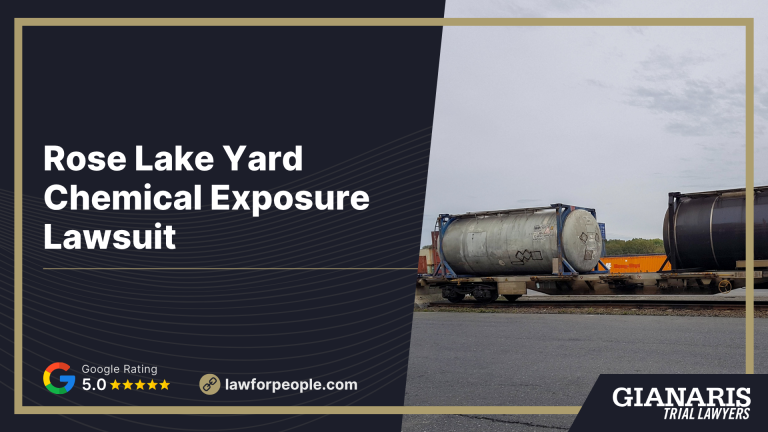
Rose Lake Yard Chemical Exposure Lawsuit

Were You Exposed to Toxic Substances at Rose Lake Yard? Contact Us

The Rose Lake Yard Chemical Exposure Lawsuit investigation focuses on whether years of work in this rail-yard and intermodal environment may have contributed to cancer, lung disease, and other serious illnesses in railroad employees.

Workers at Rose Lake Yard may have been exposed to diesel exhaust, fuel-related chemicals, solvents, asbestos-containing materials, welding fumes, and other industrial substances associated with locomotive activity, intermodal operations, repair work, and yard service.

Long-term exposure to these substances has been linked to respiratory disease, blood disorders, and certain cancers.

Gianaris Trial Lawyers is reviewing potential claims for current and former railroad workers, as well as families of deceased workers, who believe occupational chemical exposure at Rose Lake Yard contributed to a serious diagnosis or wrongful death.

Rose Lake Yard Chemical Exposure Lawsuit

Workplace Exposures at Rose Lake Yard May Be Linked to Cancer and Other Serious Health Problems

Rose Lake Yard is a freight and intermodal rail facility in the East St. Louis terminal area, now associated with CSX’s East St. Louis Intermodal Terminal.

The yard supports locomotive activity, container handling, yard service, and other rail operations tied to the movement of freight through the St. Louis region.

Workers there may have spent years around active tracks, locomotives, intermodal equipment, service areas, and other conditions associated with daily railroad work.

That environment can involve repeated contact with diesel-powered equipment, fuel-related substances, solvents, dust, welding activity, and older railroad materials.

Depending on the job and the time period involved, some workers may have been exposed to diesel exhaust, benzene-containing petroleum products, asbestos-containing materials, degreasers, lubricants, and other substances associated with yard and terminal operations.

For workers later diagnosed with cancer, respiratory disease, or another serious illness, those conditions may become relevant in a review of occupational exposure.

The Federal Employers’ Liability Act, or FELA, allows railroad employees to pursue claims when employer negligence played a part in causing occupational disease.

Gianaris Trial Lawyers is reviewing potential claims involving toxic exposure in railroad workplaces.

Contact us today, or use the chatbot on this page to see if you qualify today.

Rose Lake Yard Overview: History, Railroad Companies, and More

Rose Lake Yard is a freight and intermodal rail facility in the East St. Louis terminal area, commonly associated with CSX’s East St. Louis Intermodal Terminal.

The yard serves domestic and international freight movement and remains part of an active railroad corridor on the Illinois side of the St. Louis region.

Its history ties the property to earlier freight-yard operations before the site moved through the Conrail system and into the modern CSX network.

That long operating history placed workers in a rail environment shaped by locomotive activity, intermodal handling, yard service, and terminal support work.

The yard is not a passenger facility or a local spur. It is a working freight property where railcars, containers, locomotives, and support equipment move through a larger terminal network.

Workers assigned there may have spent years around active tracks, service areas, freight equipment, and other industrial conditions tied to daily railroad operations.

History of Rose Lake Yard

Rose Lake Yard developed within the East St. Louis rail gateway and remained tied to freight operations as the region’s railroad network changed over time.

Public records support a historical chain from the Pennsylvania Railroad era to Conrail and then to CSX after the 1999 Conrail breakup.

Today, the site operates as CSX’s East St. Louis Intermodal Terminal, also referred to as Rose Lake Yard, with active domestic and international intermodal service.

The timeline of Rose Lake Yard includes:

  • Pre-1976: Pennsylvania Railroad / Penn Central era
  • 1976: Conrail era begins
  • 1994: Federal record identifies Conrail’s Rose Lake Yard
  • 1999: CSX-era operator history begins after Conrail breakup
  • 2004: Documented diesel fuel spill at CSX Rose Lake Yard
  • 2025: Active CSX East St. Louis Intermodal Terminal / Rose Lake Yard

What Railroad Companies Have Operated at Rose Lake Yard?

Rose Lake Yard has a clear historical progression tied to a small number of major freight rail systems rather than multiple simultaneous operators.

The yard is most directly associated with the Pennsylvania Railroad in its early history, followed by Conrail, and then CSX after the Conrail breakup.

Railroad companies tied to Rose Lake Yard include:

  • Pennsylvania Railroad
  • Penn Central Transportation Company
  • Consolidated Rail Corporation (Conrail)
  • CSX Transportation

What Kind of Railroad Work Has Taken Place at Rose Lake Yard?

Rose Lake Yard has functioned as a freight and intermodal worksite within the East St. Louis terminal network.

The yard’s operations have included train arrival and departure activity, container handling, yard service, and the movement of rail traffic through an active terminal environment.

Intermodal work at the site involves the transfer of containers between rail and truck transportation, along with the staging and handling needed to keep freight moving through the terminal.

Yard operations also place employees around locomotives, railcars, support vehicles, and other railroad equipment used in daily freight service.

That work can include switching-related movement, terminal support functions, and service activity tied to trains entering, leaving, or being worked within the yard.

Historic references to older yard infrastructure, including servicing features from earlier railroad eras, show that the property has long been used for more than simple pass-through traffic.

The site is best understood as a working freight terminal where intermodal handling, locomotive activity, and yard support functions operated together over time.

Work at Rose Lake Yard has included:

  • Intermodal container handling for domestic and international freight
  • Rail-truck transfer operations within the terminal
  • Yard service and train support activity tied to freight movement
  • Locomotive and railcar movement within the yard environment
  • Freight staging and terminal preparation work
  • Maintenance and support functions involving railroad equipment
  • Older servicing and infrastructure-related yard functions tied to earlier railroad operations

Chemical Exposure Risks at Rose Lake Yard: Overview

Rose Lake Yard operates as a freight and intermodal facility where employees may have worked around locomotives, railcars, terminal equipment, and maintenance activity over extended periods.

In that environment, diesel exhaust fumes are a common condition for workers assigned near running engines, yard movements, and intermodal operations.

Diesel exhaust exposure can occur during daily work around locomotives, hostler equipment, and other diesel-powered machinery used throughout the yard.

Workers may also have encountered fuel-related substances, including petroleum products and, in some traffic settings, commodities such as crude oil.

Mechanical and maintenance work can involve solvents, oils, degreasers, and other industrial materials used in servicing equipment and supporting yard operations.

Depending on the job and time period, some employees may have been exposed to asbestos-containing materials, dust from older infrastructure, or particulates generated during repair activity, including potential asbestos exposure in earlier work environments.

Over time, repeated contact with these conditions may result in prolonged exposure for many railroad workers assigned to yard, locomotive, or maintenance roles.

Chemical exposure risks at Rose Lake Yard may include:

  • Diesel exhaust from locomotives, yard engines, and diesel-powered equipment
  • Fuel-related chemicals associated with petroleum products and crude oil traffic
  • Solvents, oils, and degreasers used in maintenance and equipment servicing
  • Asbestos exposure tied to older equipment, insulation, or historic yard infrastructure
  • Dust and particulate matter generated from ballast, repair work, and yard activity
  • Welding fumes and metal particulates from repair and fabrication tasks
  • Residue from railroad ties and other treated rail infrastructure materials

Railroad Jobs That May Have Involved Exposure at Rose Lake Yard

Exposure at Rose Lake Yard depended on the work a person performed and where that work took place within the terminal.

Employees assigned to locomotive areas, intermodal operations, repair settings, or general yard service may have worked around diesel emissions, dust, fuels, and other industrial conditions tied to daily freight activity.

Some jobs placed workers in closer and more frequent contact with active equipment, maintenance materials, and terminal operations than others.

For affected workers, those differences in assignment, location, and duration of work can become important when reviewing occupational exposure history.

Jobs that may have involved exposure at Rose Lake Yard include:

  • Conductors, brakemen, and yard crews involved in freight movement and terminal operations
  • Locomotive engineers and hostlers working around active engines and diesel-powered equipment
  • Intermodal terminal workers handling containers, transfers, and support equipment
  • Mechanics, electricians, and repair personnel working in service and maintenance areas
  • Sheet metal workers and other craft employees involved in fabrication, repair, and equipment support
  • Laborers and cleanup workers assigned to general yard service and terminal support tasks

Illnesses and Diseases Linked to Chemical Exposure in the Railroad Industry

Railroad work can involve long-term contact with industrial substances that may increase cancer risk and contribute to serious respiratory disease.

For some workers, a later cancer diagnosis may raise questions about whether years of diesel exposure, exposure to diesel exhaust, asbestos-containing materials, or other hazardous conditions played a role.

Chronic respiratory illnesses can also develop after prolonged work around dust, fumes, and industrial byproducts, including chronic obstructive pulmonary disease in some cases.

Earlier railroad work may also have involved locomotive parts manufactured with asbestos, which can be relevant in cases involving mesothelioma, asbestosis, or asbestos related lung cancer.

Illnesses and diseases commonly raised in railroad cancer cases include:

  • Lung cancer
  • Asbestos related lung cancer
  • Mesothelioma
  • Leukemia
  • Non-Hodgkin lymphoma
  • Asbestosis
  • Chronic obstructive pulmonary disease
  • Other chronic respiratory disease

Do You Qualify for a FELA Claim for Chemical Exposure?

Railroad workers who later develop a serious occupational illness may have a claim under the Federal Employers’ Liability Act, or FELA.

A claim usually depends on whether railroad employers failed to provide reasonably safe working conditions and whether that failure played a part in causing the illness.

In chemical exposure cases, that often includes questions about diesel fumes, asbestos-containing materials, solvents, dust, and other hazards present in the work environment.

Many railroad workers exposed to toxic chemicals over long periods may not know right away whether their job history supports a legal claim.

The review is often a complex process that looks at job duties, work locations, length of exposure, and the medical evidence tied to the diagnosis.

It also involves examining whether there was a failure to protect workers through warnings, safer procedures, training, or other workplace protections.

A valid claim may allow recovery for losses tied to the illness, including treatment needs, lost income, and medical costs.

A case review can help determine whether the facts support a FELA claim and whether the available evidence may justify fair compensation.

How FELA Applies to Railroad Workers

FELA is the federal law that usually governs on-the-job injury and occupational-disease claims for railroad employees.

Unlike ordinary workers’ compensation systems, it is a negligence-based statute, which means the worker must show that the railroad’s conduct played a part in causing the disease.

That can include failure to reduce hazardous conditions, failure to warn workers about known risks, or failure to provide adequate workplace protections.

That framework can apply even if the worker is retired, as long as the case is timely and supported by evidence.

A worker who later develops cancer, chronic obstructive pulmonary disorder, or another serious disease after years in railroad service may still be able to seek compensation if the evidence supports a connection between the job and the illness.

Whether the railroad workers cancer lawsuit results in a verdict or settlement depends on the proof, the diagnosis, and whether negligence can be shown.

Evidence in FELA Railroad Cancer Lawsuits

In a railroad cancer case, it is usually not enough to show that a worker became sick.

The plaintiff generally must show both harmful exposure and negligence by the railroad.

That often requires reconstructing the employee’s work history, identifying the substances present in the work environment, and showing how the railroad responded to known hazards such as diesel exhaust, benzene exposure, asbestos, and other toxic conditions.

Diesel engine exhaust is classified by IARC as carcinogenic to humans; NCI says benzene exposure may increase the risk of leukemia and other blood disorders; and OSHA and WHO both identify asbestos as a cause of lung cancer, mesothelioma, and asbestosis.

Evidence in these cases may include:

  • Employment records showing where the worker was assigned and what railroad jobs the worker performed.
  • Medical records and other medical documentation confirming the diagnosis, treatment, and progression of the illness.
  • Testimony about time spent around locomotives, intermodal activity, shop areas, or equipment that may have involved diesel fuel, solvents, or other industrial toxins.
  • Co-worker testimony describing whether workers were routinely exposed to diesel exhaust asbestos, fumes, dust, or other dangerous substances in the yard.
  • Internal railroad safety materials, manuals, inspection records, or training documents showing what the railroad knew about the hazard.
  • Expert testimony from industrial hygiene, medical, or occupational experts linking the exposure history to the worker’s disease.

Those proof issues matter because many occupational-disease cases turn on whether the illness is medically and legally cancer linked to the worker’s railroad exposure history.

That is especially true in cases involving blood cancers, multiple myeloma, or other types of cancer that require detailed causation analysis.

Gianaris Trial Lawyers: Investigating Chemical Exposure Claims at Rose Lake Yard

Chemical exposure claims involving Rose Lake Yard depend on the worker’s actual job history and the conditions present in the areas where that work was performed.

Some injured workers may have spent years around locomotives, intermodal equipment, yard service, repair activity, diesel emissions, asbestos-containing materials, solvents, and other substances associated with freight-terminal operations.

Gianaris Trial Lawyers reviews railroad cancer claims involving workers and their families who believe long-term railroad work contributed to cancer, respiratory disease, or other serious health issues.

If you or a family member worked at Rose Lake Yard and later received a serious diagnosis, Gianaris Trial Lawyers can review the work history, medical records, and other available evidence to determine whether a potential FELA claim may be supported.

A case review can help identify what records matter, what exposure issues may need closer investigation, and what legal options may be available for medical expenses, hospital bills, pain and suffering, lost income, and other losses tied to the illness.

Frequently Asked Questions

  • Where is Rose Lake Yard located?

    Rose Lake Yard is located in the East St. Louis freight corridor in southwestern Illinois.

    The yard is commonly associated with CSX’s East St. Louis Intermodal Terminal and sits near 3900 Rose Lake Road.

    Public sources place it within or adjacent to Fairmont City and Washington Park in the Metro East region.

    It operates on the Illinois side of the Mississippi River as part of the broader St. Louis rail network.

    Rose Lake Yard is a freight and intermodal facility rather than a passenger rail location.

  • What railroad companies have operated at Rose Lake Yard?

    Rose Lake Yard has a defined operator history tied to a small number of major freight rail systems rather than multiple overlapping carriers.

    The yard is most closely associated with the Pennsylvania Railroad in its early development, followed by Penn Central and then Conrail as the rail industry consolidated in the twentieth century.

    After the 1999 Conrail breakup, the yard became part of the CSX Transportation network and continues to operate under CSX today.

    This progression reflects broader changes in the U.S. freight rail system rather than a shift in the yard’s core function as a working freight property.

    Railroad companies tied to Rose Lake Yard include:

    • Pennsylvania Railroad
    • Penn Central Transportation Company
    • Consolidated Rail Corporation (Conrail)
    • CSX Transportation
  • What toxic chemicals might railroad workers be exposed to?

    Railroad workers at a facility like Rose Lake Yard may be exposed to a range of industrial substances depending on their job duties and work environment.

    Work around locomotives, intermodal equipment, maintenance areas, and freight handling can involve contact with airborne particulates, fuel-related chemicals, and other byproducts of railroad operations. Repeated exposure over time may be associated with an increased risk of serious health conditions in some workers.

    The specific substances and level of exposure vary based on the worker’s role, location within the yard, and duration of employment.

    Substances that may be involved include:

    • Diesel exhaust and locomotive emissions
    • Fuel-related chemicals, including benzene and petroleum products
    • Solvents, degreasers, and industrial cleaning agents
    • Welding fumes and metal particulates from repair work
    • Silica dust and other ballast-related particulates
    • Asbestos-containing materials in older equipment or insulation
    • Residue from treated railroad ties and other rail infrastructure materialsz
  • Can railroad workers file a lawsuit for chemical exposure?

    Yes.

    Railroad workers typically bring occupational-disease claims under the Federal Employers’ Liability Act (FELA) rather than ordinary workers’ compensation systems.

    Under 45 U.S.C. § 51, a railroad may be liable when an employee’s injury or illness results in whole or in part from the railroad’s negligence, so a worker who develops cancer or another serious disease after harmful workplace exposure may have a claim if the evidence supports both exposure and negligence.

Published by:
Share
Picture of Ted Gianaris
Ted Gianaris

With nearly 30 years of legal experience, Attorney Ted Gianaris has secured over $350 million in compensation for Illinois injury victims, car accident victims, and surviving family members of wrongful death victims.

This article has been written and reviewed for legal accuracy and clarity by the team of writers and attorneys at Gianaris Trial Lawyers and is as accurate as possible. This content should not be taken as legal advice from an attorney. If you would like to learn more about our owner and experienced Illinois injury lawyer, Ted Gianaris, you can do so here.

Gianaris Trial Lawyers does everything possible to make sure the information in this article is up to date and accurate. If you need specific legal advice about your case, contact us. This article should not be taken as advice from an attorney.

Additional Railyard Chemical Exposure Lawsuits resources on our website:
All
FAQs
Injuries & Conditions
Legal Help
Occupations
Settlements & Compensation
You can learn more about Railyard Chemical Exposure Lawsuits below:
54th Yard Chemical Exposure Lawsuit
Bedford Park Railyard Chemical Exposure Lawsuit
Bensenville Rail Yard Chemical Exposure Lawsuit
Chicago Union Station Chemical Exposure Lawsuit
Dupo Yard Chemical Exposure Lawsuit
Illinois Railyard Chemical Exposure Lawsuit
Madison Yard Chemical Exposure Lawsuit
Proviso Rail Yard Chemical Exposure Lawsuit
Railyard Chemical Exposure Lawsuits

Other Railyard Chemical Exposure Lawsuits Resources

All
FAQs
Injuries & Conditions
Legal Help
Occupations
Settlements & Compensation