No fees unless we win.
Get a free consultation
128 Reviews
5.0
★★★★★

Railroad Signal Maintainer Injury Risks

Railroad Signal Maintainers Are At Risk For Injuries

A Railroad Signal Maintainer injury claim can help injured workers seek justice after suffering serious harm linked to hazardous signal inspection, testing, and repair conditions.

Signal maintainers face heightened risks of electrical shock and arc-flash, battery acid burns, confined-space and trenching incidents, struck-by or caught-between hazards near moving trains and roadway traffic at crossings, and other preventable on-the-job dangers.

Gianaris Trial Lawyers investigates these cases and represents signal maintainers and families in pursuing compensation from railroad companies that failed to provide a safe workplace.

Railroad Signal Maintainer Injury Risks; Your Role as a Railroad Signal Maintainer; The Equipment You Handle and Maintain; Physical Injury Risks for Railroad Signal Maintainers; Mental Health Risks for Railroad Signal Maintainers; Chemical and Environmental Exposure Risks; FELA Coverage for Railroad Signal Maintainers; How Negligence May Be Proven; Evidence That Supports a FELA Claim; The Statute of Limitations for FELA Claims; Have You Sustained Injuries on the Track_ Contact Us Today

Lawyers for Injured Railroad Signal Maintainers

Are you a railroad signal maintainer?

If you are, you’re one of the most valuable members of the train crew.

You work close to the track, handle electrical equipment, and keep the systems that guide trains operating safely.

Your tasks involve inspections, repairs, testing, and constant coordination with supervisors and other personnel.

When you get hurt on the job, the impact can be immediate.

Electrical shocks, falls, chemical exposures, and the physical demands of this position can lead to serious medical and financial issues.

If your injury happened while performing assigned duties, you may be protected under FELA.

A FELA settlement entitles you to complete compensation for any injuries and illnesses (like cancer) you sustain on the job.

All you need to do is prove your employer’s negligence, unsafe practices, or faulty equipment that may have played a role in your accident.

Working with an experienced railroad injury lawyer can help to strengthen your claim.

If you, a railroad signal maintainer, sustain any injuries on the job, you may be eligible to recover compensation from your employer under the Federal Employers’ Liability Act (FELA).

Contact Gianaris Trial Lawyers for a free consultation or use our chatbot to find out immediately if you’re eligible for a claim.

Your Role as a Railroad Signal Maintainer

Your work as a railroad signal maintainer is essential to the safe movement of trains, roadway workers, and passengers.
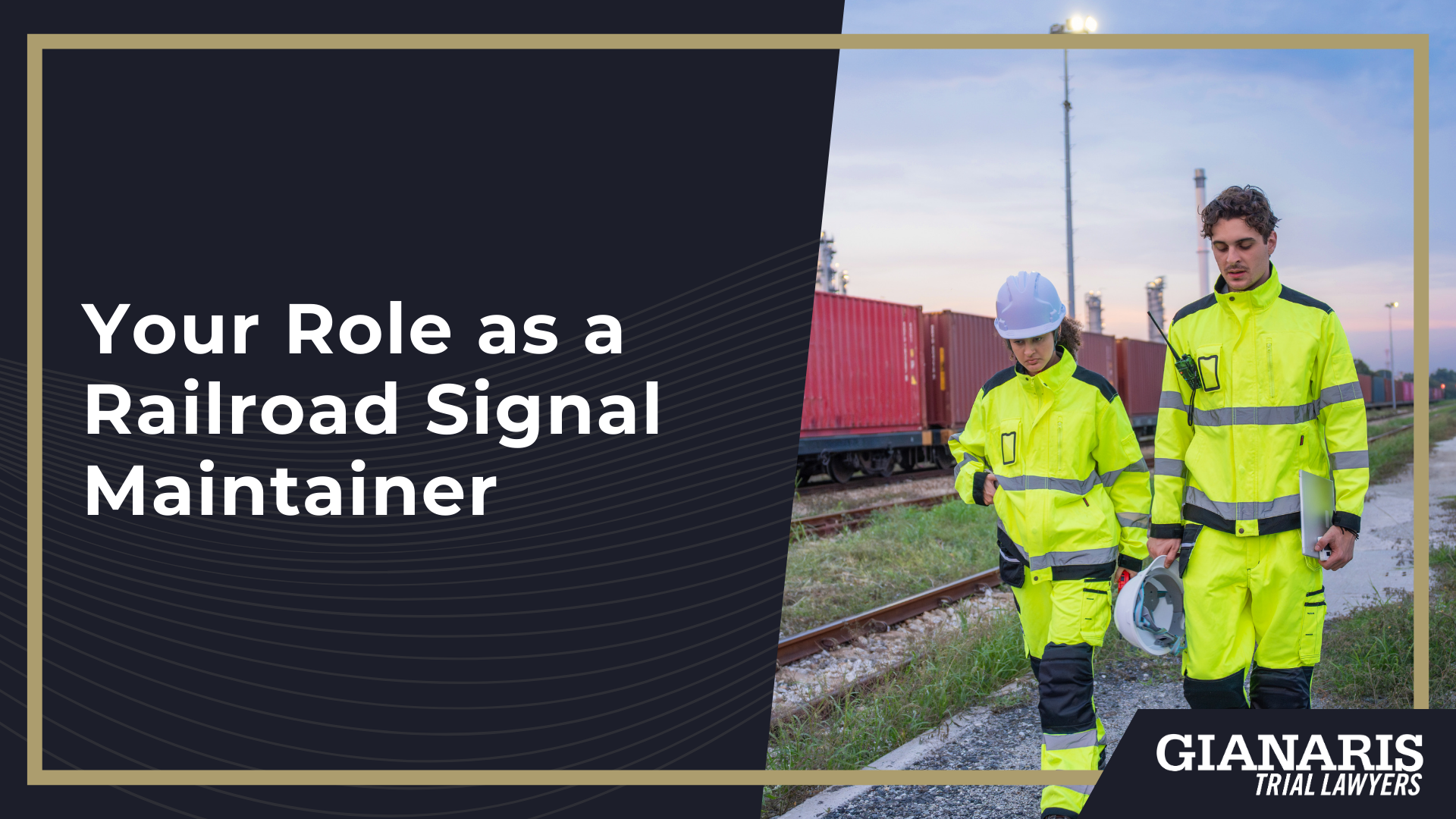
Your Role as a Railroad Signal Maintainer

Every part of the signaling system depends on your ability to inspect, repair, and verify equipment along active railroad lines.

Your Role in Train Movement and Safety

You support the systems that guide train crews, protect work zones, and control track movements.

Engineers, railroad conductors, and other assigned personnel rely on you to keep signals operating correctly.

A single malfunction can affect the safe movement of freight trains and passenger services.

Daily Duties and Technical Responsibilities

Your work involves inspections, repairs, and routine tests.

You may handle signal heads, relays, track circuits, switch indication systems, electrical control units, and communication links.

You confirm that each component responds properly and report irregularities to your supervisor.

These tasks require strong knowledge of signaling principles and strict attention to rules, diagrams, and written directions.

Conditions and Locations Where You Work

You often work outdoors along an active track.

This may include uneven walking surfaces, loud environments, changing weather, and close proximity to moving trains.

Your duties can require climbing into signal houses or accessing trackside cabinets in confined spaces.

The job often demands long hours in the field with limited access to office facilities.

The Equipment You Handle and Maintain

Your work involves a wide range of electrical and mechanical devices.
Your Role as a Railroad Signal Maintainer; The Equipment You Handle and Maintain

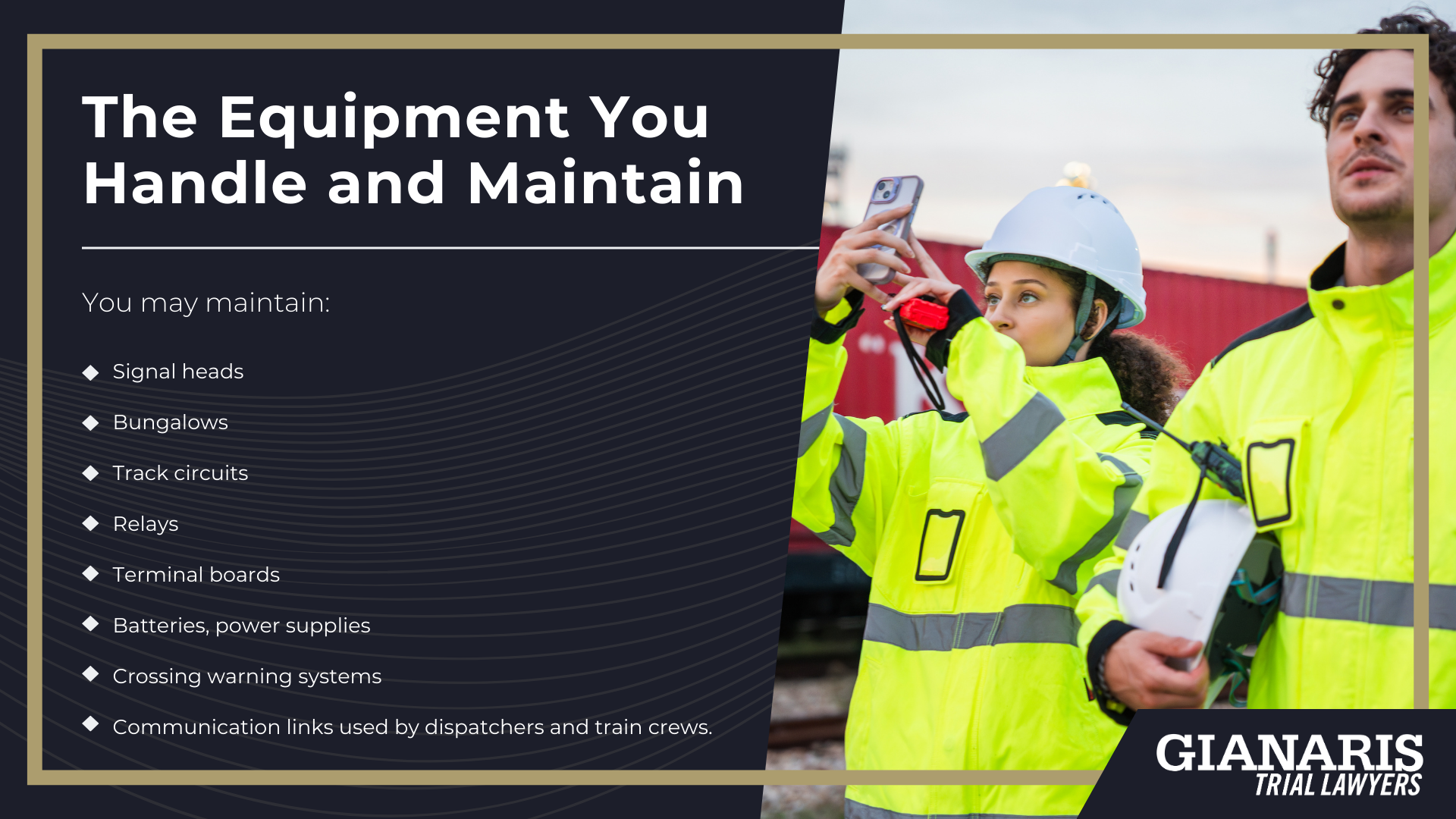
You may maintain:

  • Signal heads
  • Bungalows
  • Track circuits
  • Relays
  • Terminal boards
  • Batteries, power supplies
  • Crossing warning systems
  • Communication links used by dispatchers and train crews.

Given the equipment you maintain, proper handling of wiring, connectors, tools, and testing equipment is part of your routine.

Each component must function correctly so the entire system remains accurate and efficient.

Unfortunately, like other railroad professions (including conductors and brakemen), the scope of your work exposes you to various on-the-job risks.

History and Modernization of Railroad Signaling

Railroad signalling has progressed through several stages as the industry improved safety.

Early signaling in the United States relied on manual practices and visual indicators.

Railroads later adopted block systems that separated trains into controlled sections of track to reduce collisions.

Relay-based interlocking systems became common and improved consistency by using electrical logic to control switches and signals.

Modern railroads, including large carriers such as Norfolk Southern, now use more advanced electronic equipment, microprocessor-based systems, and upgraded communication links.

This shift has changed how signalmen and signallers maintain equipment because older relay logic often exists alongside newer technology.

Your role requires familiarity with both types of equipment, so you can support safe and efficient train movement across different locations.
Physical Injury Risks for Railroad Signal Maintainers

Your work exposes you to many physical hazards because you operate near active tracks, electrical components, and moving equipment.

These risks can affect your ability to continue in your position, support your family, or manage long-term medical needs.

There are numerous kinds of injuries covered by FELA.

Your Role as a Railroad Signal Maintainer; The Equipment You Handle and Maintain; Physical Injury Risks for Railroad Signal Maintainers

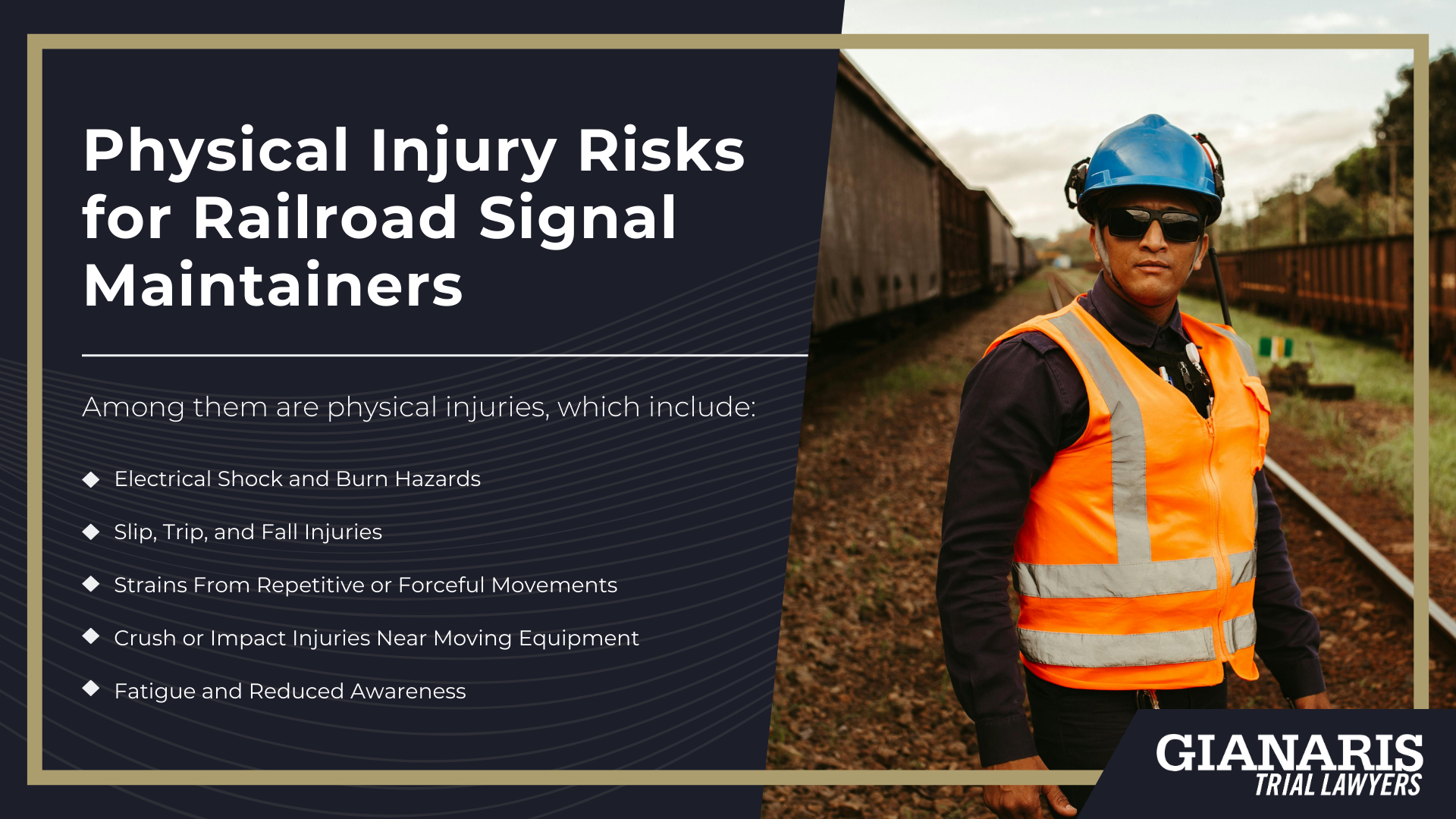
Among them are physical injuries, which include:

  • Electrical Shock and Burn Hazards
  • Slip, Trip, and Fall Injuries
  • Strains From Repetitive or Forceful Movements
  • Crush or Impact Injuries Near Moving Equipment
  • Fatigue and Reduced Awareness

Electrical Shock and Burn Hazards

You work directly with circuits, relays, power supplies, and other energized components.

A mistake during testing or repair can result in shocks or burns.

Older equipment may have worn wiring or loose connections that increase the risk.

Electrical injuries can cause pain, nerve damage, and long-term medical problems that affect your vision, mobility, and overall physical function.

Slip, Trip, and Fall Injuries

Your job often requires walking on uneven ground, loose ballast, mud, and debris along the railroad right-of-way.

You may climb into signal houses or step over cables, tools, or parts scattered around a work site.

These conditions increase your risk of falls, twisted joints, fractures, and back injuries.

Fatigue, long work hours, and poor lighting can make these hazards more severe.

Strains From Repetitive or Forceful Movements

Routine tasks involve lifting batteries, carrying tools, tightening components, and reaching into cabinets.

Repeated strain on your shoulders, hands, and lower back can lead to long-term issues such as tendon injuries or chronic pain.

These problems may develop slowly and become more noticeable as the demands of the job continue.

Crush or Impact Injuries Near Moving Equipment

You may work close to active train movements, switching operations, or roadway machinery.

An unexpected train arrival, equipment shift, or miscommunication can lead to dangerous situations.

Impact injuries can occur if you are struck by a moving object or caught between rail equipment during an inspection or repair.

Fatigue and Reduced Awareness

Long shifts, irregular schedules, and stressful conditions affect your ability to remain alert.

Fatigue reduces your reaction time and increases the chance of accidents.

It also contributes to long-term mental health issues, especially when combined with the physical demands of the rail industry.

Mental Health Risks for Railroad Signal Maintainers

Your job places you in demanding environments where physical hazards and constant responsibility can affect your mental well-being.

Signal maintainers often manage long hours, irregular schedules, and pressure to keep the system functioning safely.

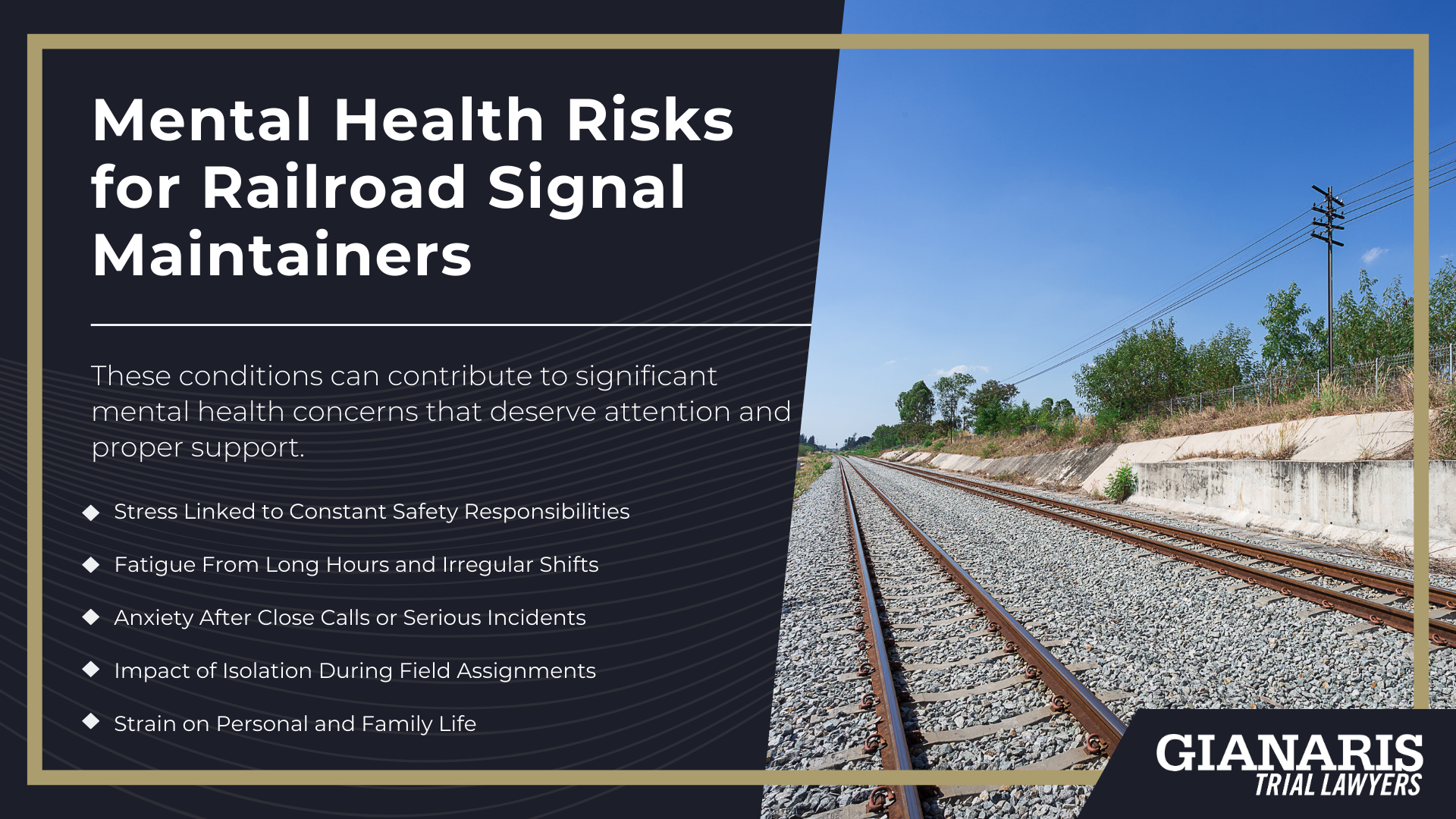
These conditions can contribute to significant mental health concerns that deserve attention and proper support.

Your Role as a Railroad Signal Maintainer; The Equipment You Handle and Maintain; Physical Injury Risks for Railroad Signal Maintainers; Mental Health Risks for Railroad Signal Maintainers

Stress Linked to Constant Safety Responsibilities

Your work directly influences the safety of train crews, roadway workers, and passengers.

When you maintain equipment that protects lives, the responsibility can create ongoing stress.

The need to complete tasks accurately, follow rules without error, and manage urgent repairs increases the pressure you experience during a normal workday.

Fatigue From Long Hours and Irregular Shifts

Extended shifts, nighttime assignments, and changes in scheduling affect your sleep and energy levels.

Fatigue makes it harder to stay aware of your surroundings and increases the risk of mistakes.

Over time, chronic fatigue can affect your mood, concentration, and ability to manage daily responsibilities outside of work.

Anxiety After Close Calls or Serious Incidents

Working near moving trains or energized equipment exposes you to high-risk situations.

A near miss, unexpected train movement, or equipment failure can trigger anxiety that persists long after the event.

Some signal maintainers continue to feel on edge when returning to the same location or performing the same task.

Impact of Isolation During Field Assignments

Many parts of your job take place alone in remote areas or at isolated signal locations.

Extended periods without nearby support can intensify stress or create feelings of isolation.

Communication with supervisors and other personnel helps, but the nature of the work limits how often support is available.

Strain on Personal and Family Life

Irregular schedules and long days can interfere with family responsibilities, rest, and personal time.

Over time, this imbalance contributes to frustration, burnout, or difficulties maintaining stable routines.

These pressures affect your overall quality of life and your ability to remain in the position safely.

Chemical and Environmental Exposure Risks

As a railroad signal maintainer, you often work around chemicals, treated materials, and airborne contaminants that can affect your health over time.

These exposures may not cause immediate symptoms, but they can lead to long-term medical conditions that interfere with your career and daily life.

Your Role as a Railroad Signal Maintainer; The Equipment You Handle and Maintain; Physical Injury Risks for Railroad Signal Maintainers; Mental Health Risks for Railroad Signal Maintainers; Chemical and Environmental Exposure Risks

Common chemical and environmental risks we’ve seen in many of our clients include:

  • Lead-Based Paint and Legacy Materials
  • Diesel Exhaust From Active Train Movements
  • Solvents, Cleaners, and Electrical Contact Agents
  • Creosote-Treated Wood and Trackside Materials
  • Environmental Conditions and Long-Term Illness

Lead-Based Paint and Legacy Materials

Older signal equipment, metal housings, and trackside structures may contain lead-based coatings.

When you scrape, sand, drill, or open aging components, lead dust can become airborne.

Repeated exposure may contribute to neurological problems, high blood pressure, and other long-term medical issues that affect your ability to work safely.

Diesel Exhaust From Active Train Movements

Working near moving freight trains exposes you to diesel exhaust, especially in yards, switching locations, and areas with limited ventilation.

Diesel exhaust contains particulates and chemical compounds that can irritate the lungs, worsen respiratory conditions, and contribute to certain cancers after long-term exposure.

These risks increase when you perform tests or repairs close to idling locomotives.

Solvents, Cleaners, and Electrical Contact Agents

Your job may involve using solvents or cleaners to prepare surfaces, remove corrosion, or maintain electrical connections.

These products can irritate the skin, eyes, and respiratory system.

Long-term exposure may contribute to rashes, breathing problems, headaches, and other chronic symptoms.

Handling these chemicals without proper ventilation increases the risk.

Creosote-Treated Wood and Trackside Materials

Many railroad ties and older trackside structures are treated with creosote.

Contact with creosote-treated surfaces can cause skin irritation or chemical burns.

Prolonged exposure is associated with certain cancers and chronic skin disorders.

These risks increase when you kneel, crouch, or work in close contact with ties or components coated in creosote residue.

Environmental Conditions and Long-Term Illness

You work in conditions that expose you to dust, soil contaminants, extreme temperatures, and poor air quality.

These environmental factors can contribute to chronic respiratory issues, heat-related illnesses, or skin disorders.

Over time, exposure to multiple hazards may increase the risk of more serious conditions such as lung disease or certain cancers.

FELA Coverage for Railroad Signal Maintainers

If you were injured while working as a railroad signal maintainer, your rights are protected under the Federal Employers’ Liability Act (FELA).

FELA gives injured railroad employees a way to pursue compensation.

Your Role as a Railroad Signal Maintainer; The Equipment You Handle and Maintain; Physical Injury Risks for Railroad Signal Maintainers; Mental Health Risks for Railroad Signal Maintainers; Chemical and Environmental Exposure Risks; FELA Coverage for Railroad Signal Maintainers

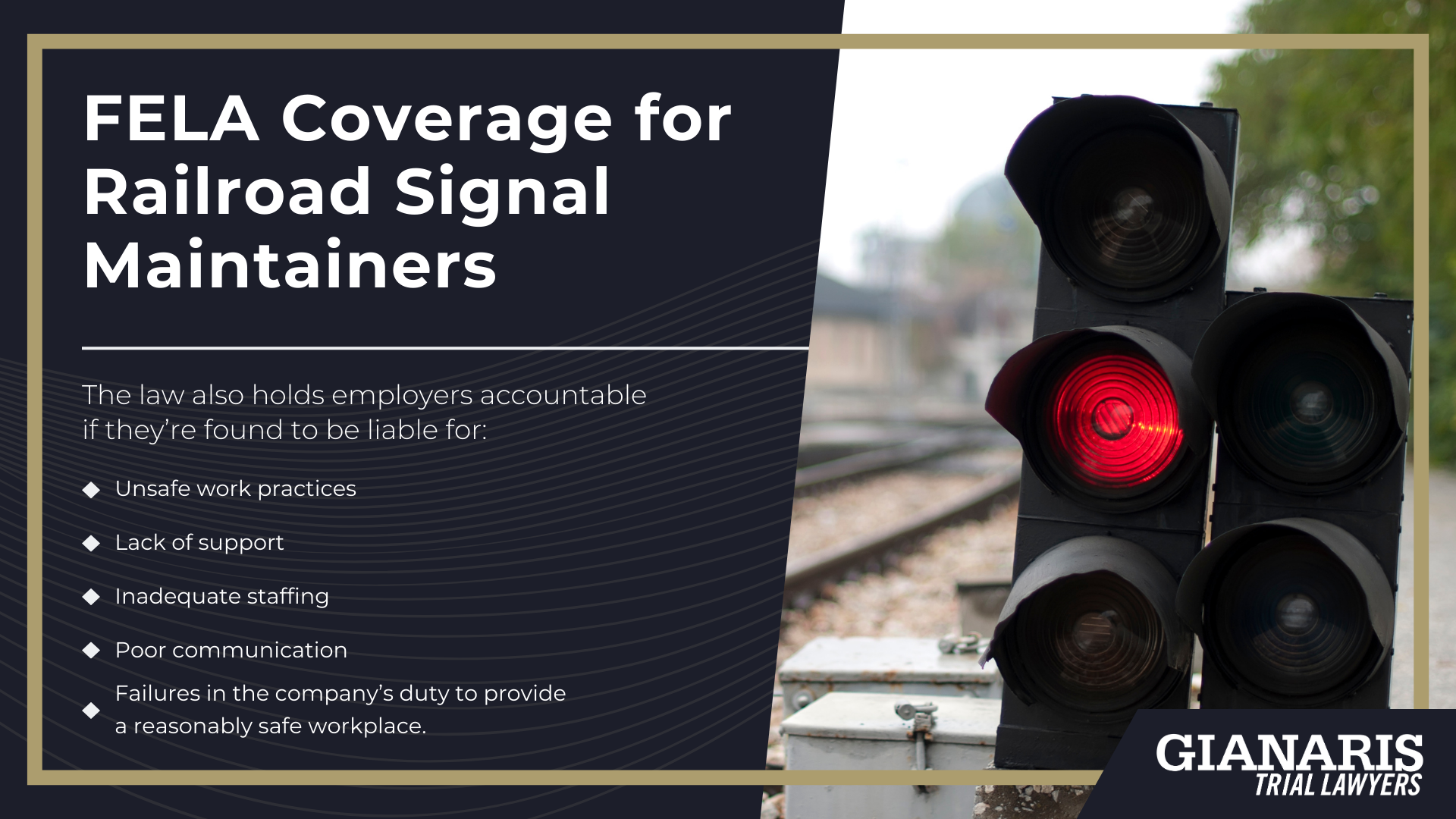
The law also holds employers accountable if they’re found to be liable for:

  • Unsafe work practices
  • Lack of support
  • Inadequate staffing
  • Poor communication
  • Failures in the company’s duty to provide a reasonably safe workplace.

How FELA Applies to Your Work as a Signal Maintainer

You are considered an employee involved in the interstate operations of the rail industry, which means you fall under FELA rather than standard workers’ compensation.

Your tasks place you near moving trains, energized equipment, hazardous materials, and changing weather conditions.

When an injury occurs, the law allows you to pursue compensation if the company failed to follow rules, provide proper tools, or maintain equipment safely.

This requirement covers signalmen, signallers, roadway workers, and other assigned personnel, including:

How Negligence May Be Proven

Unlike in workers’ compensation cases, FELA does not require you to prove full responsibility on the part of the railroad.

You only need to show that the railroad’s negligence played a part, even a small one, in the accident.

Your Role as a Railroad Signal Maintainer; The Equipment You Handle and Maintain; Physical Injury Risks for Railroad Signal Maintainers; Mental Health Risks for Railroad Signal Maintainers; Chemical and Environmental Exposure Risks; FELA Coverage for Railroad Signal Maintainers; How Negligence May Be Proven

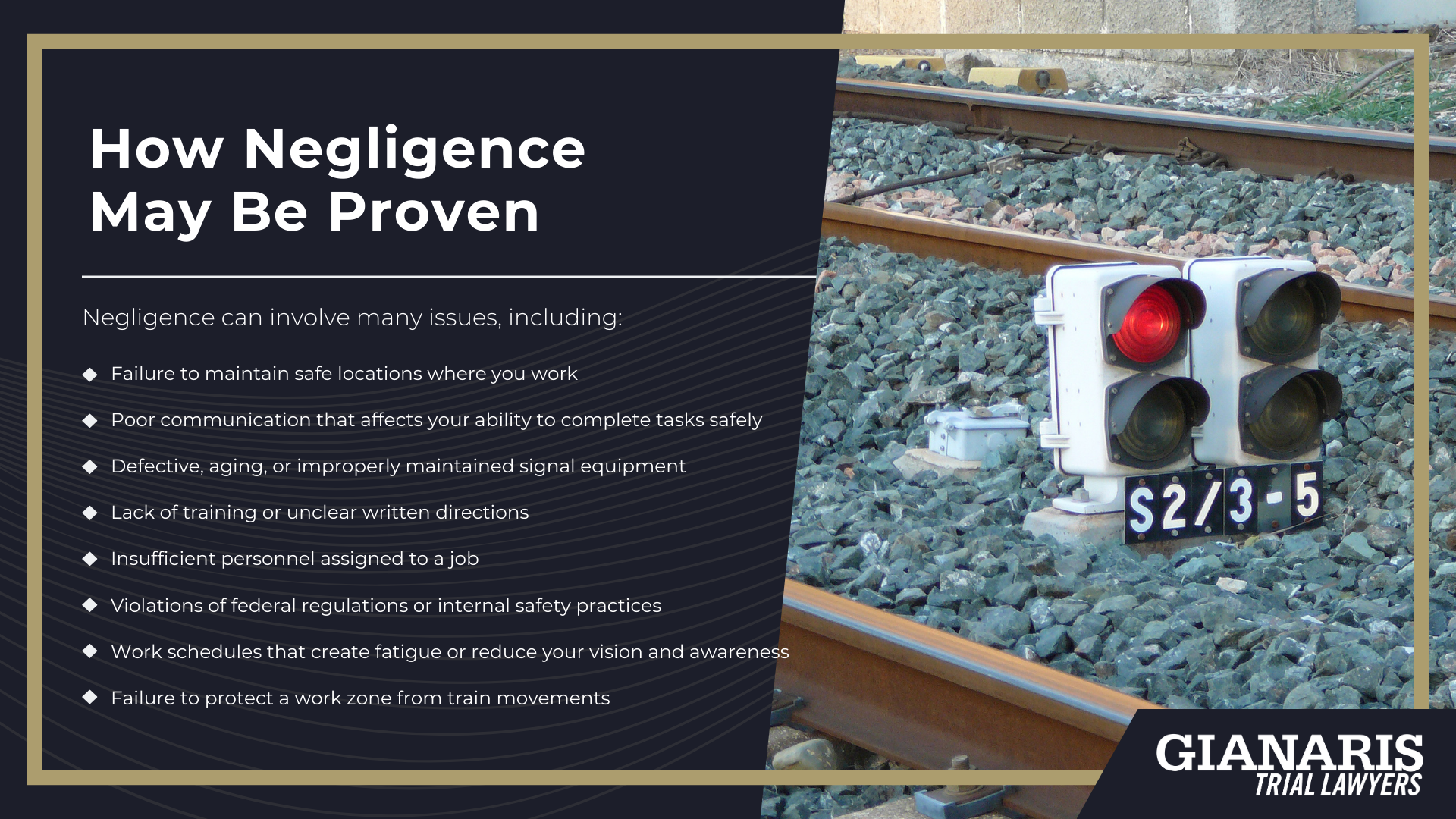
Negligence can involve many issues, including:

  • Failure to maintain safe locations where you work
  • Poor communication that affects your ability to complete tasks safely
  • Defective, aging, or improperly maintained signal equipment
  • Lack of training or unclear written directions
  • Insufficient personnel assigned to a job
  • Violations of federal regulations or internal safety practices
  • Work schedules that create fatigue or reduce your vision and awareness
  • Failure to protect a work zone from train movements

These problems can lead to electrical shocks, falls, chemical exposures, or long-term health problems that affect your career and future ability to work in the railroad environment.

Evidence That Supports a FELA Claim

Your case becomes stronger when you can show that unsafe practices or poor management contributed to your injury.

Your Role as a Railroad Signal Maintainer; The Equipment You Handle and Maintain; Physical Injury Risks for Railroad Signal Maintainers; Mental Health Risks for Railroad Signal Maintainers; Chemical and Environmental Exposure Risks; FELA Coverage for Railroad Signal Maintainers; How Negligence May Be Proven; Evidence That Supports a FELA Claim

Useful evidence may include:

  • Maintenance and inspection records for the equipment you handled
  • Notes or reports you filed with a supervisor
  • Job briefings or directions given at the beginning of a shift
  • Documentation showing repeated equipment failures at the same location
  • Records of chemical exposure or contact with treated materials
  • Photos or videos of the work area, tools, or damaged components
  • Statements from co-workers or other members of the train crew
  • Prior complaints that were ignored or not corrected
  • Medical records showing the length and severity of your injuries

Evidence helps demonstrate how the railroad’s actions reduced your ability to work safely or failed to protect you according to FELA principles.

Compensation Available Under FELA

A successful claim can help you recover compensation for losses that affect your daily life and long-term employment.

This may include:

  • Medical expenses related to immediate treatment or future care
  • Lost wages and the impact on your salary or career progress
  • Reduced earning ability if you cannot continue in your assigned position
  • Pain, suffering, and emotional strain, including mental health issues linked to the event
  • Support for long-term disabilities that interfere with your ability to manage tasks safely
  • Compensation for reduced quality of life or permanent injuries

The law recognizes that an injury can affect every part of your life, including your family responsibilities, daily routines, and ability to return to the job you have built over years of service.

The Statute of Limitations for FELA Claims

If you were injured while working as a railroad signal maintainer, it is important to understand the time limits that apply to your FELA claim.

Missing the filing deadline can prevent you from recovering compensation, even when the railroad was negligent.

This section explains the statute of limitations and how it applies to both physical injuries and long-term illnesses linked to workplace exposures.

Your Role as a Railroad Signal Maintainer; The Equipment You Handle and Maintain; Physical Injury Risks for Railroad Signal Maintainers; Mental Health Risks for Railroad Signal Maintainers; Chemical and Environmental Exposure Risks; FELA Coverage for Railroad Signal Maintainers; How Negligence May Be Proven; Evidence That Supports a FELA Claim; The Statute of Limitations for FELA Claims

The Standard Three-Year Filing Deadline

FELA claims must be filed within three years of the date of your injury.

This applies to sudden events such as electrical shocks, falls, crush injuries, or accidents involving train movements.

The deadline begins on the day you were hurt or the day you first knew that your injury was connected to your work.

How the Deadline Works for Occupational Diseases

Some conditions, like cancer, develop over time.

If your medical issues are linked to long-term exposures such as diesel exhaust, creosote, solvents, lead-based coatings, or environmental contaminants along the track, the filing period begins when you knew or should have known that your illness was related to your railroad employment.

This rule helps employees who experience delayed symptoms or slow-developing diseases that affect vision, breathing, or neurological function.

Why Early Action Protects Your Case

Evidence can disappear quickly in the rail industry.

Equipment may be repaired, replaced, or moved.

Employees may transfer to new locations, and written records may be harder to obtain.

Contacting a lawyer early allows you to secure statements, maintenance records, job briefings, and other documents that show how the railroad’s actions affected your safety and your ability to work.

Missed Deadlines and Your Rights

If the three-year period has passed, the railroad will likely argue that your claim is barred.

Courts enforce this deadline strictly.

Early legal support helps ensure that your case is filed on time and that your rights under federal law remain protected.

Have You Sustained Injuries on the Track? Contact Us Today.

If you were hurt while working as a railroad signal maintainer, your next steps matter.

Report the incident, get medical care, and keep any notes or photos that show what happened.

Injuries involving electrical equipment, moving trains, or hazardous materials can affect your long-term health, so it helps to document everything early.

Most importantly, get legal representation to strengthen your claim.

Your Role as a Railroad Signal Maintainer; The Equipment You Handle and Maintain; Physical Injury Risks for Railroad Signal Maintainers; Mental Health Risks for Railroad Signal Maintainers; Chemical and Environmental Exposure Risks; FELA Coverage for Railroad Signal Maintainers; How Negligence May Be Proven; Evidence That Supports a FELA Claim; The Statute of Limitations for FELA Claims; Have You Sustained Injuries on the Track_ Contact Us Today

At Gianaris Trial Lawyers, we have successfully represented countless railroad employees in their workers’ compensation and FELA claims.

Contact us for a free consultation.

You can also use the chatbot on this page to find out if you’re eligible for a claim.

Frequently Asked Questions

  • What Should I Do First After Getting Hurt on the Job?

    Report the injury, get medical care, and write down what happened as soon as you can.

    If unsafe conditions, equipment failures, or communication problems played a part, record those details.

    Early documentation helps protect your claim.

  • Am I Still Covered Under FELA if I Made a Mistake?

    Yes.

    FELA allows you to recover compensation even if you were partially at fault.

    You only need to show that the railroad’s negligence contributed to the injury in some way.

    Unsafe equipment, short staffing, unclear directions, and poor communication are common factors.

  • Can Chemical Exposure Be Part of a FELA Claim?

    Chemical exposure can qualify if the railroad failed to provide proper protection or safe working conditions.

    This includes contact with diesel exhaust, lead-based coatings, creosote-treated materials, solvents, or other hazardous substances you encounter during assigned tasks.

    Document exposures, seek medical evaluation, and save SDS sheets or work orders.

    These records help link your diagnosis to unsafe practices and strengthen your claim.

  • What if My Symptoms Showed Up Weeks or Months Later?

    Some injuries and illnesses develop slowly, especially those linked to chemical exposure or repetitive strain.

    You may still have a valid claim because the FELA filing period begins when you knew or should have known your condition was related to your railroad duties.

    Report symptoms promptly, get a physician’s opinion on causation, and consult an attorney early so key evidence and deadlines are preserved.

  • Do I Need a Lawyer Before Completing Railroad Paperwork?

    It is wise to speak with a lawyer first.

    Company forms can include statements that limit your rights or shift blame onto you.

    Early legal guidance helps you avoid mistakes and ensures your claim is presented accurately.

Published by:
Share
Picture of Ted Gianaris
Ted Gianaris

With nearly 30 years of legal experience, Attorney Ted Gianaris has secured over $350 million in compensation for Illinois injury victims, car accident victims, and surviving family members of wrongful death victims.

This article has been written and reviewed for legal accuracy and clarity by the team of writers and attorneys at Gianaris Trial Lawyers and is as accurate as possible. This content should not be taken as legal advice from an attorney. If you would like to learn more about our owner and experienced Illinois injury lawyer, Ted Gianaris, you can do so here.

Gianaris Trial Lawyers does everything possible to make sure the information in this article is up to date and accurate. If you need specific legal advice about your case, contact us. This article should not be taken as advice from an attorney.

Other Employees at Risk Resources
All
FAQs
Injuries & Conditions
Legal Help
Occupations
Settlements & Compensation
You can learn more about Employees at Risk below:
Railroad Brakeman Injury Risks
Railroad Carman Injury Risks
Railroad Conductor Injury Risks
Railroad Employees at Risk of Injury & Chemical Exposure
Railroad Equipment Operator Injury Risks
Railroad Locomotive Engineer Injury Risks
Railroad Shopman Injury Risks
Railroad Track Engineer Injury Risks
Railroad Trackman Injury Risks
Railroad Welder Injury Risks

Other Employees at Risk Resources

All
FAQs
Injuries & Conditions
Legal Help
Occupations
Settlements & Compensation