

Silicosis is a lung disease caused by breathing in respirable crystalline silica dust, usually over months or years of work.
This progressive lung disease often develops slowly, with many workers receiving a diagnosis 10 to 30 years after their initial exposure to silica dust.
When a person has repeated exposure to silica dust, microscopic particles can lodge deep in the lungs and trigger scarring that makes it harder to breathe.
Over time, that scarring can turn into a debilitating lung disease that limits daily activity, reduces work capacity, and may worsen even after exposure stops.
Many people who have developed silicosis were exposed on the job through cutting, grinding, drilling, or polishing materials that contain crystalline silica, including engineered stone.
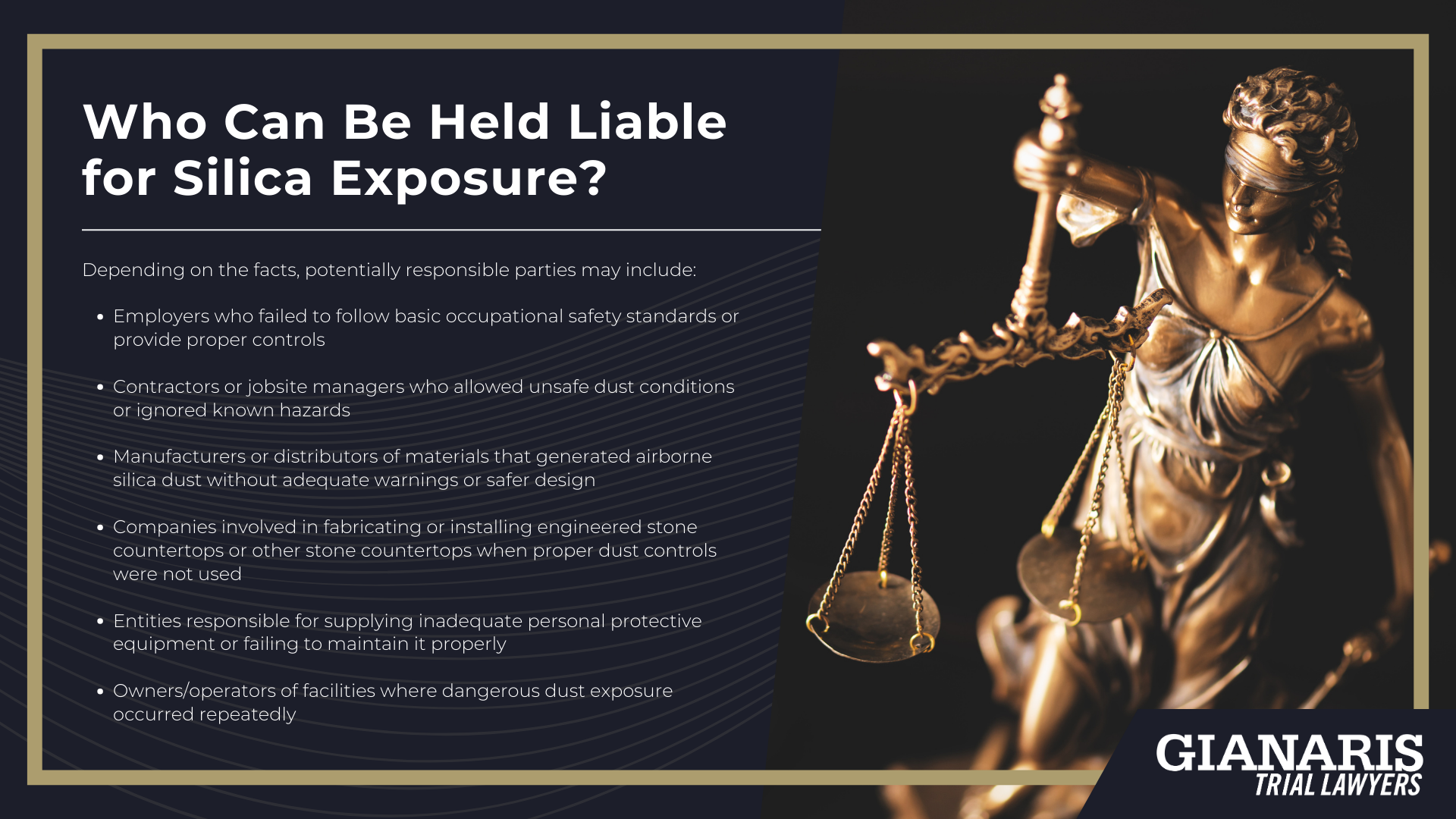
Because the condition is preventable with proper controls, some workers choose to file a silicosis lawsuit to pursue accountability and compensation when safety measures were missing or ignored.
A silicosis lawsuit settlement may help cover medical costs, lost income, and long-term care needs, but the value depends on diagnosis severity, proof of exposure, and the parties responsible.
How Crystalline Silica Dust Causes Lung Damage
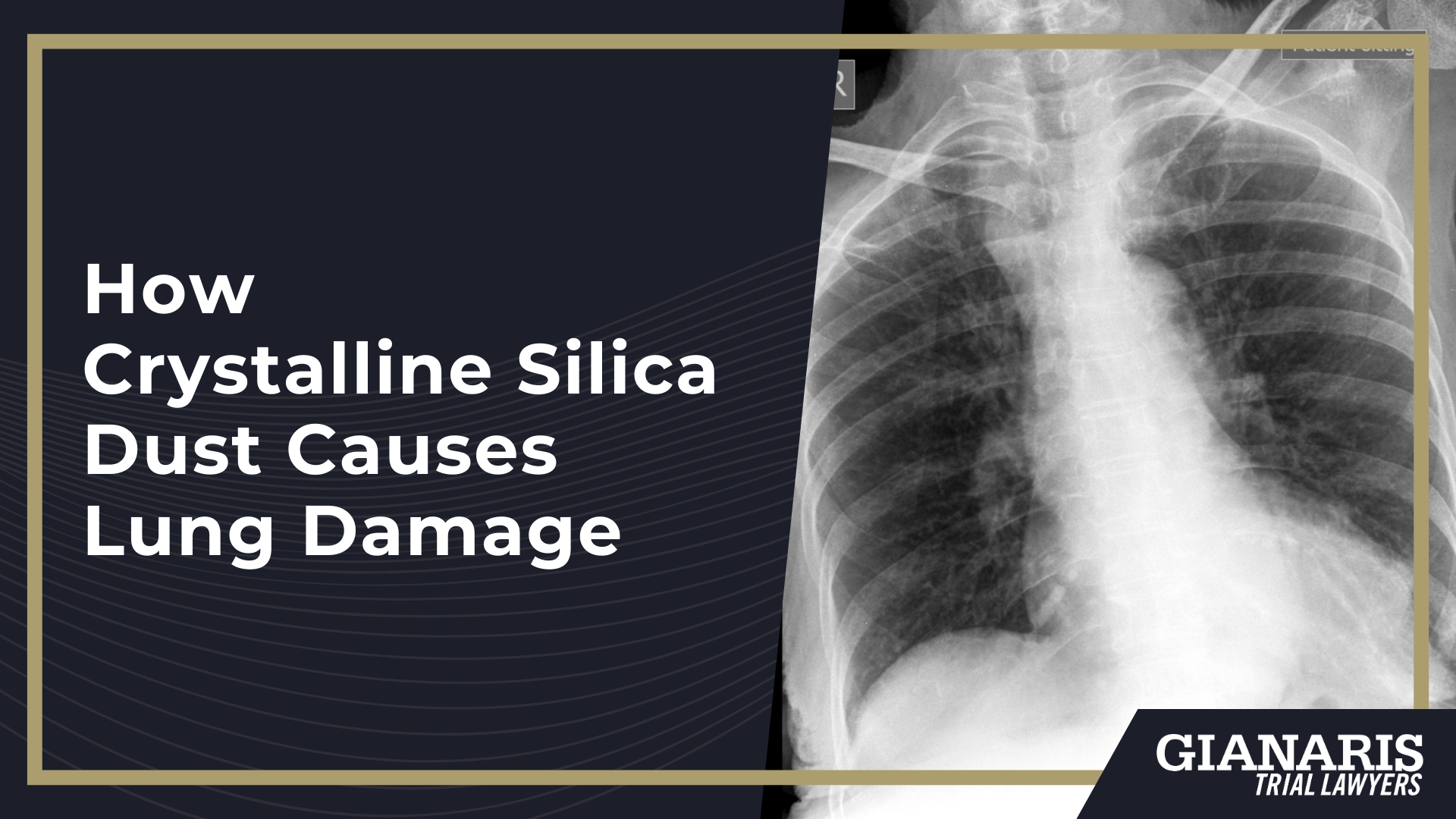
When materials containing crystalline silica are disturbed, they can release airborne silica dust particles small enough to be inhaled into the deepest parts of the lungs.
This silica dust exposure causes inflammation and injury that the body tries to repair, but repeated exposure often leads to permanent scarring (fibrosis).
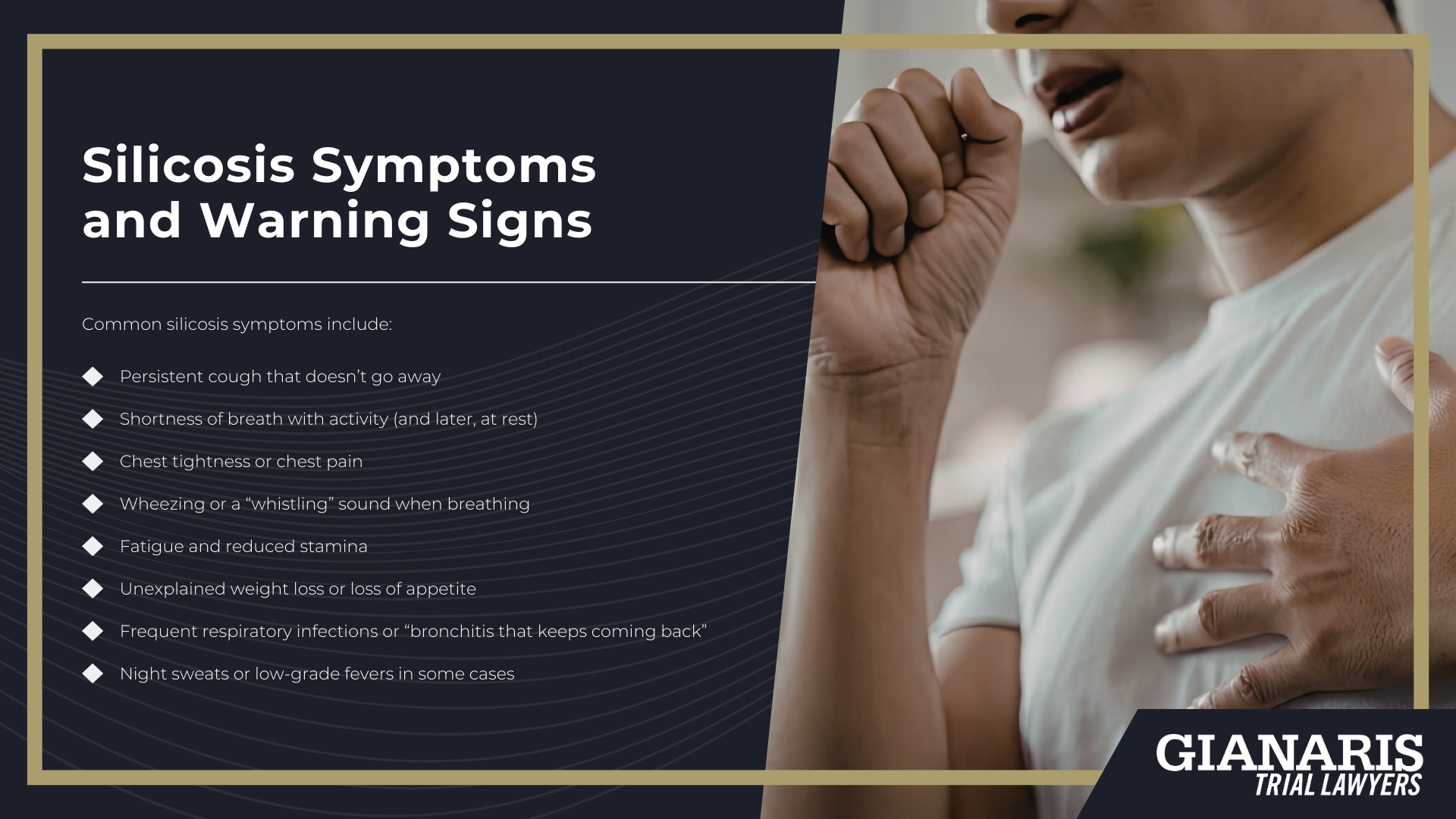
That scarring reduces lung elasticity and interferes with oxygen exchange, which is why many victims experience worsening shortness of breath, fatigue, and reduced tolerance for activity.
Silica exposure is also associated with increased risks of other serious conditions, including lung cancer, chronic obstructive pulmonary disease, and in some cases kidney disease, especially when exposure is heavy or prolonged.
In many workplaces, the highest risk comes from tasks that generate respirable crystalline silica at close range, especially dry cutting or grinding without wet methods, ventilation, or effective respiratory protection.
These medical realities are often central in a silicosis lawsuit, where the evidence must connect the job tasks and exposure sources to the disease.
Acute vs. Chronic Silicosis
Chronic silicosis is the most common form and usually develops after long-term, lower-to-moderate occupational exposure to silica dust, often over 10 years or more.
It can start subtly, with mild symptoms that gradually worsen as scarring progresses and lung function declines.
Accelerated silicosis occurs faster, typically after higher levels of respirable crystalline silica dust exposure over a shorter period, often five to 10 years, and it may progress more aggressively once it begins.
Acute silicosis can develop within months to a few years after extremely high exposure, and it may cause rapid, severe breathing problems that require urgent medical treatment.

No matter the category, silicosis is often irreversible, and progression can continue even after the worker leaves the job.
Because the timing can vary, people who have developed symptoms years after exposure may still be eligible to file a silicosis lawsuit, depending on when they were diagnosed and what evidence exists of prior exposure.
What to Do If You’ve Been Diagnosed With Silicosis
If you’ve been diagnosed or you suspect you’ve developed silicosis, your first priority is medical care and protecting your lung function.
Follow your provider’s plan, attend pulmonary appointments, and ask whether additional testing is needed to assess progression and complications like chronic obstructive pulmonary disease, kidney disease, or increased lung cancer risk.
Protect your exposure history: write down job sites, employers, tasks, products/materials used, and how often you worked around silica dust or airborne silica dust particles.

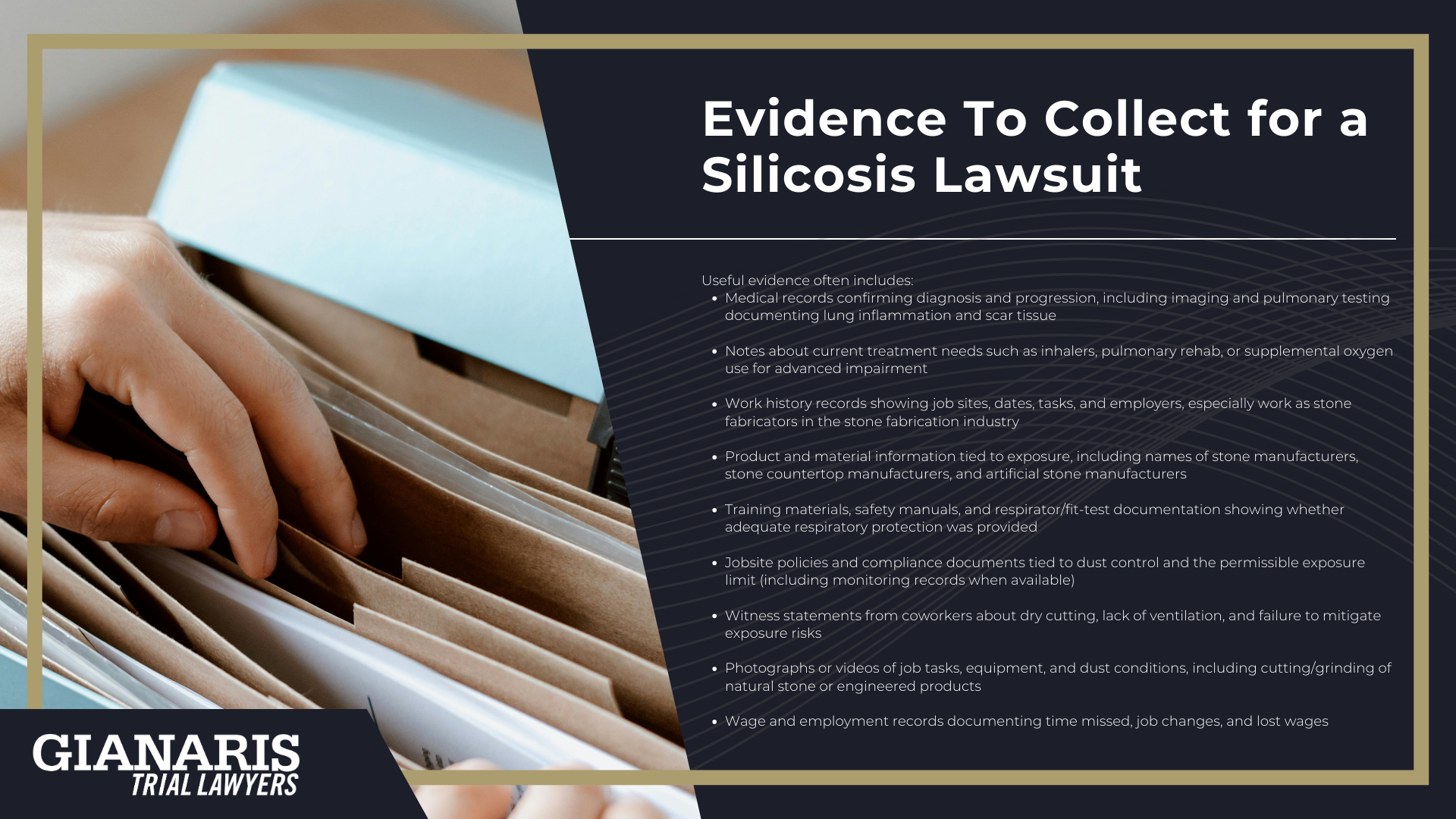
Keep copies of imaging, pulmonary function tests, pathology reports (if any), and work records, because these documents often become key evidence in a silicosis lawsuit.
Avoid discussing the details of your diagnosis on social media or with company representatives before you understand your rights, because early statements can be used to dispute exposure or minimize severity.
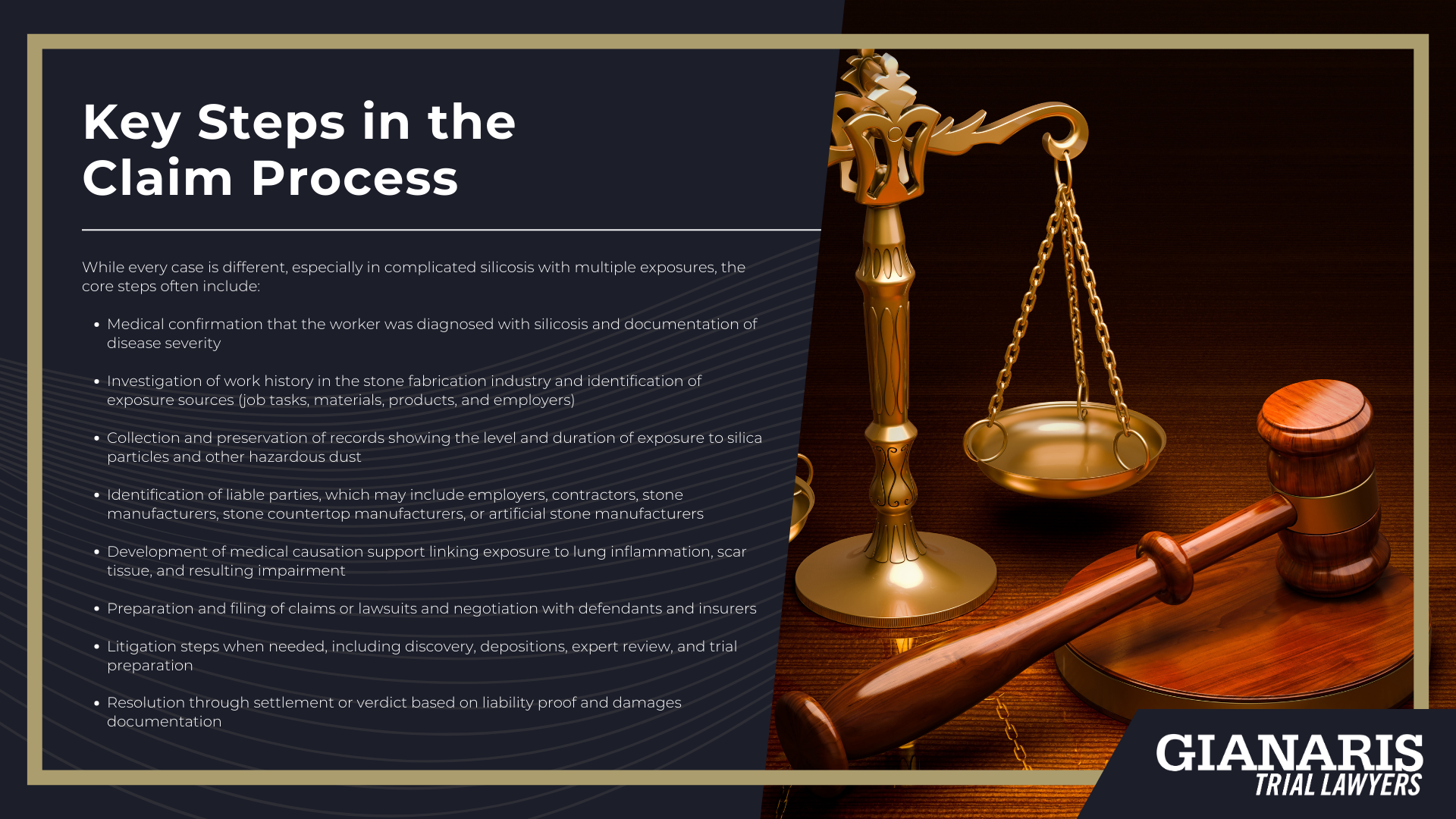
Speak with experienced silicosis lawyers to evaluate whether you can file a silicosis lawsuit and what steps are needed to preserve evidence tied to silica dust exposure and responsible parties.
Who Is Most at Risk for Silicosis?
Silicosis risk is highest in jobs where respirable crystalline silica is generated repeatedly, especially when work is done dry, in enclosed spaces, or without effective controls.
The Centers for Disease Control and Prevention has reported a recent spike in silicosis cases tied to the growing use of engineered stone countertops.
Although employers are required to implement safety measures, including providing personal protective equipment, exposure continues to occur when controls are inadequate or ignored.
As a result, certain professions face a significantly elevated risk of developing silicosis over the course of their careers.
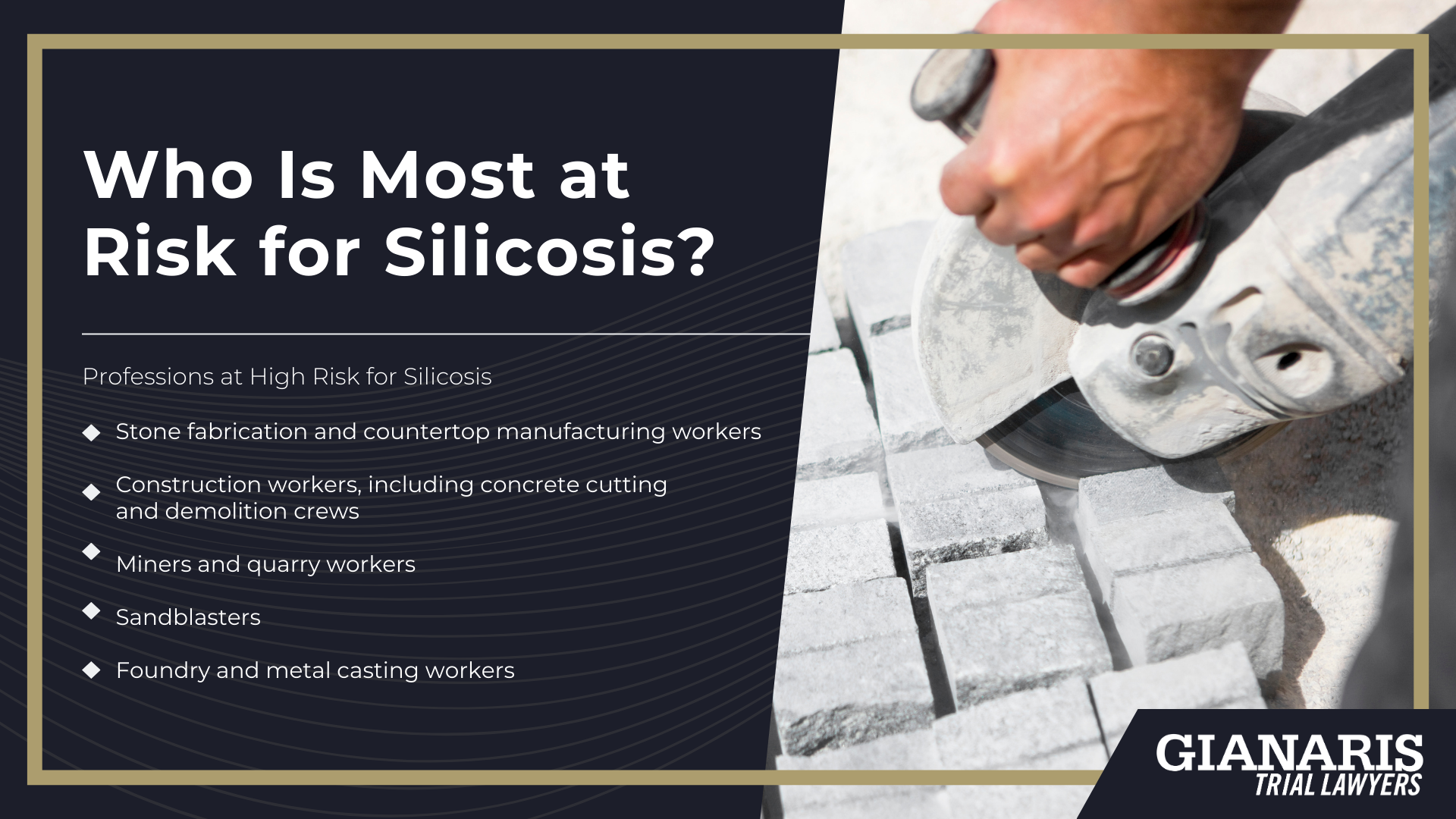
Professions at High Risk for Silicosis
- Stone fabrication and countertop manufacturing workers
- Construction workers, including concrete cutting and demolition crews
- Miners and quarry workers
- Sandblasters
- Foundry and metal casting workers