Railroad pipefitters face a unique combination of physical hazards and toxic exposures that can cause both sudden injuries and long-term health conditions.
The working environment exposes pipefitters to loud noises, potential chemical exposure, and extreme weather conditions.
Their work routinely places them near pressurized systems, hazardous materials, and aging infrastructure where a single failure can result in a serious railroad injury.
Many of these risks are not isolated events but are part of the daily conditions pipefitters encounter while installing, maintaining, or repairing piping systems throughout rail yards and maintenance facilities.
Physical injuries often occur alongside chemical exposure, compounding the harm to the worker.
Pipefitters may suffer burns, lacerations, or crush injuries while simultaneously inhaling fumes or dust released during repairs.
Repeated exposure to toxic substances can lead to occupational illnesses that are harder to diagnose and treat.
These dangers are especially significant for injured railroad workers who may not immediately connect their symptoms to past job duties or exposures.
In many railroad injury cases, unsafe conditions stem from inadequate maintenance procedures, poor ventilation, or failure to remove hazardous materials from older equipment.
When these risks are ignored, injured workers are left to bear the consequences.
Understanding how physical trauma and chemical exposure intersect is essential to evaluating liability and securing compensation under FELA, particularly in cases involving cumulative injuries or occupational disease.
Physical Injuries
Railroad pipefitters routinely perform physically demanding tasks that place them among the most vulnerable railroad employees in the industry.
Their work involves cutting, threading, aligning, and securing pipes that carry pressurized steam, fuel, air, and hydraulic fluids.
These tasks are often performed in tight mechanical spaces, beneath railcars, or inside locomotive compartments where visibility is limited and escape routes are restricted.
When systems fail or safety procedures are rushed, the risk of serious injury rises quickly.
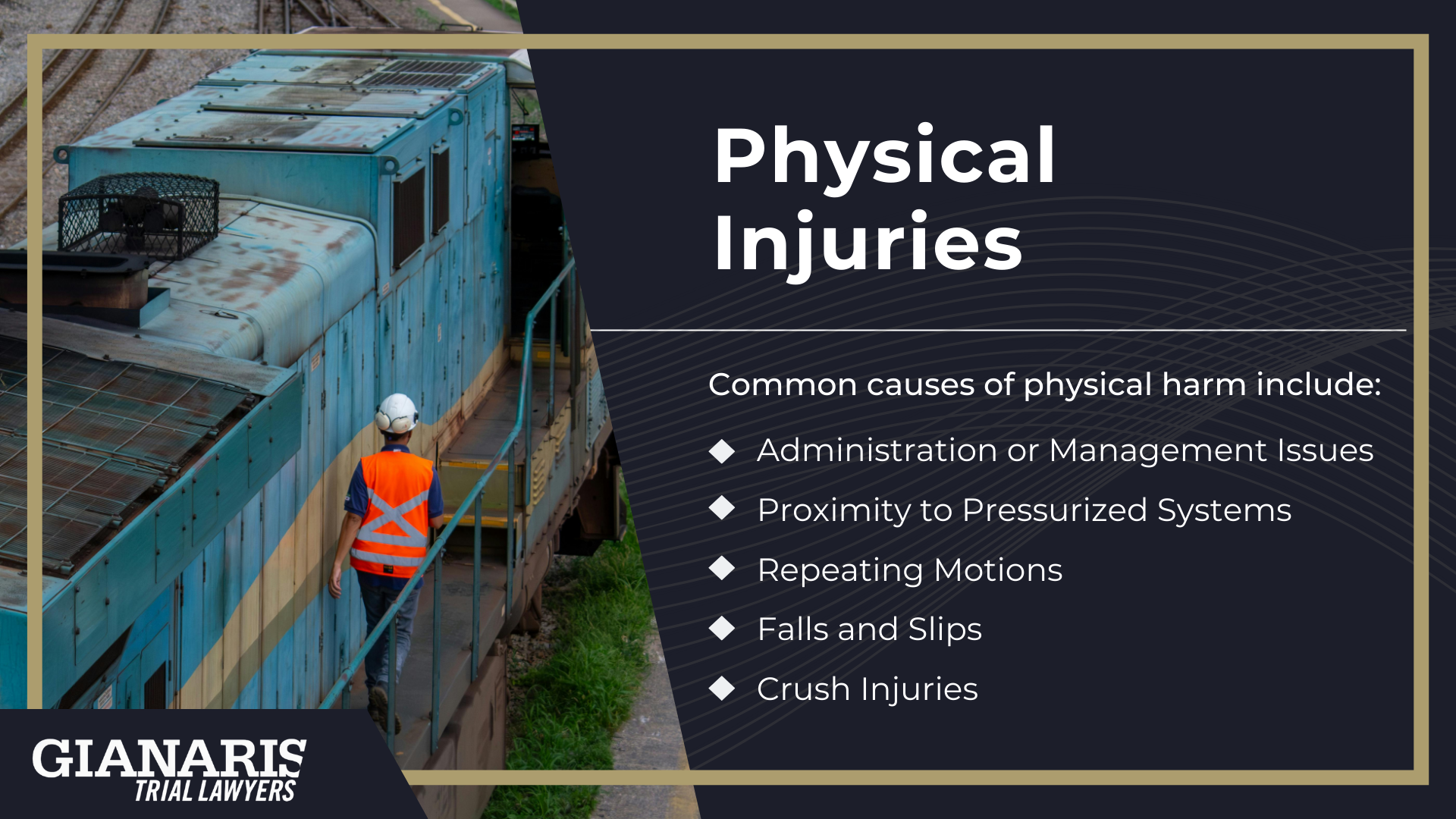
Common causes of physical harm include:
- Administration or Management Issues: Physical injuries frequently result from employer failures such as inadequate lockout procedures, poor equipment maintenance, or understaffed crews.
- Proximity to Pressurized Systems: Pipefitters may also be required to work on live or partially depressurized systems, increasing the likelihood of sudden releases, blowouts, or falling components.
- Repeating Motions: Long-term repetitive lifting, torqueing, and overhead work can cause chronic damage that develops gradually. These injuries may initially seem manageable, but they often worsen until the worker can no longer safely perform their job. Many railroad employees do not realize the full extent of their injuries until they are forced to seek medical care or experience permanent work restrictions.
- Falls and Slips: Falls are another significant hazard. Pipefitters frequently work on elevated platforms, uneven rail yard surfaces, or oily shop floors. A single slip can result in fractures, spinal injuries, or head trauma.
- Crush Injuries: Crush injuries are also common when heavy pipes, valves, or fittings shift unexpectedly. In severe cases, these injuries can end a career and interfere with benefits administered through the railroad retirement board, creating long-term financial uncertainty.
Securing fair compensation under FELA requires clearly showing how these injuries relate to unsafe working conditions.
An experienced FELA lawyer understands how to document the physical demands of pipefitting work and counter arguments that injuries were unavoidable or caused by worker error.
This legal support is especially important for railroad employees facing permanent impairment, lost earning capacity, or prolonged recovery.
Common physical injuries faced by railroad pipefitters include:
- Burns from steam, hot pipes, or leaking pressurized fluids
- Lacerations from sharp pipe edges, cutting tools, or broken fittings
- Falls resulting in fractures, head injuries, or spinal damage
- Crush injuries caused by shifting pipes, valves, or heavy components
- Repetitive strain injuries affecting the back, shoulders, wrists, and knees
- Sprains and soft-tissue injuries from awkward positioning in confined spaces