
No fees unless we win.
Get a free consultation
128 Reviews
5.0
★★★★★

Railroad Track Engineer Injury Risks [2026 Guide]

Illnesses such as lung cancer and leukemia are the lasting consequences of the hard work and dedication of America’s workers. At Gianaris Trial Lawyers, we fight for justice on behalf of those who have suffered life-altering illnesses due to years of toxic exposure.

Track Engineers are at Risk of Serious Injuries and Chemical Exposure

A railroad track engineer plays a critical role in maintaining the safety and function of the rail system through demanding physical labor and technical precision.

When injuries or illnesses result from unsafe conditions or long-term exposure on the job, Gianaris Trial Lawyers helps track engineers hold railroad employers accountable.

Our firm understands the exact nature of track work and builds strong FELA claims to secure the compensation injured workers deserve.

Railroad Track Engineer Injury Risks; Physical Injury and Chemical Exposure Risks Faced by Railroad Track Engineers; Physical Injury Risks for Railroad Track Engineers; Chemical Exposure Risks for Railroad Track Engineers; How Do FELA Claims Allow Injured Railroad Workers to Seek Fair Compensation; Gathering Evidence for a FELA Claim; Damages in FELA Lawsuits; Gianaris Trial Lawyers_ Representing Injured Railroad Workers

Track Engineers are Among the Railroad Employees Most at Risk of Injuries and Toxic Exposure

Railroad track engineers are essential to the integrity and safety of the entire rail system, responsible for inspecting, maintaining, and repairing the tracks that support every train that moves across the country.

Track engineers perform physically demanding railroad work in all weather conditions, often near active locomotives, heavy equipment, and moving railcars.

Their duties include replacing railroad ties, aligning rail segments, stabilizing ballast, and working with tools and machinery that carry serious injury risks.

Beyond the immediate physical dangers, many track engineers face prolonged exposure to diesel exhaust, degreasing solvents, and other hazardous substances that can lead to chronic conditions and occupational illnesses, including respiratory disease and even cancer.

When a railroad employer fails to provide a safe work environment or adequate protective equipment, injured railroad workers have the right to pursue fair compensation under the Federal Employers Liability Act (FELA).

Unlike workers’ comp, FELA claims allow workers to hold employers accountable for negligence that caused or contributed to their harm.

These claims can involve both sudden accidents (such as falls, crush injuries, or tool malfunctions) and long-term exposures that result in illness after years of working on the railways.

At Gianaris Trial Lawyers, we understand the specific job functions, physical demands, and risks that track engineers face every day.

Our firm is committed to helping these workers and their families recover compensation and seek justice when a railroad company fails to uphold its responsibility.

If you or a loved one worked as a railroad track engineer and suffered a serious injury or developed an illness linked to job-related exposures or unsafe conditions, contact Gianaris Trial Lawyers to discuss your legal rights under FELA.

You can also use the chat feature on this page to find out if you qualify for a railroad injury lawsuit instantly.

Physical Injury and Chemical Exposure Risks Faced by Railroad Track Engineers

Railroad track engineers are regularly exposed to hazardous working conditions that can cause both immediate physical injuries and long-term health complications.

Whether maintaining rail lines, operating heavy equipment, or working near active tracks, these workers perform duties that constantly place them in high-risk environments.

The Federal Railroad Administration has long recognized the dangers involved in track work, from high-impact accidents to toxic exposure.

When proper precautions are not taken, injured employees may suffer permanent harm, or in tragic cases, be killed on the job.

These injuries and illnesses can affect a worker’s lifelong ability to earn a living, cover medical expenses, or support their family.

A single violation of a safety statute or failure to provide access to protective gear may leave the railroad liable under FELA for the damages caused.

Physical Injury and Chemical Exposure Risks Faced by Railroad Track Engineers

In some cases, a negligent railroad company may have ignored repeated warnings about unsafe conditions or defective equipment.

FELA allows injured track engineers to pursue compensation not just for immediate injuries, but also for future losses in pay, health, and quality of life.

At Gianaris Trial Lawyers, we understand the unique risks track engineers face in the field and stand ready to help those harmed by unsafe conditions seek justice.

Physical Injury Risks for Railroad Track Engineers

Track engineers are required to perform physically demanding tasks in unpredictable and often hazardous outdoor environments.

Their work involves lifting heavy materials, operating large machinery, walking on uneven terrain, and working near high-speed trains: conditions that frequently lead to accidents and serious injuries.

Even with safety protocols in place, railroad employers often fail to provide adequate protections, training, or staffing, increasing the likelihood of preventable harm.

At Gianaris Trial Lawyers, we understand how the daily duties of track engineers (aligning rails, installing switches, replacing ties, and managing jobsite equipment) can lead to devastating physical injuries.

When workers are injured due to unsafe conditions or employer negligence, they may be entitled to compensation under FELA.

In the most severe cases, these injuries can result in permanent disability or death, especially when safety warnings are ignored.

We help injured track engineers recover damages for medical care, lost income, and the long-term impact these injuries can have on their lives and families.
Physical Injury and Chemical Exposure Risks Faced by Railroad Track Engineers; Physical Injury Risks for Railroad Track Engineers

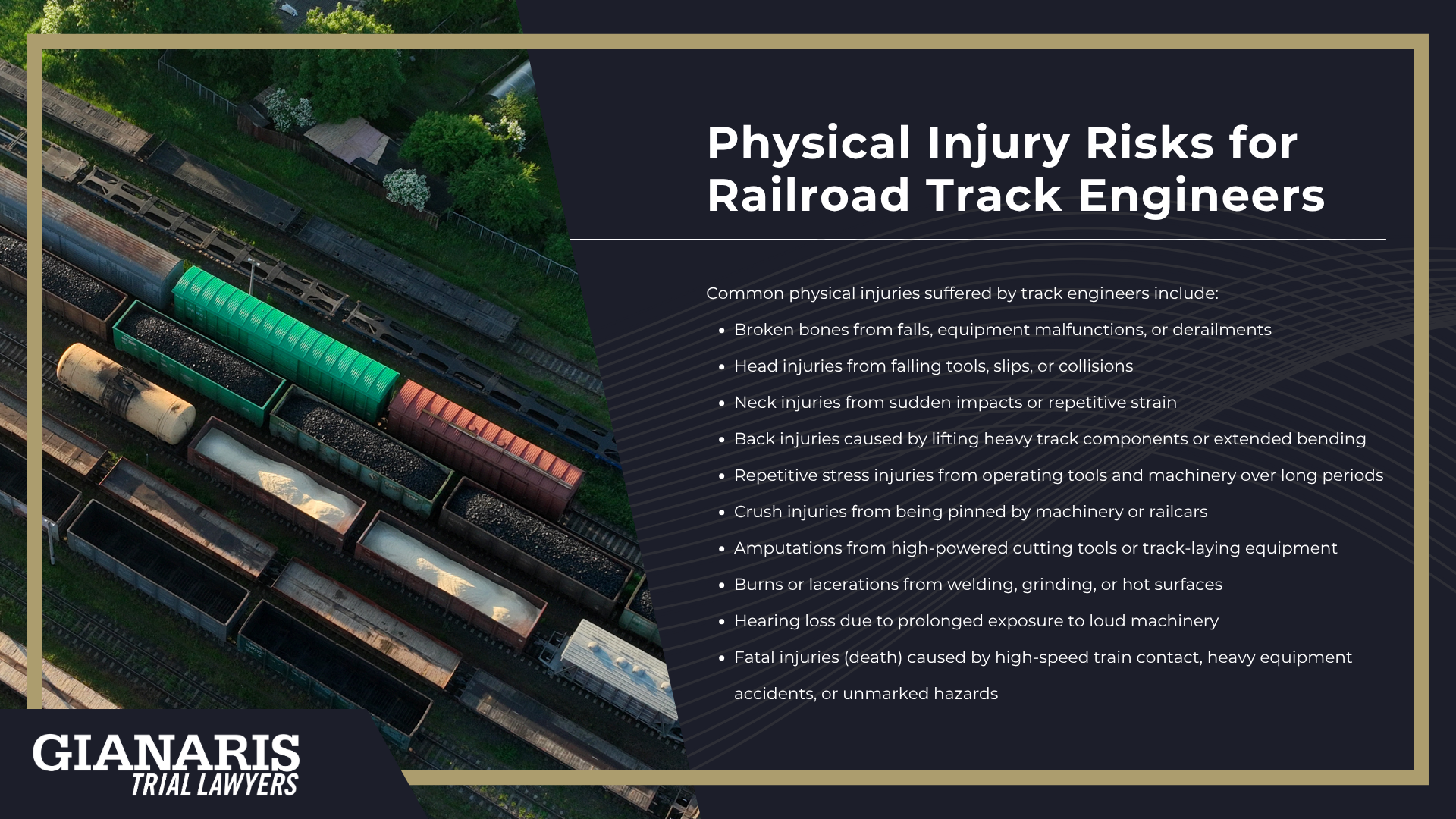
Common physical injuries suffered by track engineers include:

  • Broken bones from falls, equipment malfunctions, or derailments
  • Head injuries from falling tools, slips, or collisions
  • Neck injuries from sudden impacts or repetitive strain
  • Back injuries caused by lifting heavy track components or extended bending
  • Repetitive stress injuries from operating tools and machinery over long periods
  • Crush injuries from being pinned by machinery or railcars
  • Amputations from high-powered cutting tools or track-laying equipment
  • Burns or lacerations from welding, grinding, or hot surfaces
  • Hearing loss due to prolonged exposure to loud machinery
  • Fatal injuries (death) caused by high-speed train contact, heavy equipment accidents, or unmarked hazards

Chemical Exposure Risks for Railroad Track Engineers

In addition to the risk of traumatic accidents, railroad track engineers are often exposed to toxic chemicals during routine maintenance, repair, and construction work.

Whether treating railroad ties, working near cars carrying hazardous materials, or operating alongside idling locomotives, these workers face daily contact with substances that can cause serious long-term illness.

Exposure may occur through inhalation, skin contact, or residual contamination of tools, clothing, and worksites.

Over time, this chemical exposure can severely hurt a worker’s health, leading to respiratory issues, blood disorders, and various cancers.

These risks are often overlooked by employers, and protective measures may be outdated, inconsistently enforced, or completely absent.

Gianaris Trial Lawyers has represented track engineers suffering from these exact types of exposure and knows how to connect the job conditions to the resulting health problems.
Physical Injury and Chemical Exposure Risks Faced by Railroad Track Engineers; Physical Injury Risks for Railroad Track Engineers; Chemical Exposure Risks for Railroad Track Engineers

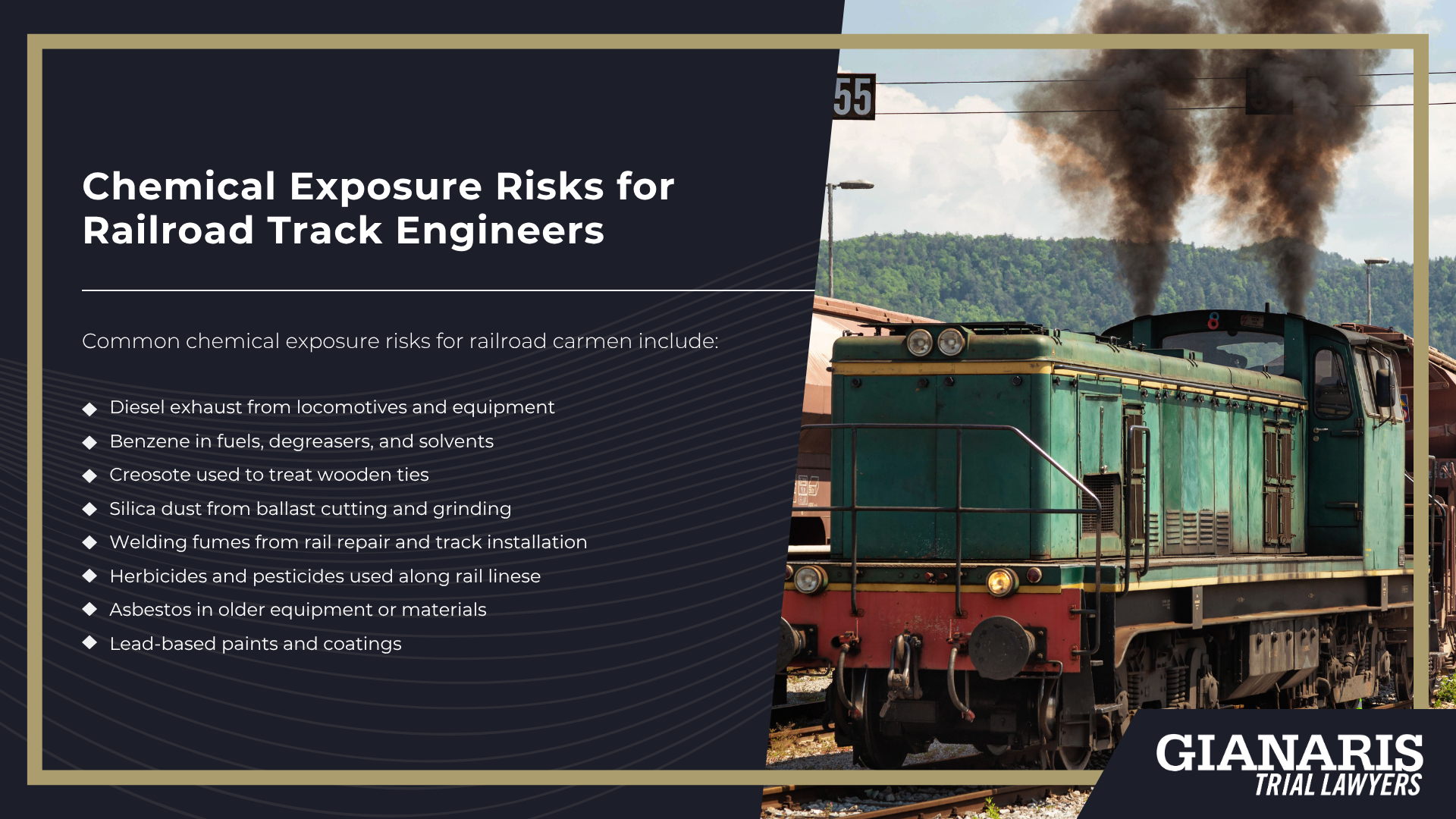
Types of chemical exposure and resultant illnesses suffered by track engineers may include:

  • Diesel exhaust from locomotives and equipment — linked to lung cancer, COPD, and chronic bronchitis
  • Benzene in fuels, degreasers, and solvents — linked to leukemia, non-Hodgkin’s lymphoma, and aplastic anemia
  • Creosote used to treat wooden ties — associated with skin cancer and chemical burns
  • Silica dust from ballast cutting and grinding — linked to silicosis, lung disease, and pulmonary fibrosis
  • Welding fumes from rail repair and track installation — associated with respiratory irritation and neurological conditions
  • Herbicides and pesticides used along rail lines — linked to non-Hodgkin’s lymphoma and Parkinson’s disease
  • Asbestos in older equipment or materials — causes mesothelioma, lung cancer, and asbestosis
  • Lead-based paints and coatings — linked to kidney damage, nerve disorders, and reproductive harm
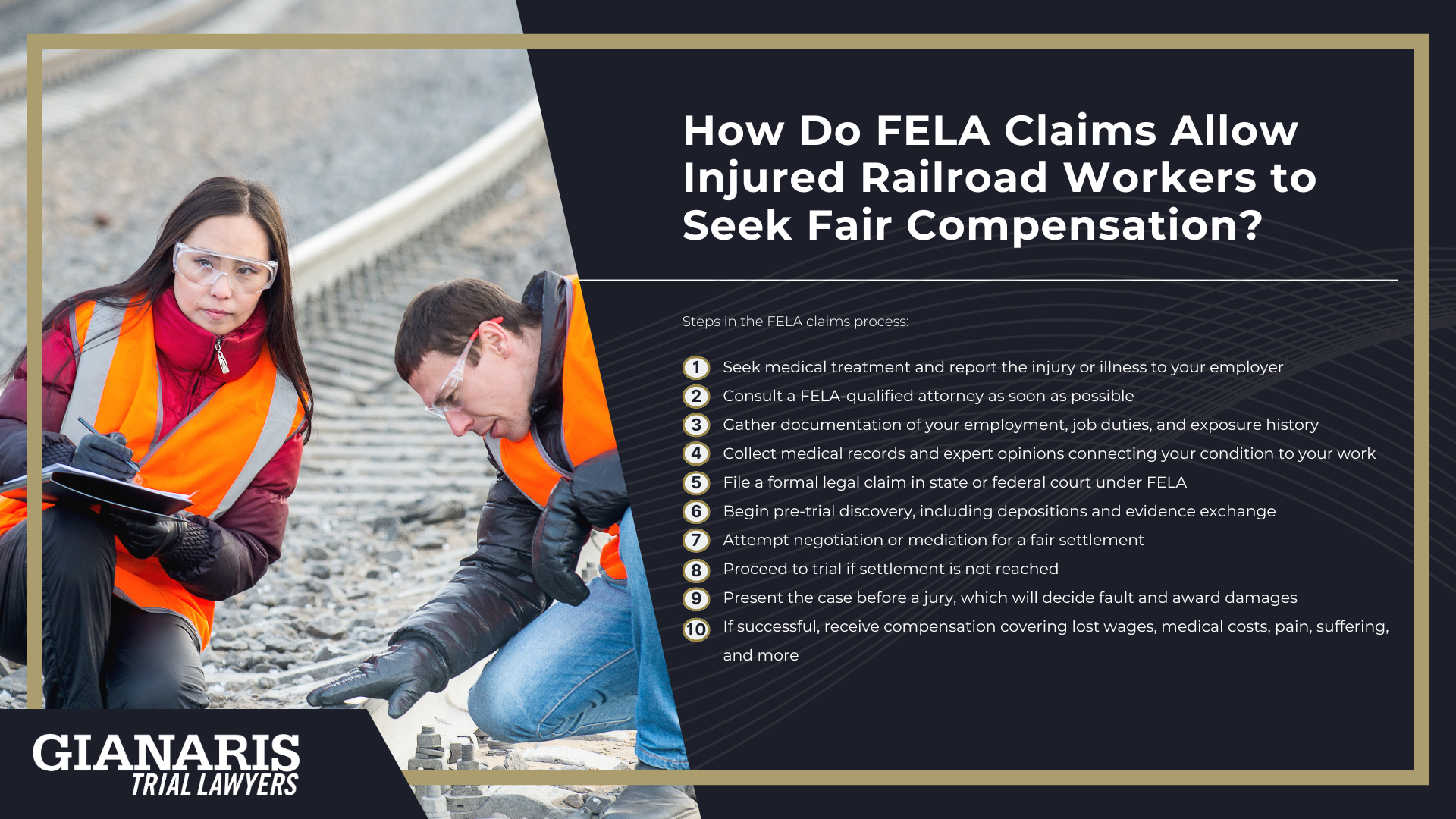
How Do FELA Claims Allow Injured Railroad Workers to Seek Fair Compensation?

Unlike workers compensation systems, the Federal Employers Liability Act (FELA) gives railroad workers the right to sue their employer directly when an injury or illness results from negligence.

This federal law was specifically created to protect railroad employees due to the dangerous nature of the railroad industry, and it applies to both traumatic injuries and illnesses caused by toxic exposures.

FELA requires proof that the railroad company was at least partially at fault: through unsafe practices, poor maintenance, or failure to provide a safe work environment.

Because this legal standard is more favorable than traditional negligence claims, many railroad injury cases result in substantial awards or multi-million dollar verdicts and settlements.

Unlike workers comp, FELA claims can recover full lost wages, pain and suffering, and future medical costs, helping workers secure maximum compensation.

At Gianaris Trial Lawyers, our team focuses exclusively on serious personal injury and exposure-related claims, making railroad litigation one of our core practice areas.

Our record includes strong results in both settlement negotiations and jury verdicts, particularly in complex railroad cancer lawsuits.

FELA claims are pursued in court and often involve expert testimony, technical job role analysis, and careful investigation of railroad policies.

Rail labor attorneys with experience in this area are essential for building strong cases and countering the railroad company’s defense.

For track engineers and other workers facing lifelong medical issues, FELA provides a vital legal path to justice.

Physical Injury and Chemical Exposure Risks Faced by Railroad Track Engineers; Physical Injury Risks for Railroad Track Engineers; Chemical Exposure Risks for Railroad Track Engineers; How Do FELA Claims Allow Injured Railroad Workers to Seek Fair Compensation

Steps in the FELA claims process:

  1. Seek medical treatment and report the injury or illness to your employer
  2. Consult a FELA-qualified attorney as soon as possible
  3. Gather documentation of your employment, job duties, and exposure history
  4. Collect medical records and expert opinions connecting your condition to your work
  5. File a formal legal claim in state or federal court under FELA
  6. Begin pre-trial discovery, including depositions and evidence exchange
  7. Attempt negotiation or mediation for a fair settlement
  8. Proceed to trial if settlement is not reached
  9. Present the case before a jury, which will decide fault and award damages
  10. If successful, receive compensation covering lost wages, medical costs, pain, suffering, and more

Gathering Evidence for a FELA Claim

In railroad injury cases, strong evidence can make the difference between a denied claim and a successful recovery.

At Gianaris Trial Lawyers, our law firm works closely with injured railroaders to gather, retain, organize, and present the documentation needed to prove liability and damages under FELA.

We provide strategic legal counsel and manage the whole process, from the initial investigation to expert reports and trial preparation.

With extensive experience in railroad litigation, our team knows how to uncover key facts, locate critical witnesses, and connect work-related conditions to medical outcomes.

Physical Injury and Chemical Exposure Risks Faced by Railroad Track Engineers; Physical Injury Risks for Railroad Track Engineers; Chemical Exposure Risks for Railroad Track Engineers; How Do FELA Claims Allow Injured Railroad Workers to Seek Fair Compensation; Gathering Evidence for a FELA Claim

Evidence in a FELA claim may include:

  • Medical records showing diagnosis, treatment, and long-term prognosis
  • Job history and employment records detailing duties and locations
  • Safety inspection reports and maintenance logs
  • Incident or accident reports filed with the railroad
  • Witness statements or testimony from coworkers
  • Telephone numbers and other contact information
  • Photographic evidence or video evidence of the scene or equipment
  • Material Safety Data Sheets (MSDS) for chemicals used
  • Documentation of exposure to toxic substances
  • Records of safety violations or previous similar incidents
  • Expert analysis linking the injury or illness to working conditions
  • Personal notes, journals, or calendars documenting symptoms or incidents

Damages in FELA Lawsuits

Accurately assessing damages is one of the most important parts of any FELA lawsuit, especially when injuries or illnesses result in long-term physical, emotional, or financial harm.

A comprehensive evaluation allows your railroad injury lawyer to recover damages that reflects the true cost of your suffering and losses, offering much-needed financial security.

At Gianaris Trial Lawyers, we work closely with medical experts, economists, and our clients to ensure no aspect of a claim is undervalued or overlooked.

Whether the injury was immediate or developed over years of exposure, we build a complete damages profile to support the strongest possible case and advocated for a significant amount of compensation.

Physical Injury and Chemical Exposure Risks Faced by Railroad Track Engineers; Physical Injury Risks for Railroad Track Engineers; Chemical Exposure Risks for Railroad Track Engineers; How Do FELA Claims Allow Injured Railroad Workers to Seek Fair Compensation; Gathering Evidence for a FELA Claim; Damages in FELA Lawsuits

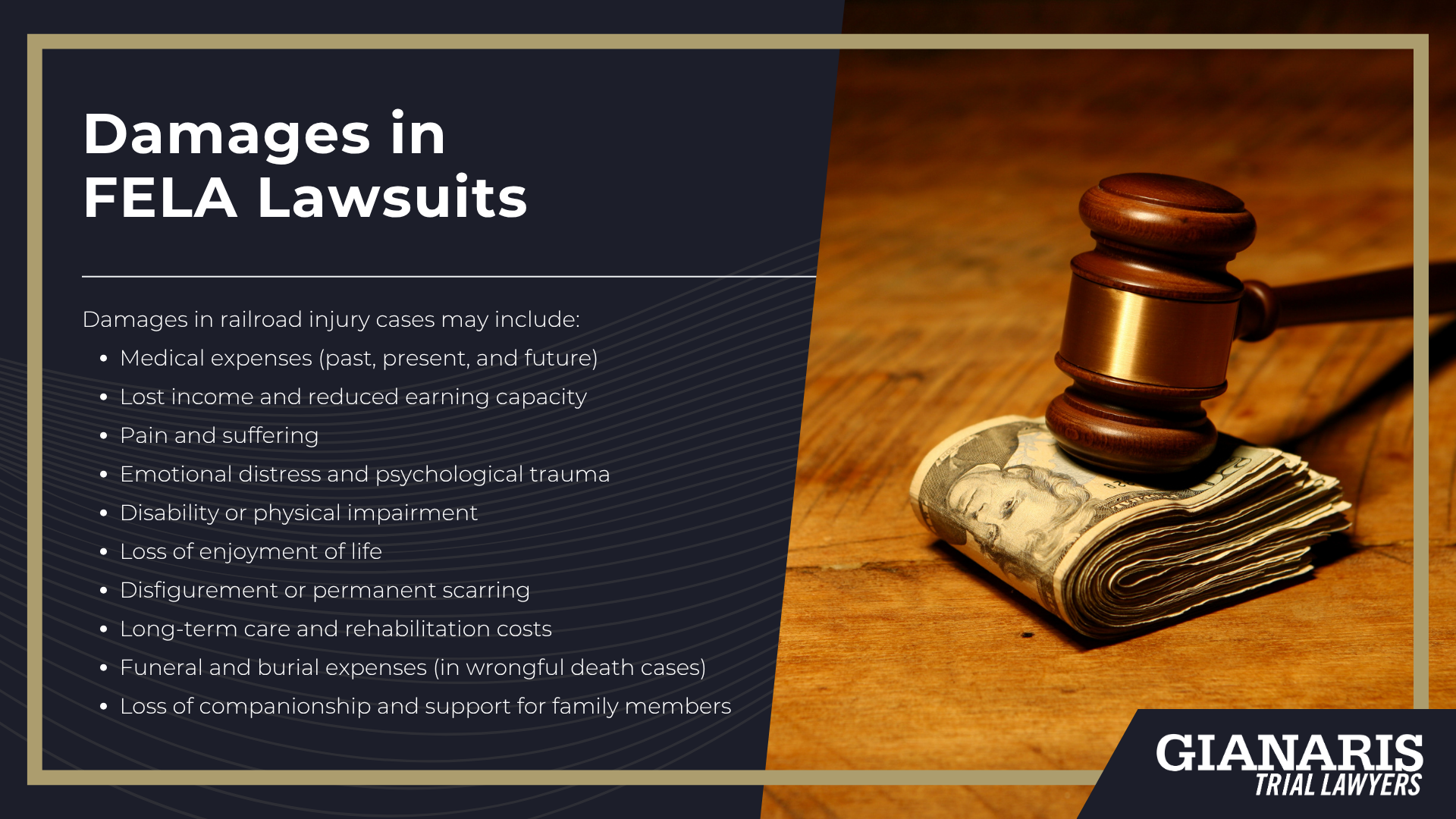
Damages in railroad injury cases may include:

  • Medical expenses (past, present, and future)
  • Lost wages
  • Lost future earnings
  • Pain and suffering
  • Emotional distress and psychological trauma
  • Disability or physical impairment
  • Loss of enjoyment of life
  • Disfigurement or permanent scarring
  • Long-term care and rehabilitation costs
  • Funeral and burial expenses (in wrongful death cases for a deceased railroad worker)
  • Loss of companionship and support for family members

Gianaris Trial Lawyers: Get Help from an Experienced FELA Lawyer

At Gianaris Trial Lawyers, we understand the physical risks, long-term health consequences, and financial strain that come with a serious railroad injury or illness.

Our legal team is committed to holding railroad employers accountable and helping injured workers pursue the justice they deserve under FELA.

With decades of experience, a deep understanding of railroad operations, and a proven record of results, we fight tirelessly for those who’ve been harmed by unsafe working conditions.

Our client testimonials speak for themselves, reflecting the care, precision, and dedication we bring to every case.

Physical Injury and Chemical Exposure Risks Faced by Railroad Track Engineers; Physical Injury Risks for Railroad Track Engineers; Chemical Exposure Risks for Railroad Track Engineers; How Do FELA Claims Allow Injured Railroad Workers to Seek Fair Compensation; Gathering Evidence for a FELA Claim; Damages in FELA Lawsuits; Gianaris Trial Lawyers_ Representing Injured Railroad Workers

If you or a loved one has suffered a railroad injury or illness, contact Gianaris Trial Lawyers today for a free, confidential consultation.

You can also use the chat feature on this page to find out if you qualify for a railroad injury lawsuit instantly.

Frequently Asked Questions

Published by:
Share
Picture of Ted Gianaris
Ted Gianaris

With nearly 30 years of legal experience, Attorney Ted Gianaris has secured over $350 million in compensation for Illinois injury victims, car accident victims, and surviving family members of wrongful death victims.

This article has been written and reviewed for legal accuracy and clarity by the team of writers and attorneys at Gianaris Trial Lawyers and is as accurate as possible. This content should not be taken as legal advice from an attorney. If you would like to learn more about our owner and experienced Illinois injury lawyer, Ted Gianaris, you can do so here.

Gianaris Trial Lawyers does everything possible to make sure the information in this article is up to date and accurate. If you need specific legal advice about your case, contact us. This article should not be taken as advice from an attorney.

Other Railroad Employees at Risk Resources
All
FAQs
Injuries & Conditions
Legal Help
Occupations
Settlements & Compensation
You can learn more about Railroad Employees at Risk below:
Railroad Brakeman Injury Risks
Railroad Carman Injury Risks
Railroad Conductor Injury Risks
Railroad Electrician Injury Risks
Railroad Employees at Risk of Injury & Chemical Exposure
Railroad Equipment Operator Injury Risks
Railroad Locomotive Engineer Injury Risks
Railroad Machinist Injury Risks
Railroad Pipefitter Injury Risks
Railroad Shopman Injury Risks
Railroad Signal Maintainer Injury Risks
Railroad Trackman Injury Risks
Railroad Welder Injury Risks

Other Railroad Employees at Risk Resources

All
FAQs
Injuries & Conditions
Legal Help
Occupations
Settlements & Compensation